Introduction of Sherlock Holmes in "A Study in Scarlet"
1887 · London, United Kingdom
Sherlock Holmes, a fictional detective created by Arthur Conan Doyle, was introduced in 'A Study in Scarlet' published in Beeton's Christmas Annual for 1887.
June 27, 1890
The British science fiction writer, Arthur Conan Doyle, publishes his second Sherlock Holmes novel, 'The Sign of Four', adding more depth to the detective genre.
London, United Kingdom | Spencer Blackett
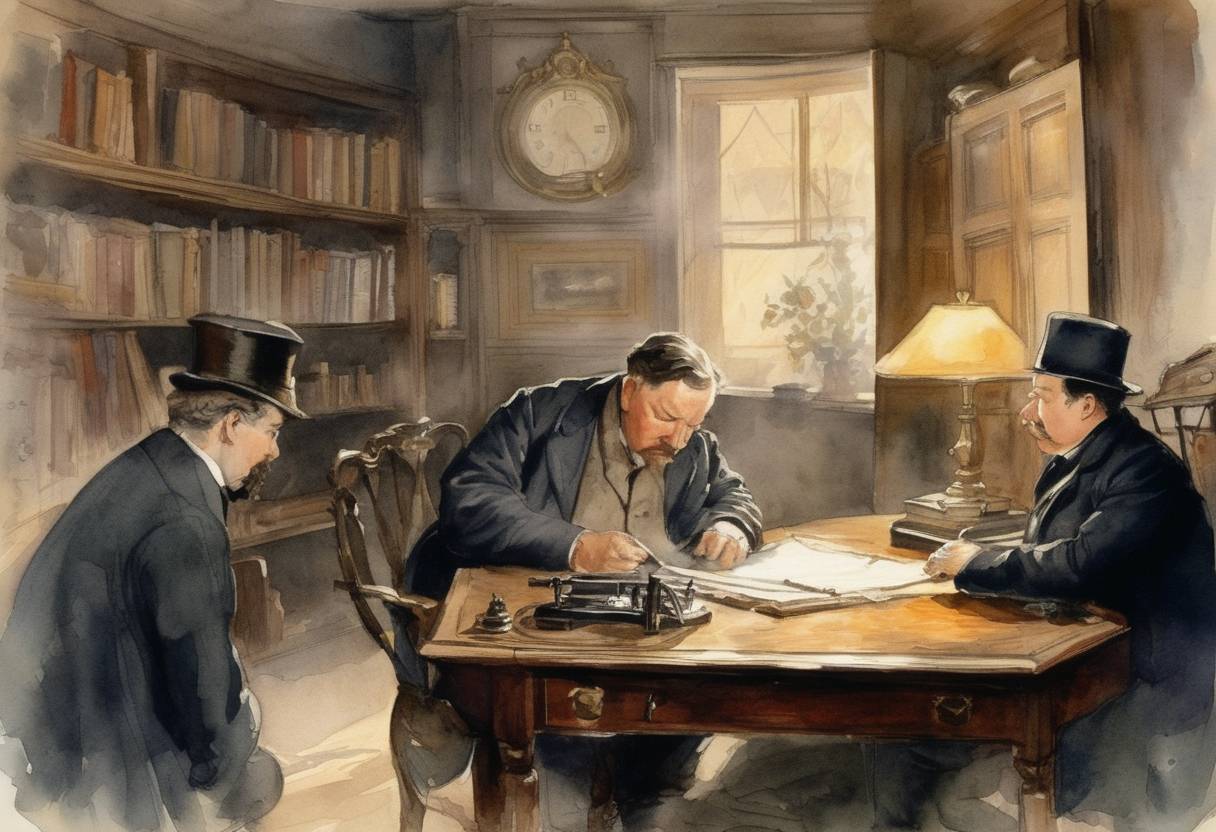
On June 27, 1890, Arthur Conan Doyle published his second Sherlock Holmes novel, The Sign of Four. This work is a fundamental piece in the canon of detective fiction and significantly expanded the depth of the genre. Written as a serialized story for the Lippincott’s Monthly Magazine, The Sign of Four built on the success of Doyle’s first Holmes novel, A Study in Scarlet, and cemented Sherlock Holmes as a prominent literary character.
The Sign of Four opens with Holmes exhibiting behaviors in stark contrast to modern norms, using cocaine to stimulate his mind in the absence of a case. Dr. John Watson, Holmes’s loyal companion, expresses his concerns, which sets the stage for Holmes’s analytical prowess once a new mystery emerges.
The story involves the enigmatic case of Mary Morstan, who seeks Holmes’s help to unravel the mystery behind her father’s disappearance, the receipt of six pearls, and an entrancing note suggesting possession of a secret treasure. The novel introduces formidable antagonists, explores themes of colonialism and betrayal, and takes readers from the streets of London to adventures involving treasure and a pact gone awry.
The Sign of Four not only continued to develop the distinct characteristics of detective literature, such as deductive reasoning and forensic science techniques, but it also introduced the personal dimension of Watson’s romantic entanglement, ending with his engagement to Mary Morstan.
The novel’s detailed exploration of motive, logical reasoning, and character intricacies serves as a foundation for many successive detective narratives, solidifying the formula that would influence countless authors in the genre.
Holmes’s portrayal challenged contemporary notions of justice and intellect, capturing the imagination of readers and establishing a blueprint for detective characters. Doyle’s ability to craft intricate plots with a keen eye for detail contributed to the perennial appeal of the Holmes stories.
The Sign of Four remains an essential reading for enthusiasts of detective stories, offering insights into Victorian society and issues of the time, while demonstrating Doyle’s skillful writing and storytelling brilliance. The global recognition of Sherlock Holmes as a cultural icon owes much to the suspense, depth, and artistry Doyle crafted in this notable publication.
Source: sherlockian-sherlock.com