The 1906 San Francisco Earthquake
1906 · San Francisco, United States
The 1906 San Francisco earthquake struck the coast of Northern California, causing widespread destruction and resulting in the deaths of an estimated 3,000 people.
January 7, 1857
The Fort Tejon earthquake, with an estimated magnitude of 7.9, shook Southern California. It was one of the most powerful earthquakes in the state's history.
Fort Tejon, United States
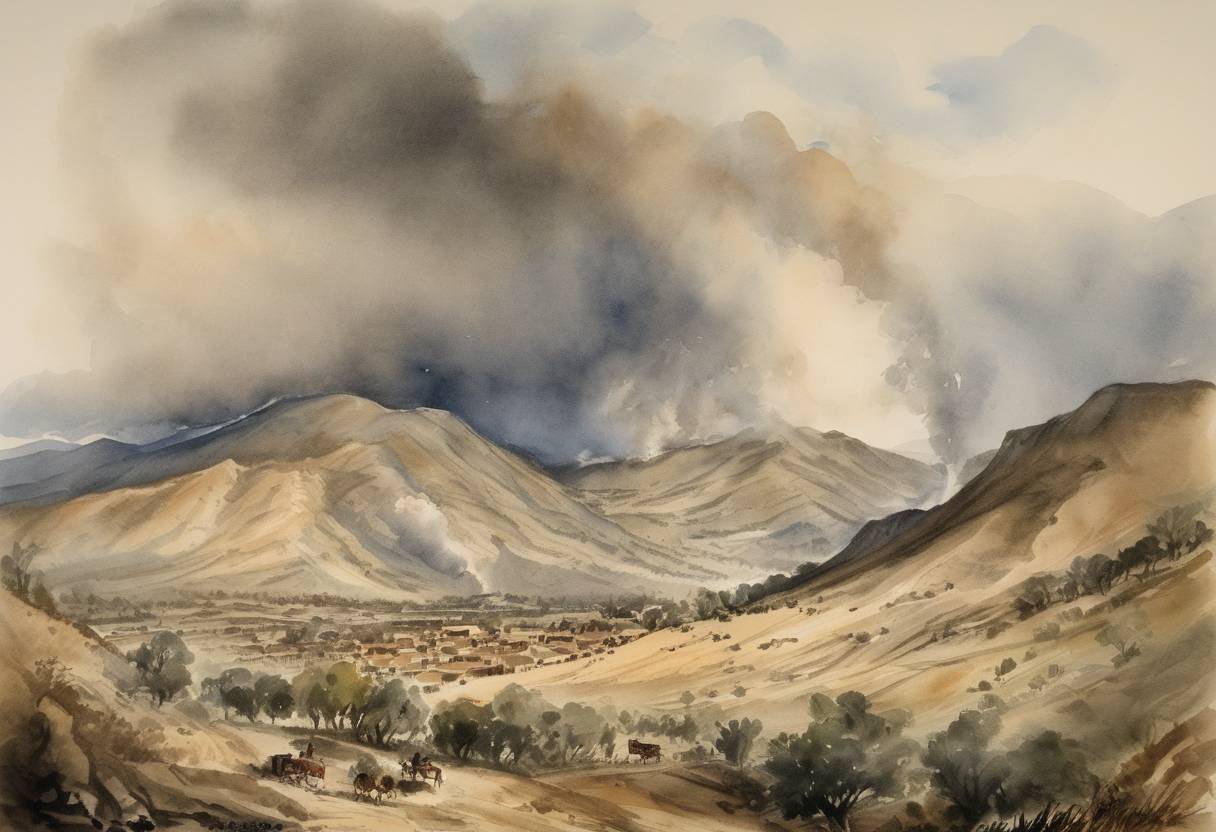
The Fort Tejon earthquake, occurring on January 7, 1857, is one of the most significant seismic events in the recorded history of California. Striking at approximately 8:20 AM local time, this earthquake had an estimated magnitude of 7.9, making it one of the most powerful to affect the region.
The earthquake originated along the San Andreas Fault, a major tectonic boundary between the Pacific Plate and the North American Plate. Specifically, the rupture began near Parkfield in Monterey County and propagated southeastwards for about 350 kilometers. This stretch of activity highlights the complex and dynamic nature of the fault line.
Despite its strength, the Fort Tejon earthquake resulted in relatively few casualties, with only two reported deaths. This low human toll was largely due to the sparsely populated nature of Southern California at the time. However, the quake inflicted considerable structural damage, particularly at Fort Tejon, a military outpost located approximately 100 kilometers north of Los Angeles. The fort experienced significant building collapses and structural failures.
The seismic activity also dramatically altered the landscape. The earthquake caused noticeable surface rupture and offset, with lateral displacements as large as 9 meters reported in some locations. This ground movement was visible in the form of surface fissures and scarps, providing a stark indication of the earth’s power.
The Fort Tejon earthquake is notable not only for its magnitude but also for the insights it provided into the behavior of the San Andreas Fault. Prior to this event, the fault’s potential to produce such powerful earthquakes was not fully understood. It served as an early wake-up call regarding the seismic vulnerability of the region, emphasizing the importance of understanding and preparing for natural disasters.
The earthquake is a significant reference point in the study of seismology. It helped establish a clearer understanding of fault mechanics and the magnitude potential of the San Andreas Fault. The event has been extensively studied in subsequent years, with findings contributing to earthquake preparedness efforts and advancements in the field of geoscience.
In summary, the Fort Tejon earthquake was a crucial event in the historical and scientific landscape of California. It underscored the seismic risks inherent to the region and laid the groundwork for future research and preparedness planning.
Source: earthquake.usgs.gov