The Rodney King Beating: March 3, 1991
1991 · Los Angeles, United States
The Rodney King beating by Los Angeles police officers is captured on video, leading to widespread public outcry and eventual riots.
April 29, 1992
The Los Angeles riots began, sparked by the acquittal of police officers involved in the beating of Rodney King.
Los Angeles, USA | Los Angeles Police Department
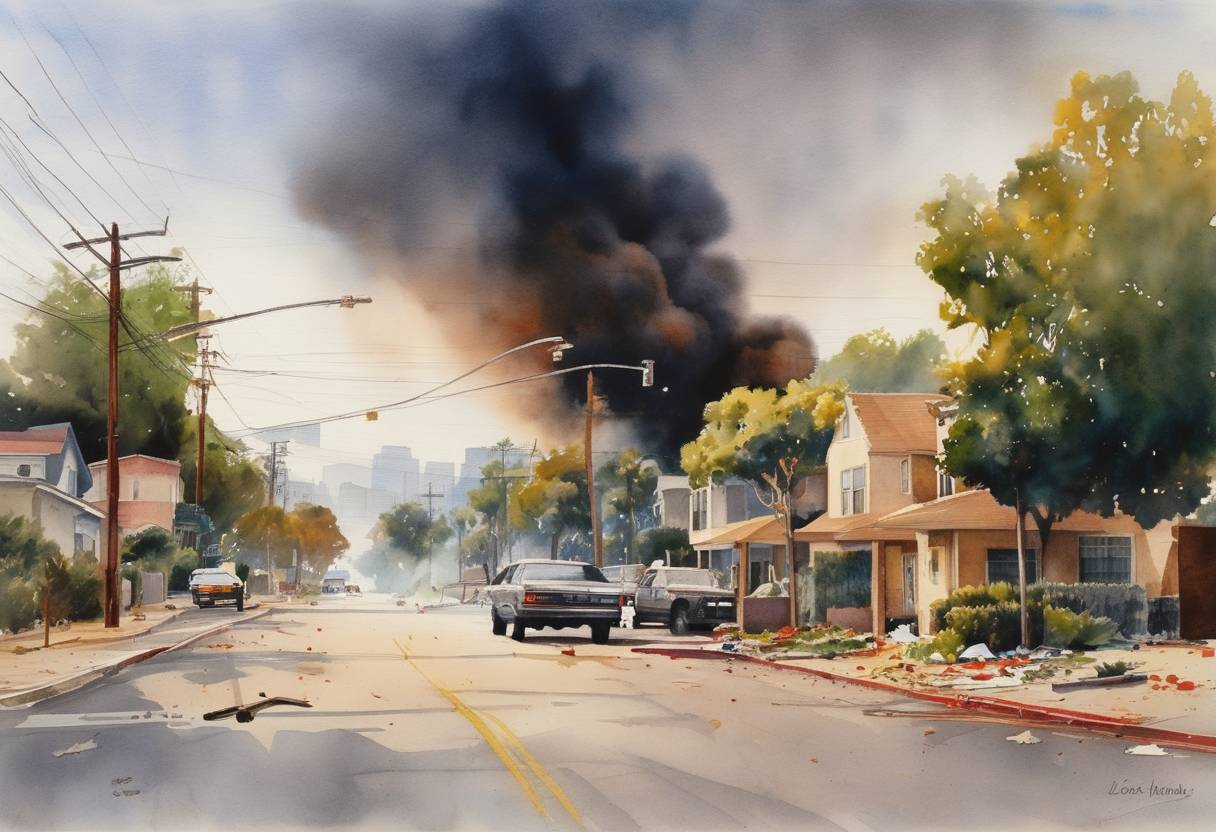
The Los Angeles riots of 1992 were a series of civil disturbances that erupted following the acquittal of four Los Angeles Police Department (LAPD) officers on April 29, 1992. These officers were involved in the brutal beating of African-American motorist Rodney King, an incident that was captured on videotape and had garnered significant nationwide attention. The footage, recorded by a bystander on March 3, 1991, showed the officers repeatedly striking King with batons, kicking him, and using excessive force after a high-speed chase.
On April 29, 1992, a predominantly white jury in a Simi Valley courtroom acquitted the four officers: Stacey Koon, Laurence Powell, Timothy Wind, and Theodore Briseno, of all charges related to the use of excessive force. The decision was met with widespread disbelief and outrage, particularly within the African-American community, who saw the verdict as a blatant miscarriage of justice and a symbol of systemic racism and police brutality.
The initial unrest began in South Central Los Angeles shortly after the verdict was announced. Incidents of looting, arson, and assaults rapidly escalated into a full-scale riot. Over the next six days, the violence spread throughout the city and neighboring communities. Widespread property damage occurred, with thousands of businesses looted or burned. The riots prompted a massive response from law enforcement and eventually required the deployment of the California National Guard, as well as federal troops and Marines, in an effort to restore order.
The riots had profound and lasting effects on Los Angeles and beyond. Efforts to rebuild the city commenced, but many areas took years to recover. Rodney King himself became an advocate for peace, famously pleading for harmony with his impassioned appeal: “Can we all get along?” The events also spurred changes in policing, including the hiring of a new police chief and the implementation of community policing initiatives.
The 1992 Los Angeles riots remain a pivotal moment in American history and continue to be studied as an example of racial tensions, the complexities of urban life, and the triggers of civil unrest. The legacy of the riots continues to influence dialogues about race, justice, and reform in contemporary society.
Source: www.history.com