The Concordat of Worms: Ending the Investiture Controversy
1122 · Worms, Holy Roman Empire
The Concordat of Worms was signed, ending the Investiture Controversy between the Papacy and the Holy Roman Empire.
March 1, 1076
The Synod of Worms rejected the validity of Gregory VII's papacy during the Investiture Controversy, a conflict between the papacy and secular European powers over the appointment of church officials.
Worms, Holy Roman Empire | Synod of Worms
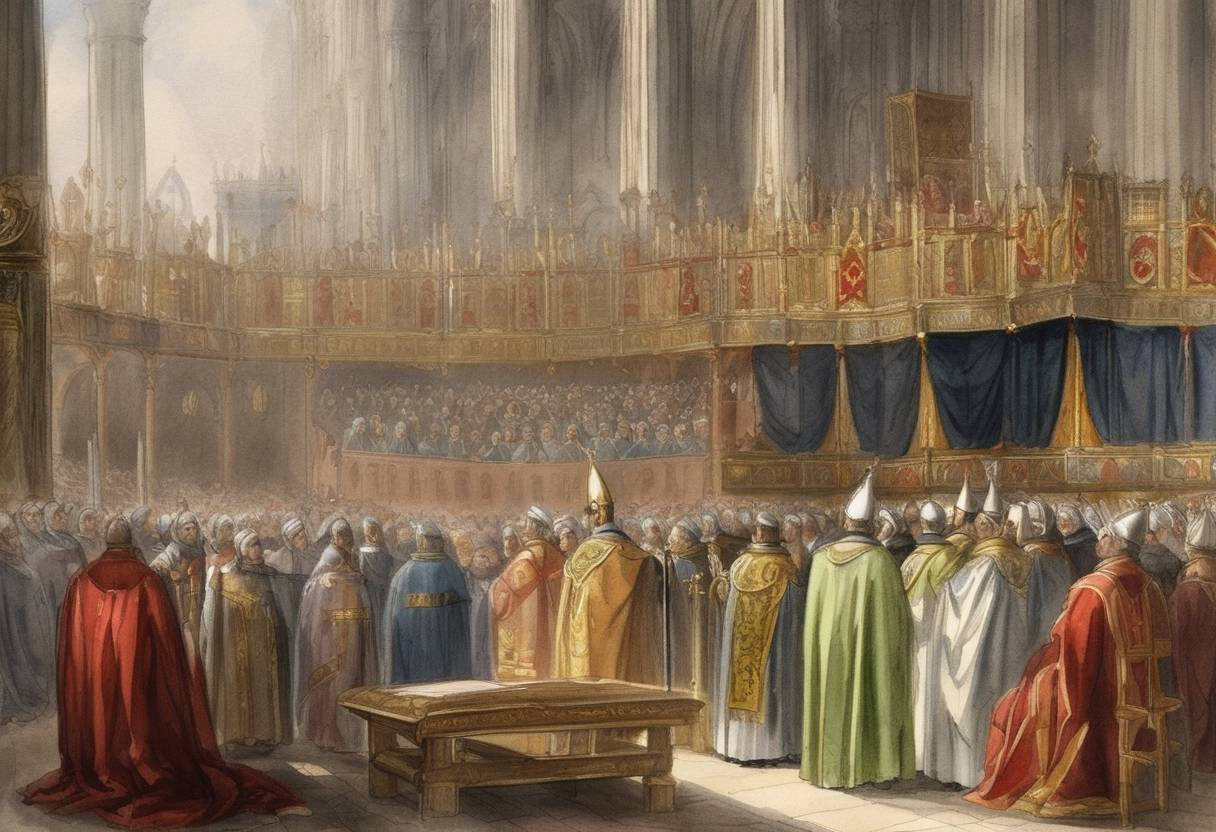
Background:
The Investiture Controversy was a significant conflict during the 11th and 12th centuries between the secular rulers of Europe and the papacy. This conflict centered on the issue of who held the authority to appoint church officials such as bishops and abbots. Traditionally, secular leaders, particularly the Holy Roman Emperor, had wielded substantial influence over these appointments. However, the push for reform within the Church sought to wrest control of these appointments from secular hands, asserting the autonomy of the ecclesiastical hierarchy.
The Synod of Worms, January 24, 1076:
On January 24, 1076, a decisive event in the Investiture Controversy unfolded at the Synod of Worms. The synod was a gathering of bishops and imperial officials convened by Henry IV, the Holy Roman Emperor, in the city of Worms, located in present-day Germany.
The primary action taken at this synod was the rejection and denunciation of Pope Gregory VII’s papacy. Henry IV and his supportive bishops accused Gregory VII of overstepping his powers and declared him deposed from the papal office. This declaration stemmed from Pope Gregory’s firm stance in favor of reforming church practices and restricting lay influence over ecclesiastical appointments, which directly challenged the traditional power of the Emperor.
Consequences and Aftermath:
The Synod of Worms was a bold maneuver by Henry IV, but it did not resolve the conflict. Instead, it exacerbated tensions, leading to a dramatic escalation. Pope Gregory VII responded to this denouncement by excommunicating Henry IV, which had significant religious and political repercussions. The excommunication released Henry’s subjects from their oaths of loyalty to him, thereby damaging his authority and prompting rebellions among his discontented nobles.
This confrontation culminated in the famous event at Canossa in 1077, where Henry IV was forced to make a penitential pilgrimage to seek absolution from Pope Gregory VII, symbolizing a temporary reconciliation. However, the broader conflict persisted for many more years. The Investiture Controversy ultimately concluded with the Concordat of Worms in 1122, which established a compromise between the papacy and the Holy Roman Empire regarding the appointment of bishops.
The Synod of Worms and the Investiture Controversy are pivotal because they signified a shift in the balance of power between the Church and the state, highlighting the growing assertion of papal authority and the challenges faced by secular rulers in maintaining traditional control over religious institutions.
Source: en.wikipedia.org