Wiley Post's Solo Flight Around the World
1933 · New York City, United States
Wiley Post became the first person to fly solo around the world, completing the journey in 7 days, 18 hours, and 49 minutes.
June 23, 1931
Wiley Post and Harold Gatty began their record-setting flight around the world, leaving from Roosevelt Field in New York.
New York City, United States | aviation endeavor
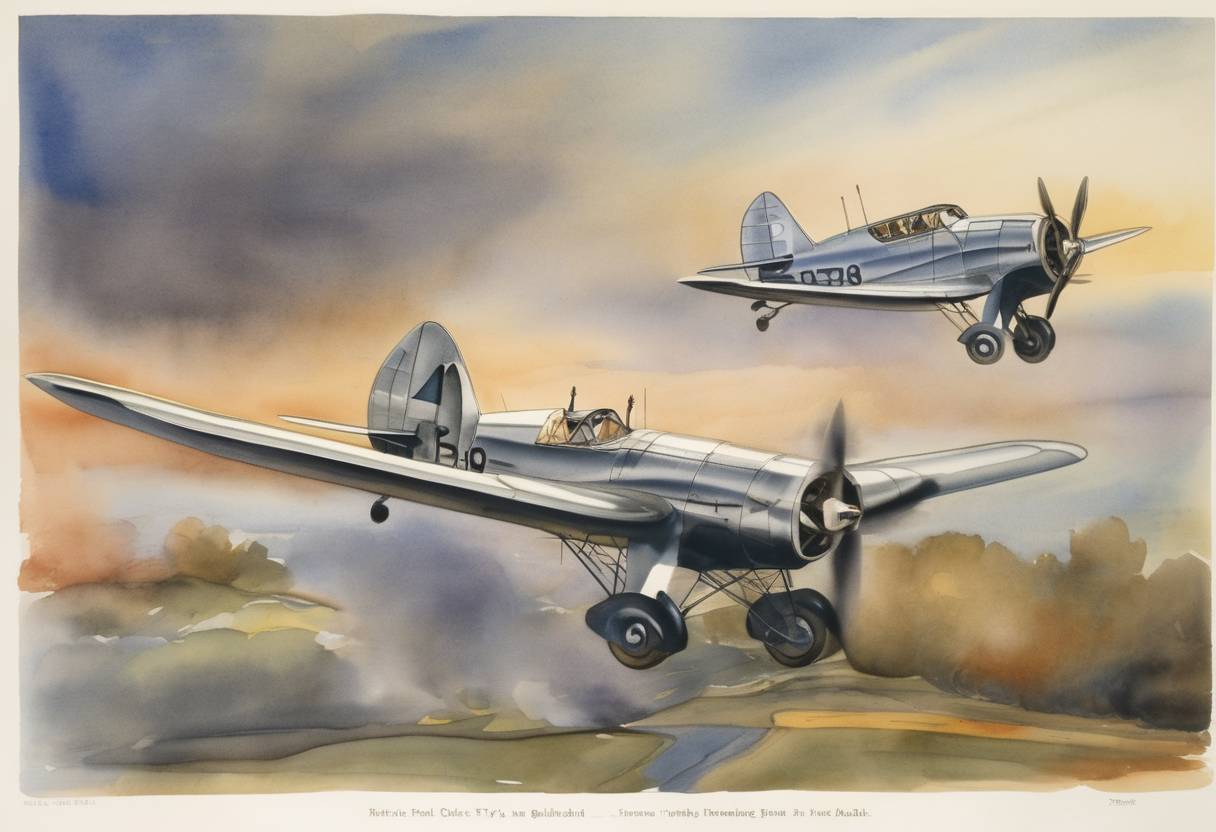
On June 23, 1931, Wiley Post, an aviator, and his navigator, Harold Gatty, embarked on a monumental journey to circumnavigate the globe. Departing from Roosevelt Field in New York, the duo aimed to break previous records for an around-the-world flight, an endeavor that captured public imagination and highlighted advancements in aviation technology and navigation techniques.
Wiley Post was already a renowned pilot, known for his keen interest in aviation innovation, while Harold Gatty was an experienced navigator, often referred to as the “Prince of Navigators.” Their collaboration was driven by Post’s ambition to showcase both their skills and the capabilities of their aircraft, the Lockheed Vega named the Winnie Mae. This aircraft was particularly noteworthy for its robust design and reliability, crucial factors in long-distance flights.
On the morning of June 23, as they lifted off from Roosevelt Field, Post and Gatty carried not only the hopes of setting a new speed record but also a heavy load of supplies and equipment necessary for their extensive journey. Their route was meticulously planned and was to take them eastward across the Atlantic Ocean, over Europe, and through Asia, before traversing the Pacific Ocean and concluding back in the United States.
This event marked a significant point in aviation history. At a time when flight was still emerging as a viable means of long-distance travel, such pioneering efforts demonstrated the feasibility of global air travel. Additionally, it underscored the importance of accurate navigation in aviation, as they relied on dead reckoning, celestial navigation, and other innovative techniques to maintain their course—a testament to Gatty’s navigation prowess and Post’s piloting skills.
Post and Gatty completed their groundbreaking flight on July 1, 1931, setting a record time of 8 days, 15 hours, and 51 minutes for their around-the-world journey. This achievement not only set a new benchmark for future aviators but also significantly contributed to the advancements in navigational charts and flight planning.
Their record-setting flight around the world was celebrated as a triumph of human ingenuity and determination, inspiring subsequent generations of explorers and aviators to push the boundaries of what was considered possible in the realm of air travel.
Source: en.wikipedia.org