Creation of the United States Coast Guard - January 28, 1915
1915 · Washington, D.C., United States
The United States Coast Guard is created as a branch of the United States Armed Forces.
February 12, 1899
The Congress granted permission for freemen of color to serve in the United States military after the end of the Spanish-American War.
Washington, D.C., United States | United States Congress
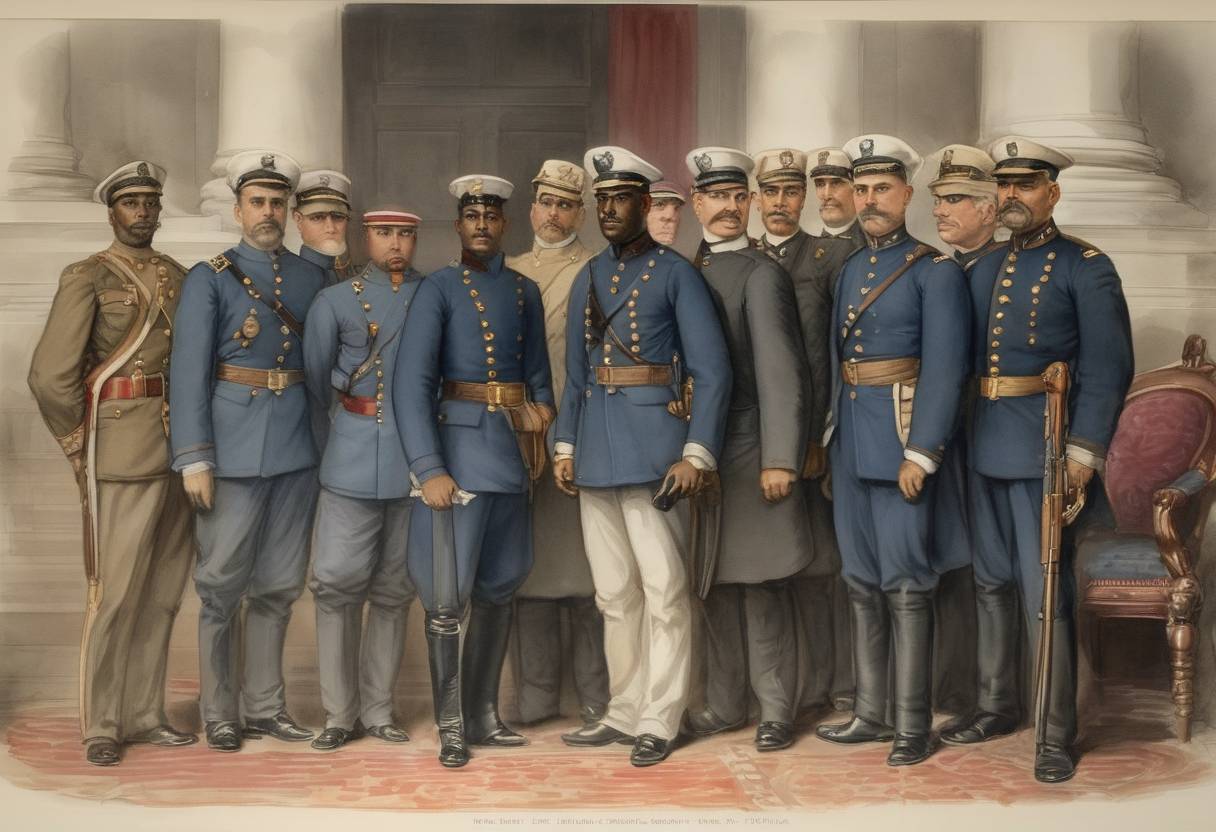
On February 12, 1899, the United States Congress took a significant step in addressing racial inclusivity within its military forces post the Spanish-American War. Following the conclusion of the war, Congress officially permitted freemen of color, specifically African Americans, to serve as enlisted personnel within the United States military. This move marked an important moment in both military and civil rights history.
The Spanish-American War, fought between April and August 1898, was a brief conflict that resulted in the U.S. gaining control over former Spanish territories such as the Philippines, Guam, and Puerto Rico. During the war, African American soldiers, known as Buffalo Soldiers, played a crucial role in the conflict, despite facing significant racial discrimination.
Prior to this, African Americans faced numerous restrictions and segregation within the military. The battles they fought in Cuba, Puerto Rico, and the Philippines demonstrated valor and capability, but their contributions were downplayed due to prevailing racial prejudices.
The decision made by Congress on February 12, 1899, to permit freemen of color to officially enroll as soldiers was a legislative acknowledgment of the contributions African Americans had made during the recent conflict. This was not only a reaction to their military service but also a reflection of the broader social changes and the early momentum of the civil rights movement, which would gain further traction in the 20th century.
This decision was pivotal in increasing the military roles available to African Americans and continuing their involvement in national defense efforts in a more recognized and structured capacity.
While this move by Congress did not eliminate racial discrimination in the military, it did lay groundwork for further integration and set a precedent for the eventual desegregation of the U.S. armed forces. This would come to fruition with President Harry S. Truman’s Executive Order 9981 in 1948, officially desegregating the military and mandating equal treatment and opportunity for all personnel.
The Congressional authorization on February 12, 1899, thus stands as an early, although limited, victory in the long struggle for racial equality and set the stage for future legislative and social advances.
Source: history.state.gov