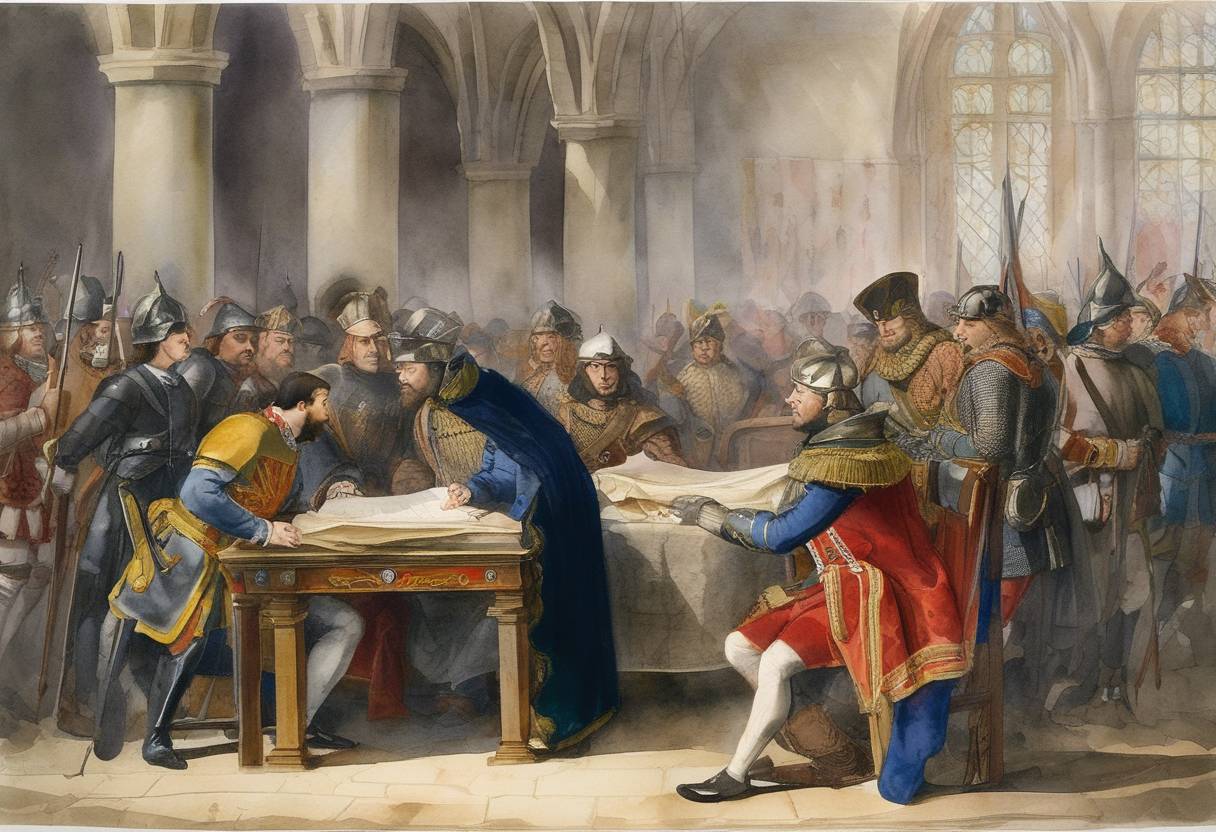
The Treaty of Brétigny and the Events of September 8, 1363
The Treaty of Brétigny, initially signed on May 8, 1360, during the Hundred Years’ War, was a pivotal agreement between England and France. As a result, significant territorial and political concessions were instituted to bring about a temporary cessation of hostilities between the two nations. On September 8, 1363, a notable event occurred when King John II of France returned to English custody, reaffirming the treaty’s terms which had been challenged by various circumstances.
Context and Background
The Hundred Years’ War, fought from 1337 to 1453, primarily between the kingdoms of England and France, was a protracted series of conflicts that arose due to territorial disputes and claims to the French throne by the English monarchy. The early phase of the war was marked by significant English victories, such as the Battle of Crécy (1346) and the capture of King John II of France at the Battle of Poitiers (1356).
The Treaty of Brétigny
Negotiated in the aftermath of English military successes, the Treaty of Brétigny aimed to establish a more lasting peace. It granted England substantial territories in France, including Aquitaine, Gascony, and Calais, without requiring homage to the French crown. In return, Edward III renounced his claim to the French throne, a symbolic yet significant concession. Additionally, a hefty ransom was stipulated for the release of King John II, leading to his return to France in 1360 and the arrangement of hostages to ensure payment.
Events of September 8, 1363
The negotiation dynamics shifted when, due to financial and political pressures on France, King John II voluntarily returned to English captivity on September 8, 1363. This remarkable demonstration of honor and commitment to the treaty terms underscored the tensions between maintaining royal dignity and managing domestic backlash against the treaty’s stipulations. His decision was precipitated by the failure of his son, Louis of Anjou, to honor the hostage commitments he had pledged.
Consequences and Significance
Despite the intentions of the Brétigny Treaty, its terms proved to be unstable and faced resistance from both English and French nobles, as well as logistical difficulties in fulfilling the agreed terms. The tensions and unresolved issues from the treaty contributed to the resumption of hostilities a decade later, marking the commencement of the war’s second phase. This period of the Hundred Years’ War highlighted the complexities of dynastic politics and the challenges of enforcing treaties in medieval Europe.
The event of King John II’s return to English captivity on September 8 stands as a testament to the personal honor and political intricacies that characterized medieval diplomacy, further illustrating the turbulent nature of the era.