Establishment of the Second French Empire: Napoleon III
1852 · Paris, France
Louis-Napoléon Bonaparte declared himself Emperor Napoleon III, establishing the Second French Empire.
May 30, 1814
The First Treaty of Paris was signed, ending the War of the Sixth Coalition and restoring the Bourbon monarchy in France with Louis XVIII as king. The treaty defined France's borders and reduced its size to those of 1792.
Paris, France | Allied powers, Bourbon monarchy
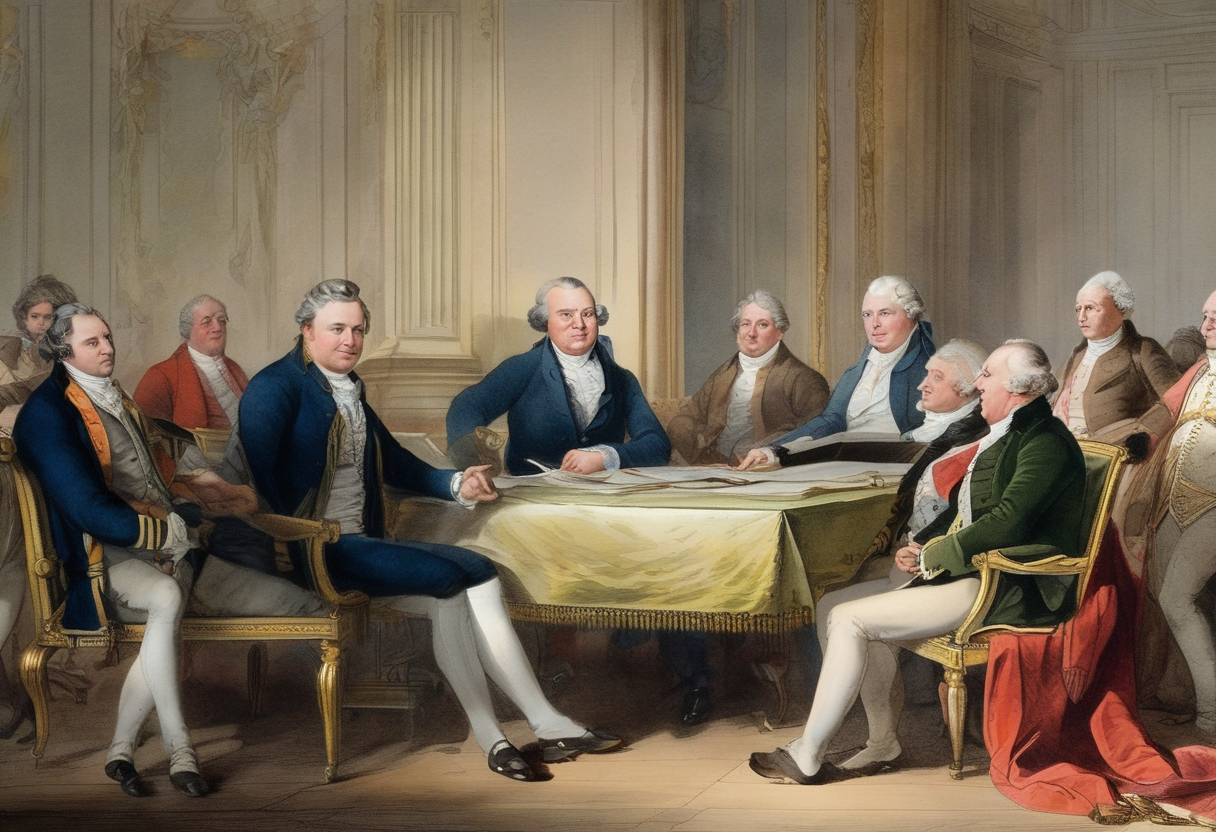
The First Treaty of Paris, signed on May 30, 1814, marked a pivotal moment in European history by formally concluding the War of the Sixth Coalition. This multinational conflict had seen several European powers unite against Napoleon Bonaparte’s France, ultimately leading to his defeat and the end of his rule.
After the disastrous retreat from Moscow in 1812 and subsequent defeats in 1813 and 1814, Napoleon’s hold on Europe weakened significantly. The Sixth Coalition, including major powers such as Britain, Russia, Prussia, and Austria, pushed forward to reclaim territories under French control. In April 1814, Napoleon abdicated, retreating to the island of Elba, thus paving the way for the restoration of the Bourbon monarchy.
The First Treaty of Paris outlined several key terms:
Restoration of the Bourbon Monarchy: The treaty reinstated Louis XVIII as the King of France. The Bourbon monarchy had been displaced since the early stages of the French Revolution.
Territorial Adjustments: France’s borders were rolled back to those of 1792, prior to the Revolutionary Wars. This adjustment significantly reduced France’s influence and mitigated its territorial expansion under Napoleon.
Loss of Influence: France relinquished various European territories but was allowed to keep colonies it had possessed prior to the Napoleonic Wars, with specific exceptions that benefitted the victors.
Congress of Vienna: The treaty laid the groundwork for the Congress of Vienna (1814-1815), where European powers sought to establish a balance of power and long-term peace in Europe. It reassessed many territorial claims, aiming to prevent future conflicts.
Napoleon’s Hundred Days: Despite the treaty’s attempts at stabilizing Europe, Napoleon managed a brief return to power in 1815, an episode known as the Hundred Days. His defeat at the Battle of Waterloo led to the signing of a second Treaty of Paris that year, with harsher terms for France.
Legacy: The First Treaty of Paris was crucial in re-establishing monarchical order in Europe after the chaos of the Napoleonic era and in guiding the diplomatic landscape of 19th-century Europe. It heralded a period of relative stability, known as the Concert of Europe, which lasted until the outbreak of World War I.
The signing of this treaty not only marked the end of a significant military struggle but also demonstrated the complexities of diplomatic negotiations needed to restore peace in a continent that had been torn apart by decades of warfare.
Source: en.wikipedia.org