Oklahoma Becomes the 46th State of the United States
1907 · Guthrie, United States
Oklahoma becomes the 46th state of the United States.
September 16, 1893
Settlers made their first run into the Cherokee Strip land in what is now part of the U.S. state of Oklahoma.
Cherokee Strip, United States
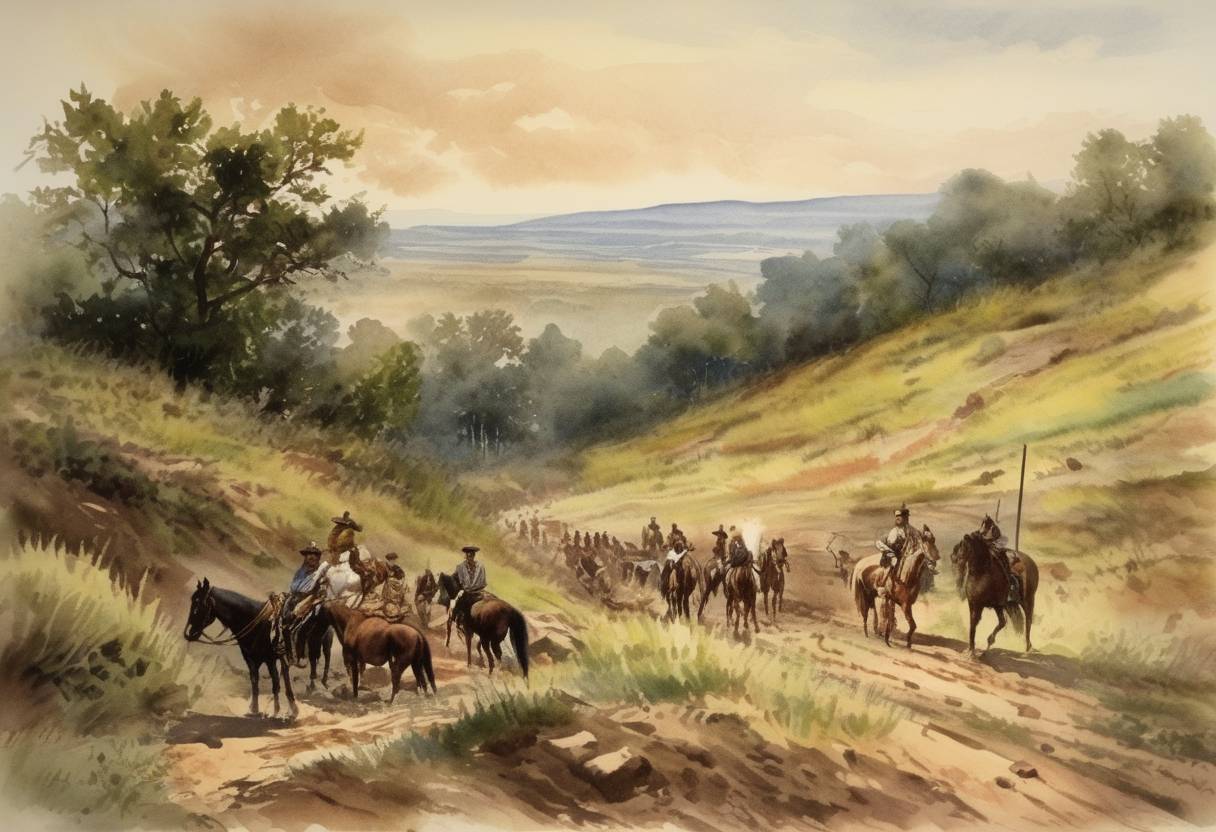
The Cherokee Strip Land Run, which took place on September 16, 1893, was a pivotal event in the history of American westward expansion and settlement. This massive land rush occurred in an area often referred to as the “Cherokee Outlet,” located in present-day Oklahoma.
The Cherokee Outlet, commonly called the “Cherokee Strip,” was a stretch of land that the Cherokee Nation had acquired under a treaty. Although it was originally meant to serve as a buffer between the Cherokee Nation and the lands of the western Plains tribes, the increasing pressure from settlers and the U.S. government eventually led to its sale. In 1893, the U.S. government purchased the land from the Cherokee Nation, clearing the way for settlement by non-Native Americans.
At precisely noon on September 16, 1893, an estimated 100,000 participants eagerly awaited the sound of a signal to begin the rush into the Cherokee Strip. This event marked one of the largest land runs in U.S. history, during which settlers raced to claim roughly six million acres of land available for homesteading. Participants arrived on horseback, by wagon, and even on foot, each eager to establish their homesteads on plots ranging from 160 acres for farms to smaller parcels in urban areas.
The chaotic nature of the rush led to immediate and significant consequences. Disputes over land claims were common, as individuals contested who arrived at specific plots first. The establishment of new towns happened almost overnight, with provisional governments quickly set up to govern these burgeoning communities. These developments underscored the rapid and often tumultuous process of American settlement and development in the late 19th century.
The Cherokee Strip Land Run stands as a critical moment in the broader context of American expansionism, reflecting the intense demand for land and the government’s role in facilitating westward movement. The land run also highlighted the complex interactions between Native American tribes and the U.S. government, as land treaties and sales often came at the cost of Native American sovereignty and territory.
In summary, the Cherokee Strip Land Run of 1893 was a transformative event that not only shaped the settlement patterns of present-day Oklahoma but also illustrated the broader dynamics of land acquisition and settlement in the United States during this period.
Source: www.okhistory.org