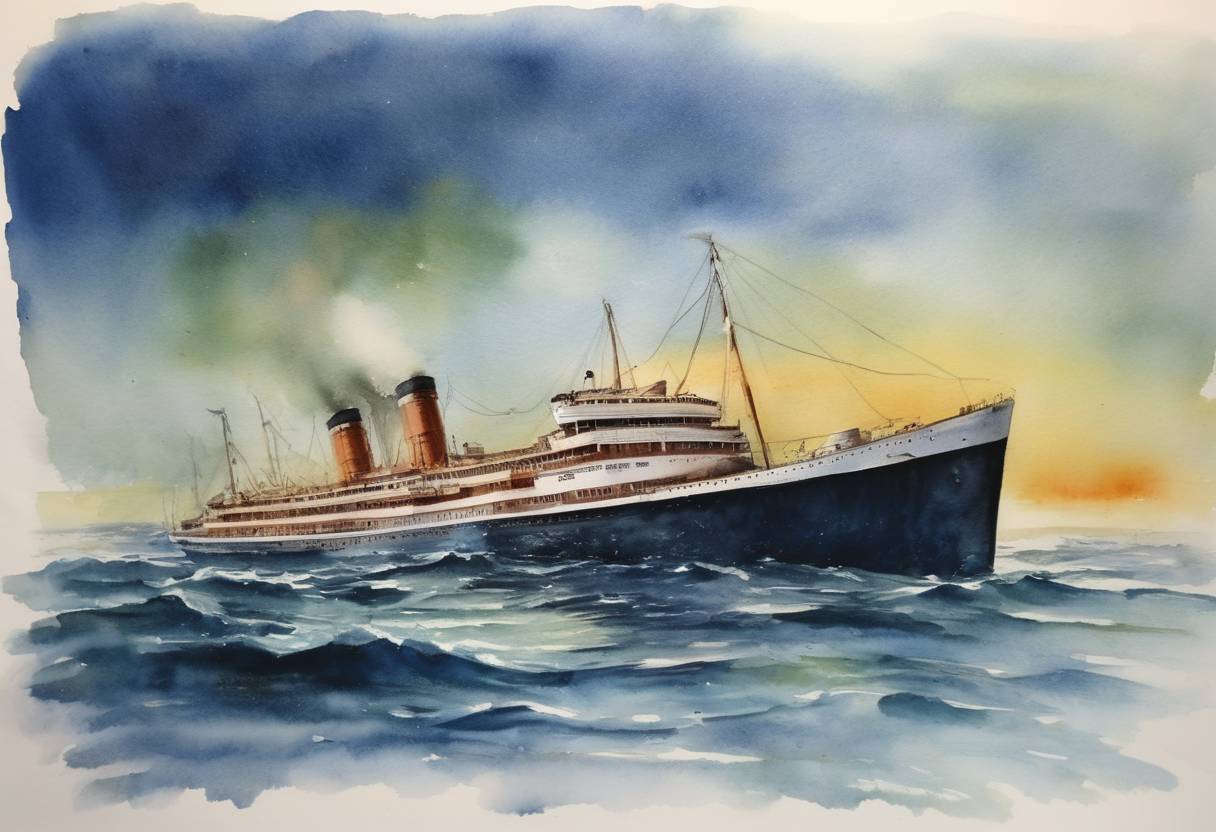
Incident Overview: The Sinking of SS Andrea Doria
On July 25, 1956, the Italian ocean liner SS Andrea Doria collided with the Swedish vessel MS Stockholm off the coast of Nantucket, Massachusetts, shortly before midnight (GMT). This catastrophic event resulted in the capsizing and eventual sinking of the Andrea Doria, marking one of maritime history’s most infamous disasters.
Collision and Sinking
- Time and Location: The collision occurred in dense fog roughly 50 miles off the coast of Nantucket, Massachusetts.
- Vessels Involved: The Italian liner SS Andrea Doria was en route to New York City, while the Swedish MS Stockholm was traveling eastbound towards Gothenburg.
- Impact Dynamics: The MS Stockholm’s reinforced ice-breaking bow struck the Andrea Doria’s starboard side, creating a massive gash that flooded several of its watertight compartments.
- Casualties: Out of the 1,706 passengers and crew aboard the Andrea Doria, 46 lost their lives during the incident. The Stockholm suffered 5 fatalities among its crew.
Rescue Operations
- Response Efforts: Despite the fog, a swift and well-coordinated rescue operation ensued, with nearby ships, including the SS Île de France, responding to distress calls.
- Evacuation: Lifeboats and life rafts were deployed, and the majority of passengers were evacuated safely, largely due to the crew’s and rescuers’ efforts.
- Time to Sink: The Andrea Doria remained afloat for approximately 11 hours, finally succumbing to the sea on the morning of July 26, which provided crucial time for successful evacuations.
Investigation
- Findings: Investigations revealed that both vessels were at fault due to navigational errors and misinterpretations of radar readings. The heavy fog compound these mistakes.
- Radar Technology: Post-accident analysis brought a spotlight on the limitations and mismanagement of radar technology, which both ships had relied upon heavily under poor visibility conditions.
Salvage and Legacy
- Salvage Operations: Efforts to salvage the ship and its valuable artwork and cargo continued for years but were challenged by the ship’s depth and deterioration.
- Long-term Effects: The disaster expedited changes in maritime safety regulations, including improvements in radar use and ship design for passenger safety.
- Implications for Trans-Atlantic Travel: The sinking underscored the decline of ocean liner travel as air transportation became more prevalent and preferred.
Broader Historical Context
- The Andrea Doria’s sinking heralded the end of the golden age of trans-Atlantic ocean liners, reinforcing a shift towards aviation as the dominant mode of international travel.
- The incident remains significant in maritime history for both its dramatic human impact and the subsequent regulatory and technological advances that it spurred in the industry.