Opening of the Blackwall Tunnel
1897 · London, United Kingdom
The Blackwall Tunnel under the River Thames is officially opened in London by the Prince of Wales (the future King Edward VII).
December 27, 1871
The world's first Cat Show is organized by Harrison Weir and takes place at the Crystal Palace in London, highlighting the growing interest in domestic cats as companion animals and marking an important step in the formal recognition of various cat breeds.
London, United Kingdom | Crystal Palace
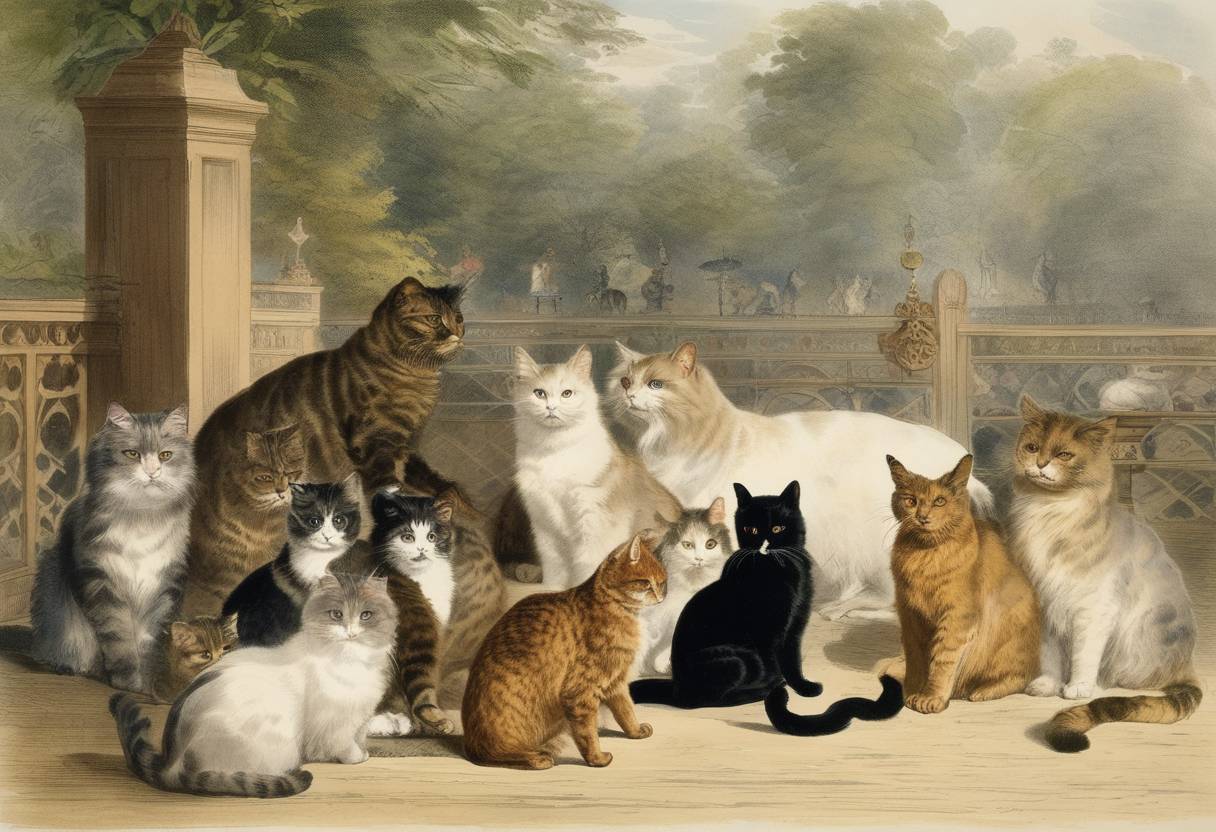
On December 27, 1871, the world’s first organized cat show took place at the iconic Crystal Palace in London. This event marked a significant milestone in the formal recognition of various cat breeds and demonstrated the growing interest in domestic cats as companion animals during the Victorian era.
The show was orchestrated by Harrison Weir, a respected artist and animal enthusiast known for his love of cats. Weir not only organized but also designed and judged the show, bringing attention to the artistic and social appeal of these animals. During the 19th century, domestic cats began to emerge as favored pets within the middle and upper classes in England, shifting from simply utilitarian roles—such as controlling vermin—to beloved household companions.
Held in the grandeur of the Crystal Palace, the event attracted significant attention and was a pioneering venture in the exhibition of cats. This location, renowned for hosting various exhibitions and fairs, provided an impressive backdrop to showcase the beauty and diversity of felines. Cats competing in the show were judged on criteria such as appearance, demeanor, and overall health, which would later influence the standards for specific cat breeds.
The inaugural cat show not only brought attention to the aesthetic qualities of cats but also set the stage for the formalization of cat breeding practices. It encouraged the differentiation and standardization of cat breeds—such as the Persian, Siamese, and British Shorthair—some of which were displayed at this first show. By promoting a deeper appreciation for the variety and characteristics of different breeds, the event contributed to the evolution of modern cat breeding and elevated the status of cats as cherished pets.
In the years following the first show, cat exhibitions became increasingly popular, leading to the formation of cat fancier societies and contributing to the establishment of breed standards and registries. Today, cat shows continue to be a popular and widely respected tradition around the world, reflecting the enduring impact of the groundbreaking exhibition organized by Harrison Weir.
The 1871 cat show at the Crystal Palace stands as a landmark event in the history of feline domestication and the broader cultural embrace of cats as companions, paving the way for their revered status in households across the globe.
Source: en.wikipedia.org