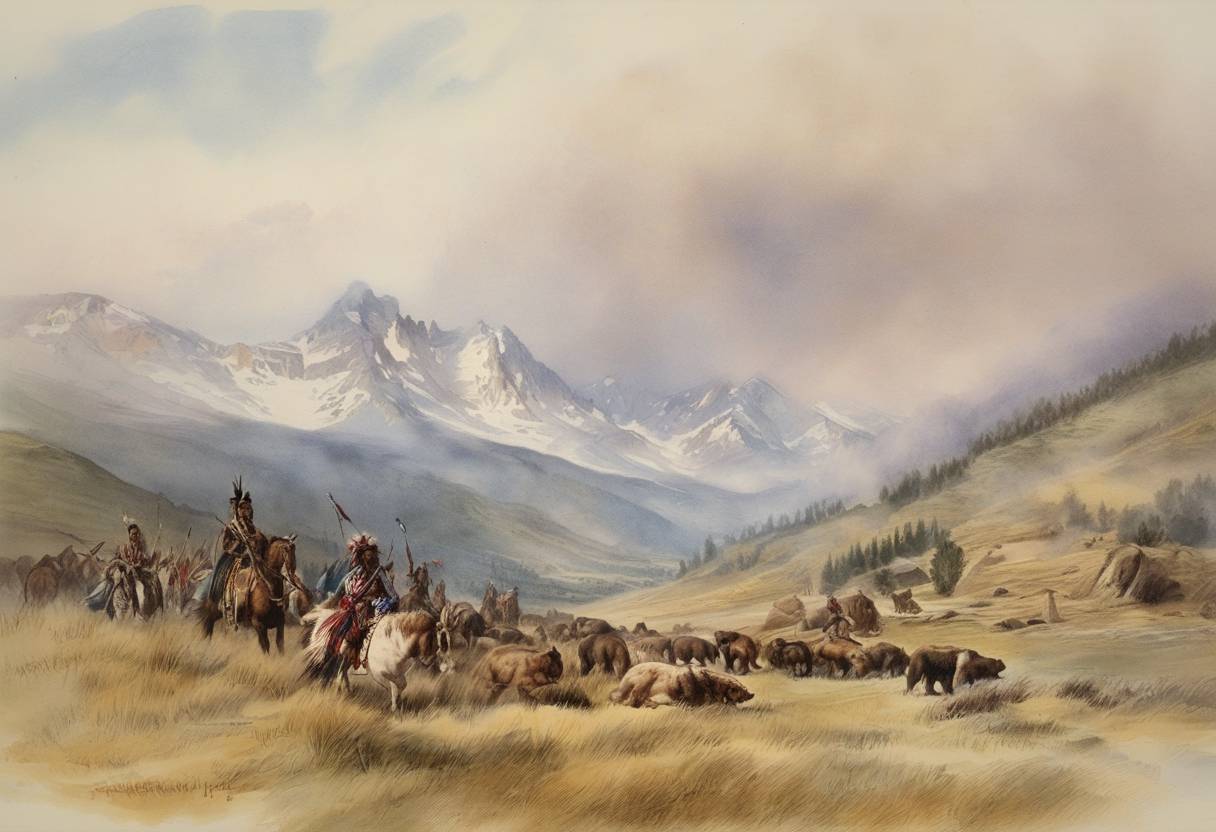
Chief Joseph Surrenders: The Conclusion of the Nez Perce War
On October 5, 1877, the Nez Perce War reached its conclusion when Chief Joseph and the Nez Perce tribes surrendered to U.S. Army forces in the Bear Paw Mountains of Montana. This marked the end of a four-month conflict between the U.S. government and the Nez Perce, a Native American tribe that had been resisting forced relocation from their ancestral homelands in the Pacific Northwest.
The Nez Perce War
The Nez Perce War began in June 1877, spurred by growing tensions over land disputes in Oregon, Idaho, and Washington. The U.S. government sought to confine the Nez Perce to a reservation in Idaho, significantly smaller than their traditional territory. Exploiting the tribe’s internal divisions and the pressure to cede more land, the situation escalated into violence.
Under leaders such as Chief Joseph, Looking Glass, and White Bird, about 700 Nez Perce embarked on a strategic retreat across the northwest regions of the United States. Their initially successful skirmishes gained them sympathy across the country and displayed their military prowess.
Surrender and Chief Joseph’s Speech
After a long and arduous journey over 1,170 miles that included several successful engagements against pursuing U.S. forces, the Nez Perce were finally cornered near the Canadian border. Starved, cold, and outnumbered, Chief Joseph chose to surrender.
Chief Joseph’s surrender is most poignantly remembered through his purported speech, where he declared, “I am tired of fighting. Our chiefs are killed… It is cold, and we have no blankets; the little children are freezing to death… From where the sun now stands I will fight no more forever.” These words have resonated as a symbol of Native American resistance and resignation to overwhelming odds.
Aftermath
Following the surrender, promises made to the Nez Perce were not honored. They were relocated to reservations in Indian Territory, present-day Oklahoma, far from their homeland. Chief Joseph continued to advocate passionately for his people’s return to their native lands until his death in 1904. The Nez Perce War and the actions of Chief Joseph remain significant in highlighting the struggles and resilience of Indigenous peoples in the United States during the era of westward expansion.