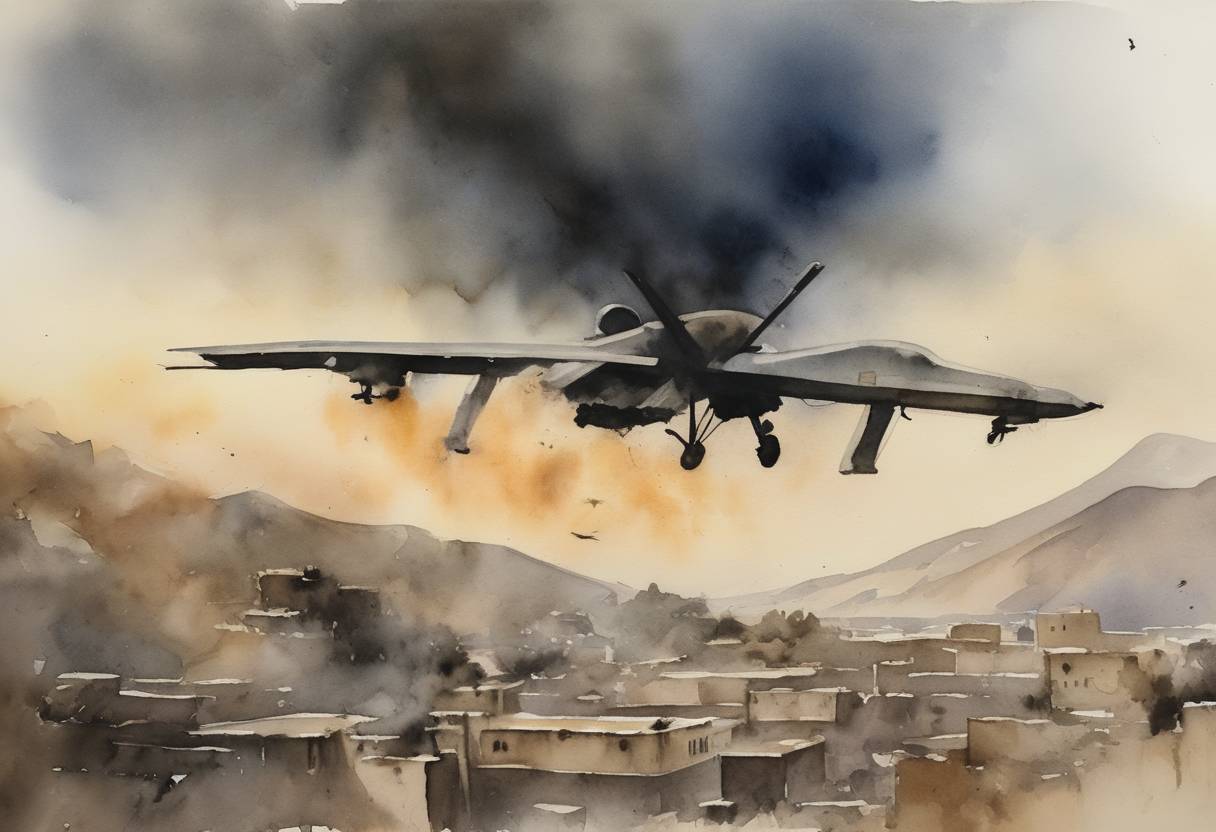
The U.S. Drone Strike in Kabul - August 28, 2021
On August 28, 2021, the United States conducted a drone strike in Kabul, Afghanistan, specifically targeting an alleged accomplice of the ISIS-K group, following the devastating bombing at Hamid Karzai International Airport that occurred two days prior. This military action was part of a rapid response to the attack on the Kabul airport on August 26, which involved a suicide bomber that claimed the lives of 13 U.S. service members and over 170 Afghan civilians.
Context
ISIS-K (Islamic State Khorasan Province): This regional affiliate of ISIS has been active in Afghanistan and was responsible for the August 26 airport attack. Known for its brutal tactics and opposition to the U.S. and Taliban, ISIS-K has sought to destabilize the Afghan government and regional security.
U.S. Response to the Kabul Attack: Following the suicide bombing, the U.S. military and intelligence agencies swiftly worked to identify those responsible. The August 28 drone strike was part of a broader counterterrorism strategy to target ISIS-K leaders and operatives who posed an imminent threat to American forces and the ongoing evacuation efforts at Hamid Karzai International Airport.
The Strike
Location and Target: The strike was executed in a Kabul neighborhood identified as a hub for potential ISIS-K activity. The objective was to eliminate a suspected planner involved in planning future attacks against evacuation operations at the airport.
Immediate Aftermath: While the U.S. Department of Defense initially reported the strike as a success against its intended target, subsequent reports and investigations raised concerns over the accuracy of intelligence and the possibility of civilian casualties.
Consequences and Analysis
Civilian Casualties: Early reports suggested potential collateral damage involving civilians, including children, which sparked international concern and scrutiny over U.S. drone strike practices and intelligence assessments.
Impact on U.S. Withdrawal: The strike and the preceding airport attack underscored the volatility in Kabul during the final phase of the U.S. military withdrawal from Afghanistan, scheduled to conclude by August 31, 2021. They highlighted the challenges faced by U.S. forces in ensuring the safe evacuation of American citizens and Afghan allies amid escalating threats.
Broader Historical Implications: The events drew significant political and public scrutiny over U.S. military strategies in Afghanistan and the broader implications for regional security. They intensified debates about the efficacy and ethics of drone warfare in counterterrorism operations.
In conclusion, the August 28 drone strike in Kabul was emblematic of the complex and rapidly evolving security challenges in Afghanistan during the final days of the U.S. military presence, raising important questions about future U.S. engagement and the humanitarian impact of military actions in conflict zones.