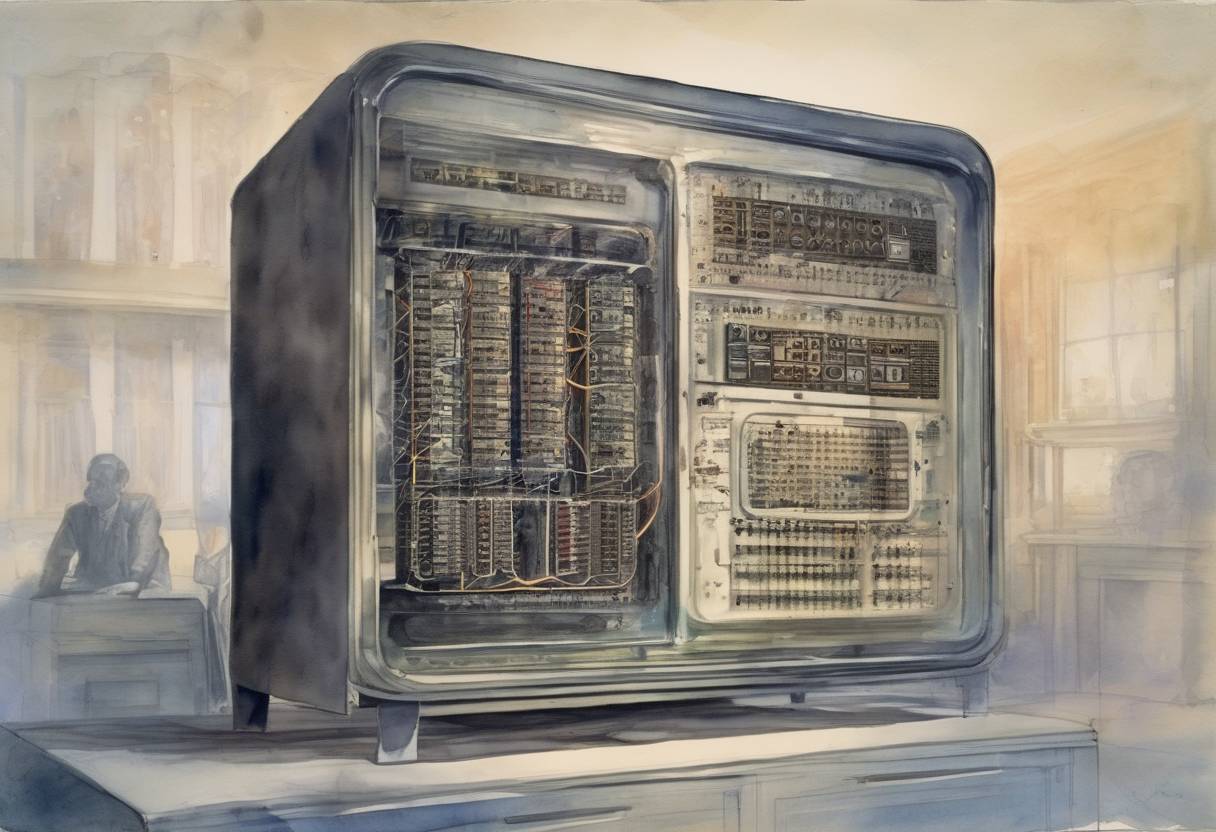
On June 14, 1951, the UNIVAC I (Universal Automatic Computer I) was officially unveiled in Philadelphia, marking a significant milestone in the history of computing. Developed by J. Presper Eckert and John Mauchly, who were also the creators of the ENIAC, the UNIVAC I was the first commercially produced computer in the United States.
Background
- Development Team: The UNIVAC I was developed by the Eckert-Mauchly Computer Corporation, which was later acquired by Remington Rand in 1950.
- Purpose: The computer was designed to handle both numerical and textual information, making it suitable for business and government applications.
Technical Specifications
- Architecture: The UNIVAC I was a large-scale, vacuum tube-based computer.
- Components: It utilized over 5,000 vacuum tubes and weighed approximately 16,000 pounds.
- Memory: The machine had a memory capacity of 1,000 words, with each word being 12 characters long.
- Input/Output: It used magnetic tape for input and output, which was a novel feature at the time.
Key Events on June 14, 1951
- Demonstration: The UNIVAC I was demonstrated to the public and the press at the Remington Rand headquarters in Philadelphia.
- First Client: The first UNIVAC I was delivered to the United States Census Bureau, which used it to process data from the 1950 census.
Significance and Impact
- Commercial Computing: The UNIVAC I’s unveiling marked the beginning of the commercial computer era, paving the way for future developments in the industry.
- Influence on Business: It demonstrated the potential of computers to revolutionize data processing in business and government sectors.
- Legacy: The success of the UNIVAC I led to the development of subsequent models and inspired other companies to enter the computer market.
Aftermath
- Market Expansion: Following the UNIVAC I, several other companies began developing commercial computers, leading to rapid advancements in technology.
- Cultural Impact: The UNIVAC I gained public attention when it correctly predicted the outcome of the 1952 U.S. presidential election, showcasing its computational power.
The unveiling of the UNIVAC I was a pivotal moment in technological history, setting the stage for the widespread adoption of computers in various fields and industries.