Joan of Arc Arrives to Relieve the Siege of Orléans
1429 · Orléans, France
Joan of Arc arrives to relieve the Siege of Orléans during the Hundred Years' War.
July 17, 1453
The French, led by Joan of Arc, achieved a decisive victory at the Battle of Castillon, effectively ending the Hundred Years' War.
Castillon-la-Bataille, France | French Army
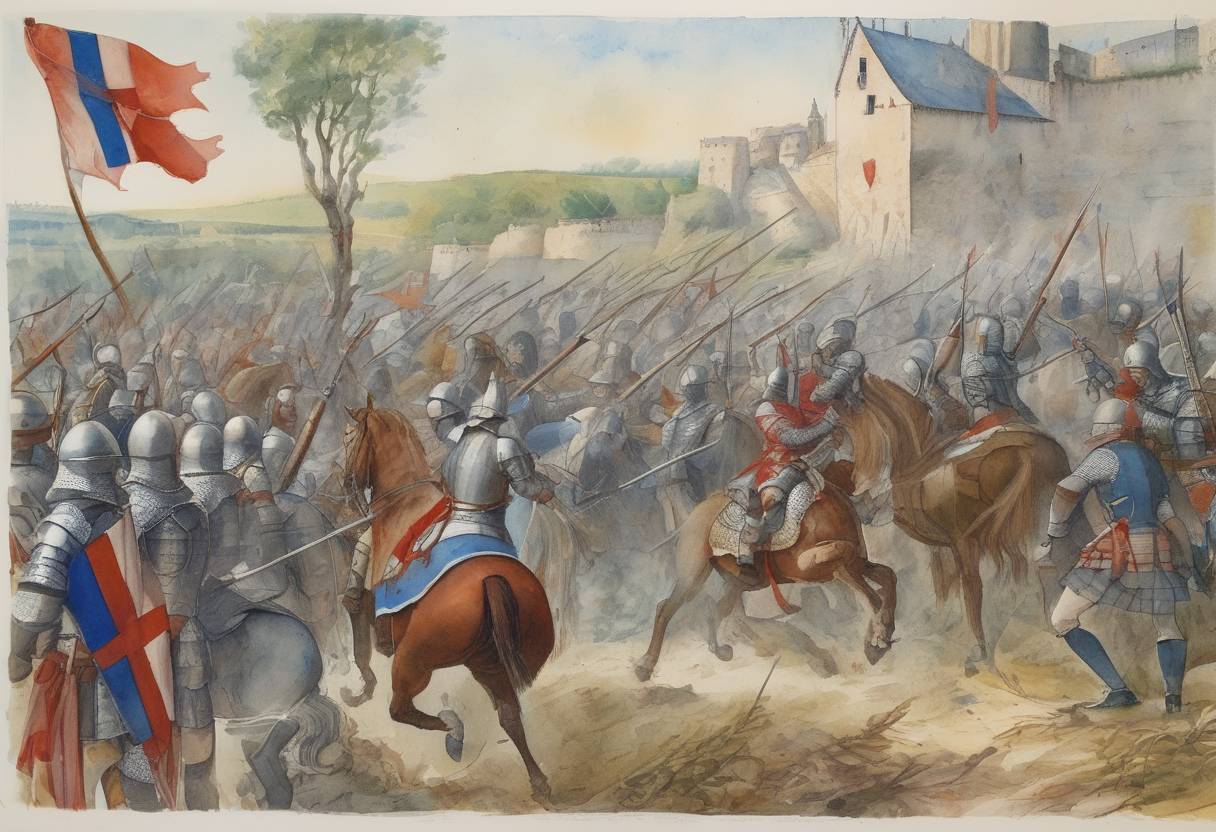
The Battle of Castillon, fought on July 17, 1453, marked a pivotal moment in European history, effectively bringing the Hundred Years’ War to a close. This conflict, which had raged intermittently between England and France since 1337, was characterized by a series of battles over territorial claims and the right to the French throne.
The Hundred Years’ War was a protracted struggle primarily over the control of territories in France. By the mid-15th century, the tide had turned in favor of the French, thanks in part to the inspirational leadership of figures like Joan of Arc, who had earlier played a crucial role in lifting the Siege of Orléans and ensuring the coronation of Charles VII as King of France.
By 1453, the French had regained much of the territory previously lost to the English. The Battle of Castillon was the culmination of a series of successful French campaigns aimed at expelling English forces from their remaining strongholds in France.
The Battle of Castillon took place near the town of Castillon-sur-Dordogne in the region of Gascony. The French forces, commanded by Jean Bureau, a master of artillery, were well-prepared and strategically positioned. They had constructed a fortified camp equipped with a formidable array of cannons, reflecting the increasing importance of artillery in warfare.
The English army, led by John Talbot, Earl of Shrewsbury, was determined to relieve the besieged town of Castillon. However, Talbot underestimated the strength and preparedness of the French forces. On July 17, 1453, the English launched an assault on the French camp, but they were met with devastating artillery fire.
The French artillery decimated the English ranks, and the ensuing battle saw the English forces suffer heavy casualties. Talbot himself was killed in the fighting, and the English army was decisively defeated.
The Battle of Castillon effectively ended English territorial ambitions in France. Following this defeat, Bordeaux, the last major English-held city in France, surrendered to the French in October 1453. This marked the end of the Hundred Years’ War, with the exception of the English-controlled Calais, which remained in English hands until 1558.
The victory at Castillon solidified Charles VII’s control over France and marked the beginning of a period of recovery and consolidation for the French kingdom. The war’s conclusion also signaled a shift in military tactics, with the increasing use of gunpowder and artillery reshaping future European conflicts.
In summary, the Battle of Castillon was a decisive French victory that not only ended the Hundred Years’ War but also heralded a new era in military strategy and European political dynamics.
Source: en.wikipedia.org