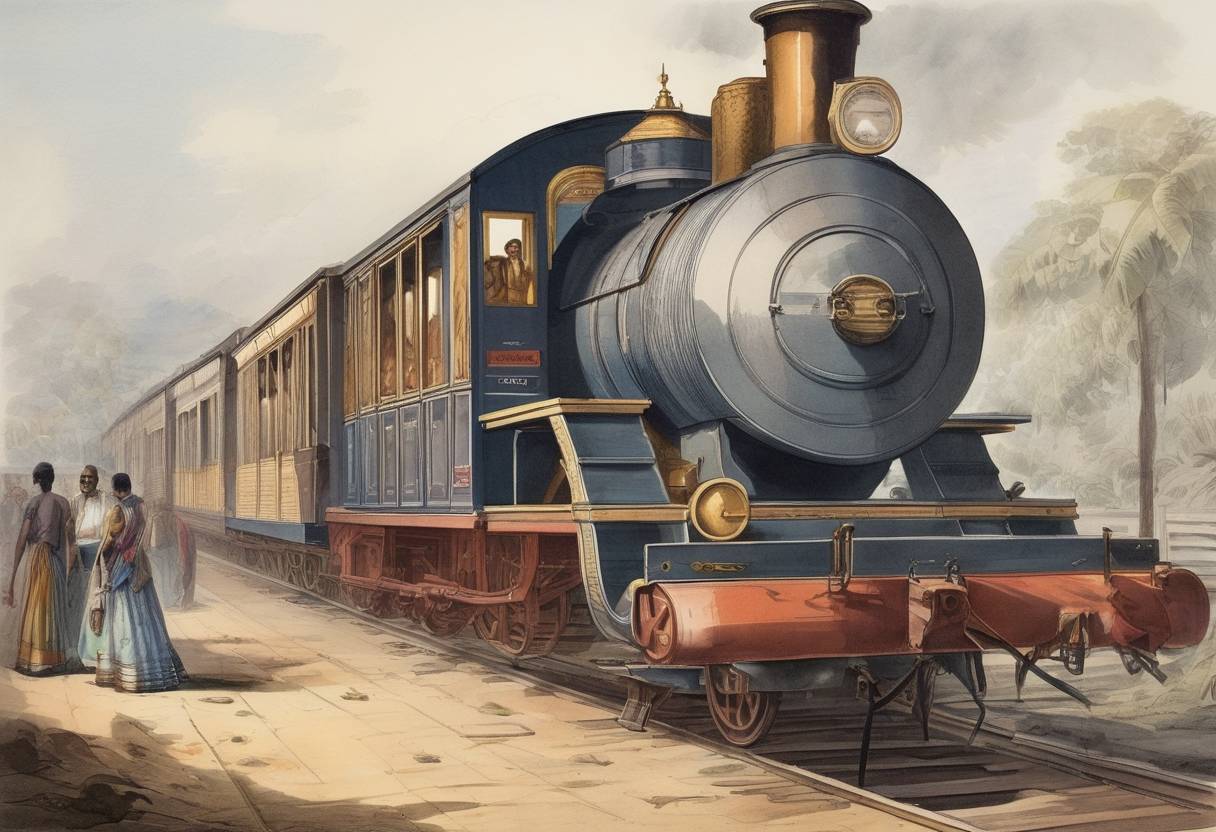
The Inauguration of India’s First Passenger Railway: April 16, 1853
On April 16, 1853, a significant milestone in the history of transportation in India was achieved with the inauguration of the first passenger railway line. This event marked the beginning of the Indian railway system, which would go on to become one of the largest and most complex railway networks in the world.
Key Details
- Route: The inaugural journey covered a distance of 34 kilometers (approximately 21 miles), running from Bori Bunder in Bombay (now Mumbai) to Thane.
- Train Composition: The train consisted of 14 carriages and was hauled by three steam locomotives named Sahib, Sindh, and Sultan.
- Passengers: The train carried about 400 passengers, including British officials and Indian dignitaries, marking a celebratory occasion.
- Duration: The journey took approximately 57 minutes to complete.
Context and Significance
- Colonial Influence: The establishment of the railway was driven by the British colonial administration, which sought to improve transportation for economic and administrative efficiency. Railways were seen as a means to facilitate the movement of goods, troops, and resources across the vast subcontinent.
- Economic Impact: The introduction of the railway system played a crucial role in the economic development of India. It enabled the efficient transport of raw materials to ports for export and the distribution of imported goods to the interior regions.
- Social and Cultural Impact: The railway system also had profound social implications, as it facilitated greater mobility for people, leading to increased cultural exchanges and the spread of ideas.
Aftermath and Legacy
- Expansion: Following the success of the Bombay-Thane line, the railway network expanded rapidly across India. By the end of the 19th century, thousands of kilometers of track had been laid, connecting major cities and regions.
- Modernization: Over time, the Indian Railways evolved into a crucial component of the nation’s infrastructure, undergoing modernization and electrification to meet the demands of a growing population.
- Cultural Icon: The Indian Railways became an integral part of Indian life and culture, often depicted in literature, films, and art as a symbol of connectivity and progress.
The inauguration of the first passenger railway in India on April 16, 1853, was not just a technological achievement but a transformative event that reshaped the economic and social landscape of the country. It laid the foundation for a transportation network that continues to be vital to India’s development and integration.