Robert Peary's North Pole Expedition - April 6, 1909
1909 · North Pole, Arctic
American explorer Robert Peary allegedly reached the North Pole, though his claim has been subject to controversy.
July 22, 1793
Alexander Mackenzie reached the Pacific Ocean, becoming the first recorded person to complete a transcontinental crossing of North America north of Mexico.
Bella Coola, Canada | North West Company
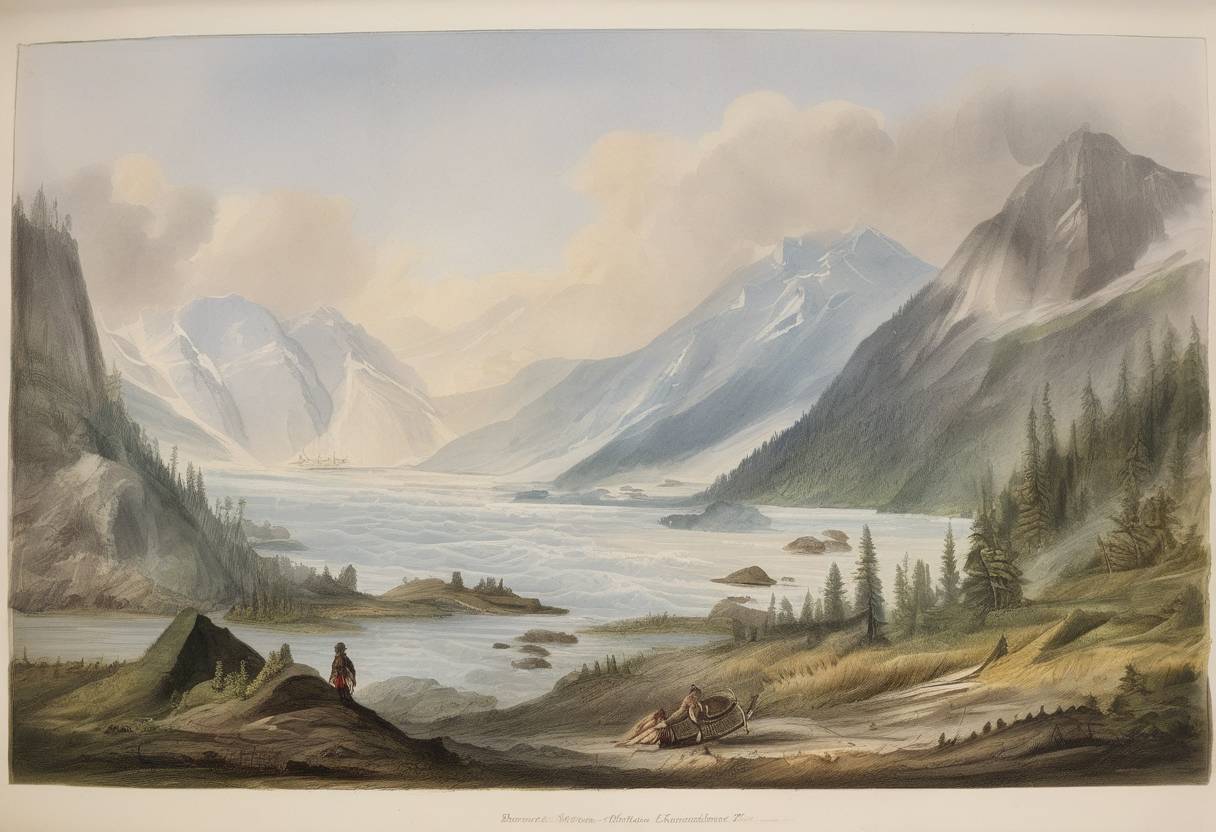
On July 22, 1793, Alexander Mackenzie, a Scottish explorer, became the first recorded person to complete a transcontinental crossing of North America north of Mexico. This remarkable achievement marked a significant milestone in the exploration of the continent and paved the way for future expeditions and the eventual expansion of trade routes.
Alexander Mackenzie was born in 1764 in Stornoway, Scotland. He emigrated to Canada in 1779 and joined the North West Company, a major fur trading enterprise. Mackenzie was driven by the desire to find a viable trade route across North America to the Pacific Ocean, which would enhance the fur trade by providing a direct line to Asian markets.
Mackenzie’s expedition began in 1792, departing from Fort Chipewyan on Lake Athabasca in present-day Alberta. He was accompanied by a small party, including French-Canadian voyageurs and Indigenous guides, who were crucial to the success of the journey due to their knowledge of the land and survival skills.
The Peace River: Mackenzie and his team traveled westward along the Peace River, navigating through challenging terrain and harsh weather conditions.
Crossing the Rockies: The expedition faced significant obstacles as they crossed the Rocky Mountains. The journey required immense perseverance and adaptability, as they had to find passable routes through the rugged landscape.
The Fraser River: Initially mistaking the Fraser River for a route to the Pacific, Mackenzie realized the river’s treacherous rapids made it unsuitable for travel. The team had to alter their course, which delayed their progress.
The Bella Coola River: Eventually, Mackenzie and his team reached the Bella Coola River, which led them to the Pacific Ocean.
On July 22, 1793, Mackenzie and his party arrived at the Pacific Ocean near present-day Bella Coola, British Columbia. To commemorate the achievement, Mackenzie inscribed a message on a rock using a mixture of grease and vermilion, noting the date and his successful crossing.
Mackenzie’s journey was a landmark event in the history of North American exploration. It demonstrated the feasibility of a transcontinental route and highlighted the potential for expanding trade networks. His expedition predated the more famous Lewis and Clark Expedition by over a decade, underscoring the significance of his accomplishment.
Mackenzie documented his journey in a book titled “Voyages from Montreal,” published in 1801, which provided valuable insights into the geography and Indigenous cultures of the regions he explored. His work contributed to the broader understanding of the continent and inspired future explorers and traders.
In recognition of his contributions, Mackenzie was knighted in 1802. His legacy endures as a testament to the spirit of exploration and the drive to connect disparate parts of the world through discovery and trade.
Source: en.wikipedia.org