The Siege of Acre: Beginning of a Pivotal Battle in the Third Crusade
1189 · Acre, Israel
The Third Crusade: The Crusaders begin the Siege of Acre, a pivotal battle in the campaign to reclaim Jerusalem from Saladin.
July 12, 1191
The city of Acre fell to the Crusaders during the Third Crusade after a prolonged siege. This victory was a significant turning point in the Crusade, allowing the Crusaders to establish a foothold in the Holy Land.
Acre, Israel | Crusaders
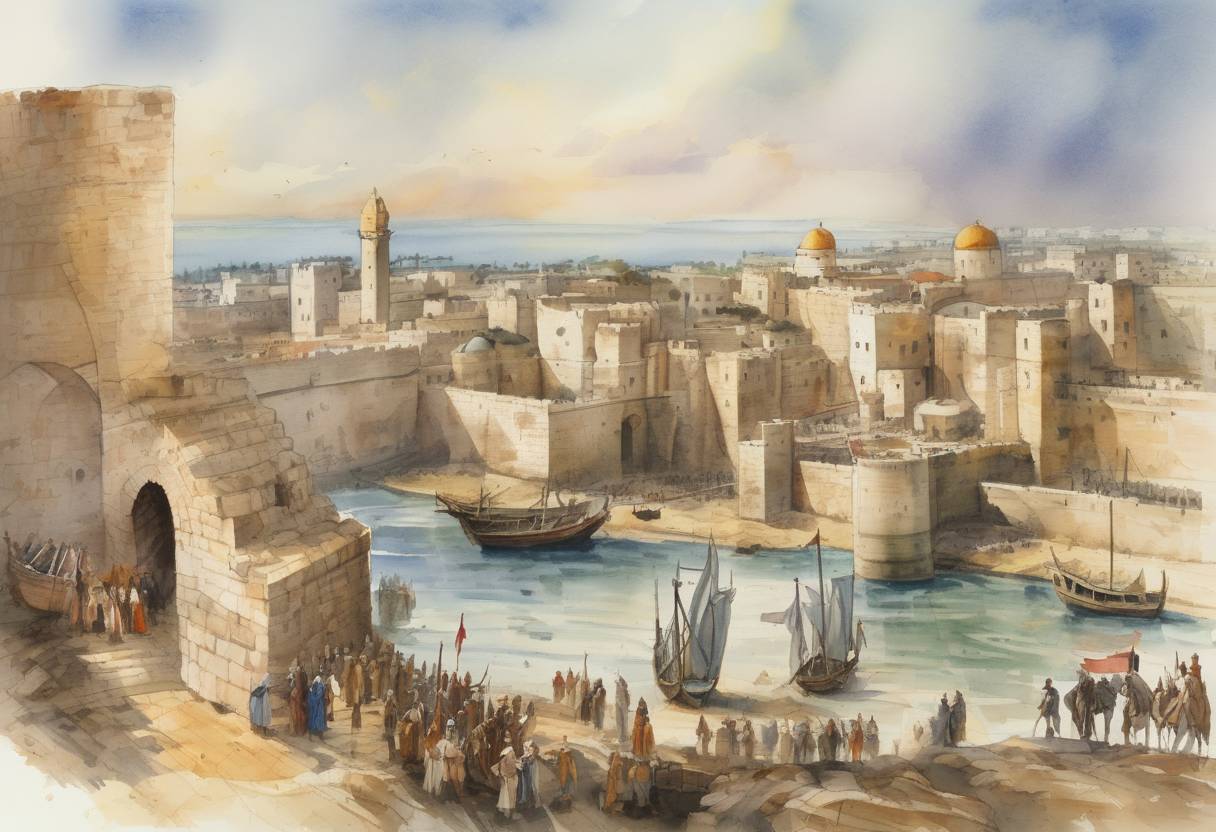
The fall of Acre on July 12, 1191, was a pivotal moment during the Third Crusade, marking a significant victory for the Crusaders in their efforts to reclaim the Holy Land from Muslim control. This event came after a prolonged and arduous siege that lasted nearly two years, from August 28, 1189, to July 12, 1191.
The Third Crusade (1189–1192) was launched in response to the capture of Jerusalem by the Muslim leader Saladin in 1187. The loss of Jerusalem, a city of immense religious significance to Christians, spurred European leaders to organize a military campaign to reclaim the Holy Land. Key figures in this crusade included Richard I of England (Richard the Lionheart), Philip II of France, and Frederick I Barbarossa of the Holy Roman Empire.
Acre, a strategically vital port city in the Kingdom of Jerusalem, became the focal point of the Crusaders’ efforts. Its capture was crucial for establishing a stronghold from which to launch further operations in the region.
The siege of Acre was one of the longest and most grueling of the Crusades. It began in August 1189 when Guy of Lusignan, the King of Jerusalem, laid siege to the city with a small force. The siege quickly attracted more Crusaders from Europe, including the forces of Richard I and Philip II, who arrived in 1191.
The besieging forces faced numerous challenges, including disease, supply shortages, and fierce resistance from the city’s defenders, who were reinforced by Saladin’s army. Despite these difficulties, the Crusaders gradually tightened their grip on the city.
On July 12, 1191, after months of relentless assault and negotiation, the Muslim defenders of Acre surrendered to the Crusaders. The terms of surrender included the release of Christian prisoners and the payment of a substantial ransom. The capture of Acre provided the Crusaders with a crucial foothold in the Holy Land, allowing them to secure supply lines and plan further military campaigns.
The fall of Acre was a turning point in the Third Crusade. It demonstrated the effectiveness of the Crusader forces and boosted their morale. However, despite this victory, the ultimate goal of recapturing Jerusalem remained elusive. Internal conflicts among the Crusader leaders and logistical challenges hindered further progress.
The siege of Acre also highlighted the complexities of medieval warfare, including the importance of naval power, siege tactics, and diplomacy. The city’s capture underscored the strategic importance of coastal cities in the Crusades.
In the broader context of the Crusades, the fall of Acre was a temporary success. While it did not lead to the recapture of Jerusalem, it established a precedent for future Crusader efforts and maintained a Christian presence in the region until the eventual fall of Acre in 1291, which marked the end of Crusader rule in the Holy Land.
The events at Acre in 1191 remain a testament to the enduring struggle for control over the Holy Land and the complex interplay of military, political, and religious forces during the Crusades.
Source: en.wikipedia.org