Theresa May Becomes Prime Minister of the United Kingdom
2016 · London, United Kingdom
Theresa May became the Prime Minister of the United Kingdom, succeeding David Cameron following the Brexit referendum.
May 7, 2015
The United Kingdom held a general election, resulting in a surprise majority win for the Conservative Party led by David Cameron.
London, United Kingdom | UK Government
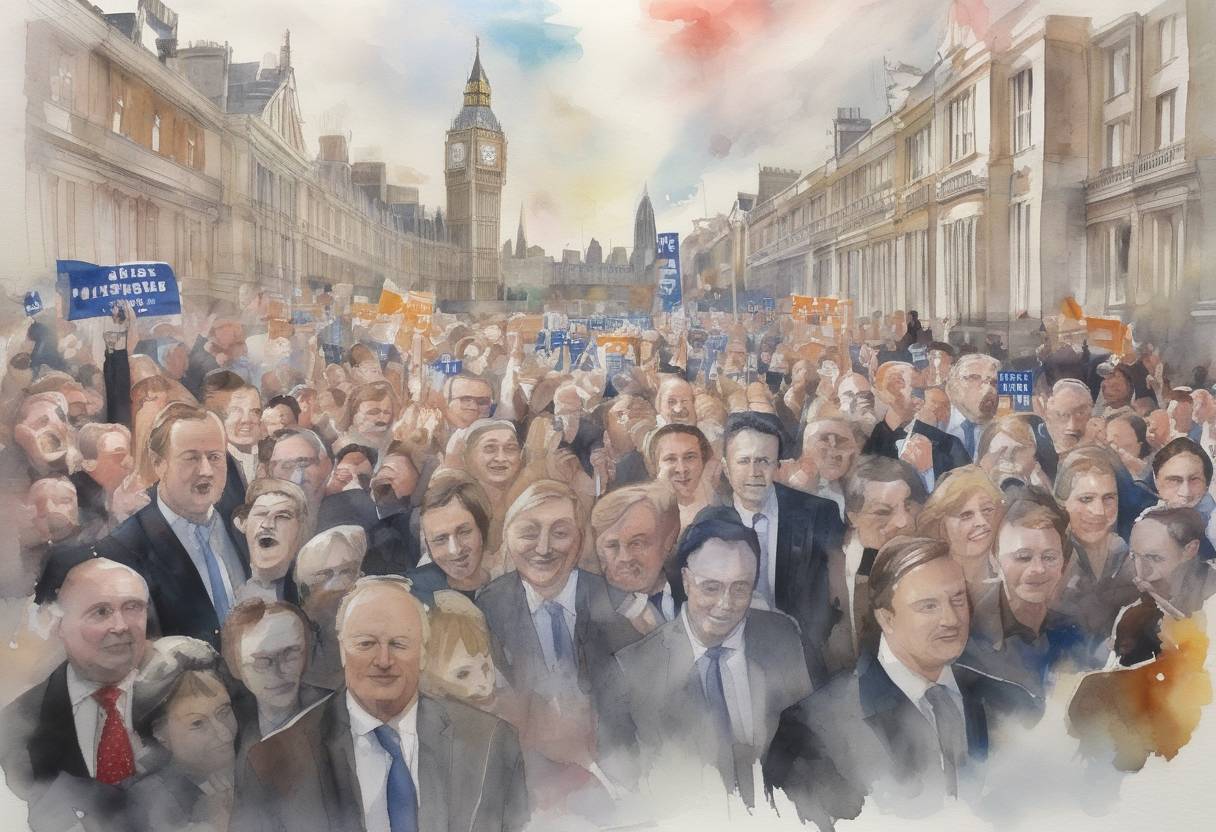
On May 7, 2015, the United Kingdom held a general election that resulted in a surprising majority win for the Conservative Party, led by David Cameron. This election was significant for several reasons, marking a pivotal moment in British politics.
The 2015 general election was held against a backdrop of economic recovery following the global financial crisis of 2008. The Conservative Party, in coalition with the Liberal Democrats since 2010, had implemented austerity measures aimed at reducing the national deficit. This period was characterized by debates over public spending, welfare reform, and the future of the UK’s relationship with the European Union.
Conservative Party Victory: The Conservative Party secured 331 seats out of 650 in the House of Commons, achieving a majority government. This was a significant increase from the 306 seats they held previously and allowed them to govern without the need for a coalition partner.
Labour Party: The Labour Party, led by Ed Miliband, won 232 seats, a decrease from their previous 258 seats. The loss was attributed to a failure to regain ground in Scotland and a lack of convincing economic policies.
Scottish National Party (SNP): The SNP achieved a historic victory in Scotland, winning 56 out of 59 seats. This was a dramatic increase from the 6 seats they held before, reflecting a surge in Scottish nationalism following the 2014 independence referendum.
Liberal Democrats: The Liberal Democrats, led by Nick Clegg, suffered a catastrophic loss, retaining only 8 seats, down from 57. This was largely seen as a backlash against their role in the coalition government and their perceived compromises on key policies.
UK Independence Party (UKIP): Despite receiving nearly 4 million votes, UKIP won only 1 seat, highlighting the challenges of the first-past-the-post electoral system for smaller parties.
David Cameron’s Leadership: With a majority government, David Cameron was able to pursue his party’s agenda more freely. One of his key promises was to hold a referendum on the UK’s membership in the European Union, which eventually took place in 2016.
Political Landscape: The election results significantly altered the political landscape in the UK. The SNP’s dominance in Scotland raised questions about the future of the union, while the decline of the Liberal Democrats reshaped the dynamics of British politics.
Brexit Referendum: The promise of an EU referendum set the stage for the Brexit vote in 2016, which resulted in a decision to leave the EU, leading to profound political and economic changes in the UK.
The 2015 general election was a turning point that not only reshaped the immediate political scene but also set in motion events that would have lasting impacts on the UK’s future.
Source: www.bbc.com