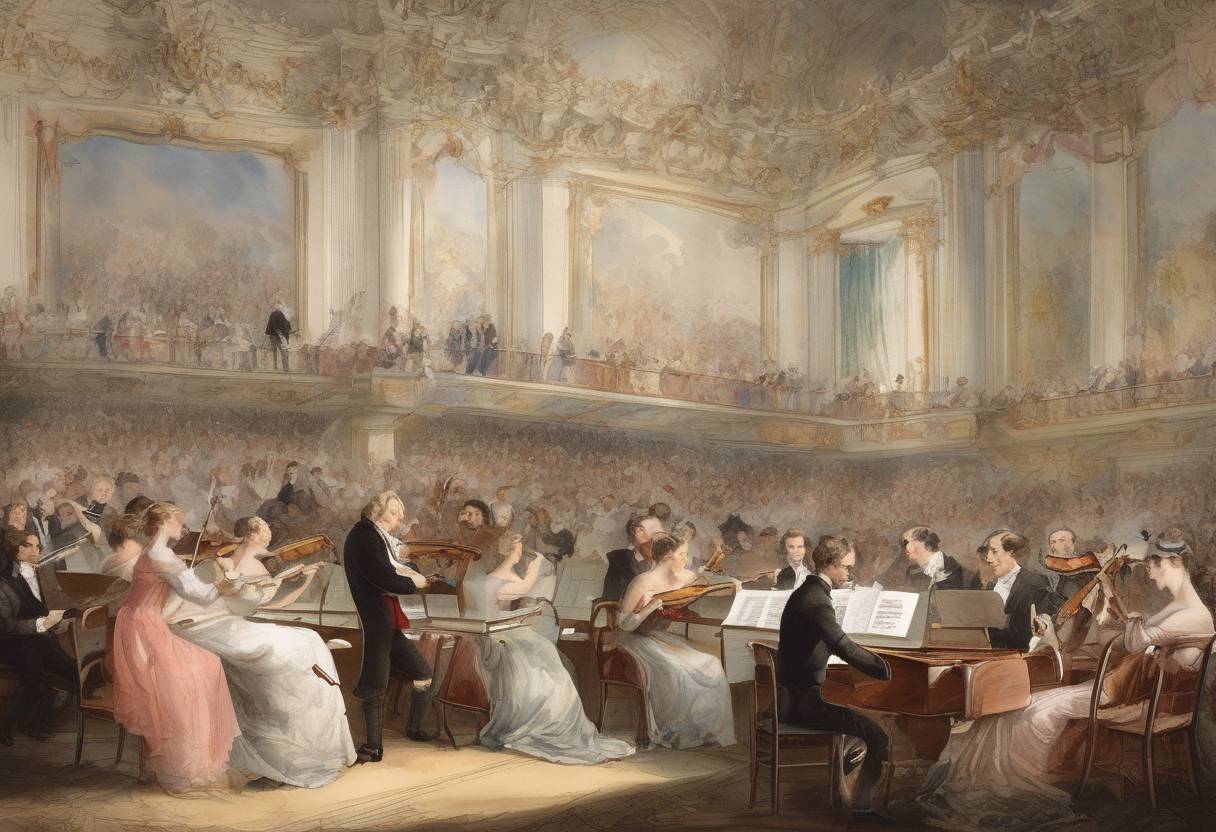
Felix Mendelssohn’s Violin Concerto Premiere
On March 13, 1845, Felix Mendelssohn’s Violin Concerto in E minor, Op. 64, premiered in Leipzig, Germany. This event marked a significant contribution to the violin concerto repertoire, showcasing Mendelssohn’s innovative approach to the genre.
Background
- Composer: Felix Mendelssohn, a German composer, pianist, and conductor, was a prominent figure in the early Romantic period. Known for his melodic inventiveness and structural clarity, Mendelssohn’s works often bridged the classical traditions with romantic expressiveness.
- Composition: Mendelssohn began working on the Violin Concerto in 1838 and completed it in 1844. The concerto was dedicated to his friend, the violinist Ferdinand David, who also provided technical advice during its composition.
Premiere
- Date: March 13, 1845
- Location: Leipzig, Germany
- Performer: The concerto was premiered by Ferdinand David, the concertmaster of the Leipzig Gewandhaus Orchestra, under the baton of Danish conductor Niels Gade.
Musical Innovations
- Structure: The concerto is structured in three movements: Allegro molto appassionato, Andante, and Allegretto non troppo – Allegro molto vivace. It deviates from the traditional concerto form by connecting the movements without breaks.
- Opening: Unlike many concertos of the time, Mendelssohn’s work begins with the solo violin introducing the main theme, rather than an orchestral introduction.
- Cadenza: The concerto features a written-out cadenza placed before the recapitulation in the first movement, rather than at the end, which was a novel approach at the time.
Significance
- Influence: Mendelssohn’s Violin Concerto has become one of the most frequently performed and recorded violin concertos in the classical repertoire. Its lyrical melodies, technical demands, and innovative structure have influenced countless composers and violinists.
- Legacy: The concerto is celebrated for its seamless integration of soloist and orchestra, as well as its emotional depth and technical brilliance. It remains a staple in the violin repertoire and a favorite among audiences and performers alike.
Aftermath
- Reception: The concerto was well-received at its premiere and quickly gained popularity. It solidified Mendelssohn’s reputation as a master composer and contributed to the growing prestige of the Leipzig Gewandhaus Orchestra.
- Enduring Popularity: Over the years, the concerto has been performed by many of the world’s leading violinists and continues to be a benchmark for violinists aspiring to master the Romantic concerto repertoire.
Felix Mendelssohn’s Violin Concerto in E minor remains a testament to his genius and a cornerstone of the violin concerto literature, celebrated for its beauty, innovation, and enduring appeal.