The Great Chicago Fire: October 8, 1871
1871 · Chicago, United States
The Great Chicago Fire begins, lasting until October 10, 1871, and resulting in the destruction of a large portion of the city of Chicago, Illinois.
April 27, 1865
The steamboat Sultana exploded on the Mississippi River, killing an estimated 1,800 of its 2,400 passengers, many of whom were Union soldiers returning home after the Civil War.
Memphis, United States | N/A
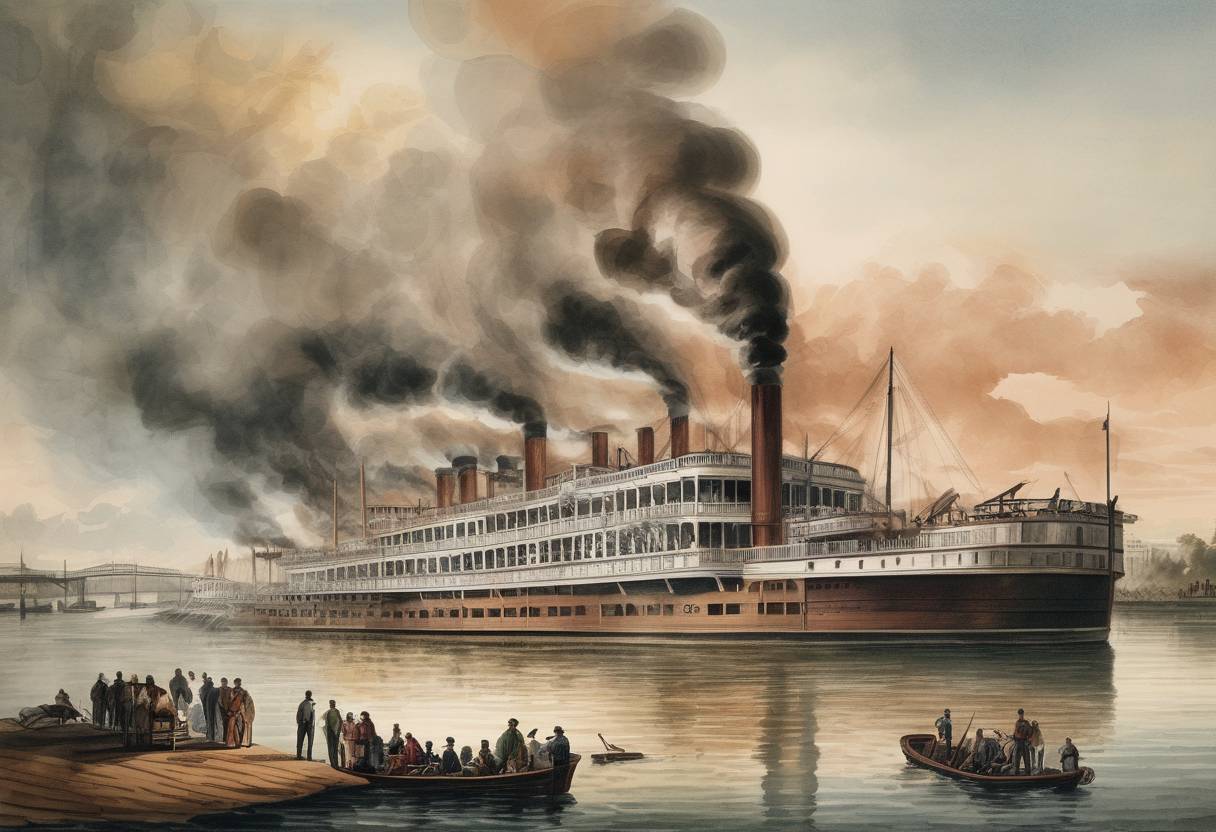
On April 27, 1865, the steamboat Sultana suffered a catastrophic explosion on the Mississippi River, resulting in one of the deadliest maritime disasters in United States history. The tragedy claimed the lives of an estimated 1,800 of the 2,400 passengers aboard, many of whom were Union soldiers recently released from Confederate prison camps.
The Sultana was a side-wheel steamboat built in 1863, primarily used for transporting cotton and passengers along the Mississippi River. In April 1865, it was tasked with carrying Union soldiers back north following the end of the Civil War. These soldiers had endured harsh conditions in Confederate prison camps such as Andersonville and Cahaba, and were eager to return home.
The Sultana was designed to carry about 376 passengers, but on this fateful journey, it was grossly overloaded with approximately 2,400 individuals. This overcrowding was partly due to a lucrative government contract that paid per soldier transported, incentivizing the ship’s operators to carry as many passengers as possible.
In the early hours of April 27, 1865, while navigating the Mississippi River near Memphis, Tennessee, one of the Sultana’s boilers exploded. The explosion was likely caused by a combination of factors, including the ship’s overburdened load, poorly maintained boilers, and the use of river water, which was high in sediment and could lead to boiler scaling.
The initial explosion triggered a chain reaction, causing two more boilers to explode. The blasts tore through the ship, igniting a fire that quickly spread. Many passengers were killed instantly, while others were thrown into the cold, fast-moving river.
Rescue efforts were hampered by the darkness and the river’s strong currents. Nearby vessels and residents of Memphis attempted to save as many people as possible, but the majority of those aboard perished. The exact number of casualties remains uncertain, but estimates suggest around 1,800 lives were lost.
The disaster received relatively little attention at the time, overshadowed by the recent assassination of President Abraham Lincoln and the conclusion of the Civil War. However, it remains a poignant reminder of the perils of river travel and the human cost of war.
The Sultana disaster highlighted the dangers of steamboat travel during the 19th century, particularly the risks associated with boiler explosions and overcrowding. It also underscored the challenges faced by returning soldiers and the often inadequate measures taken to ensure their safe return home.
In the years following the disaster, regulations regarding steamboat safety were gradually improved, though it would take several more decades for significant advancements in maritime safety standards to be implemented.
The Sultana tragedy remains a significant, though often overlooked, event in American history, symbolizing both the end of the Civil War and the beginning of a new era in transportation safety.
Source: en.wikipedia.org