March 2, 1877

Rutherford B. Hayes was declared the winner of the 1876 United States presidential election by the U.S. Congress, following the Compromise of 1877.


Washington, D.C., United States | United States Congress
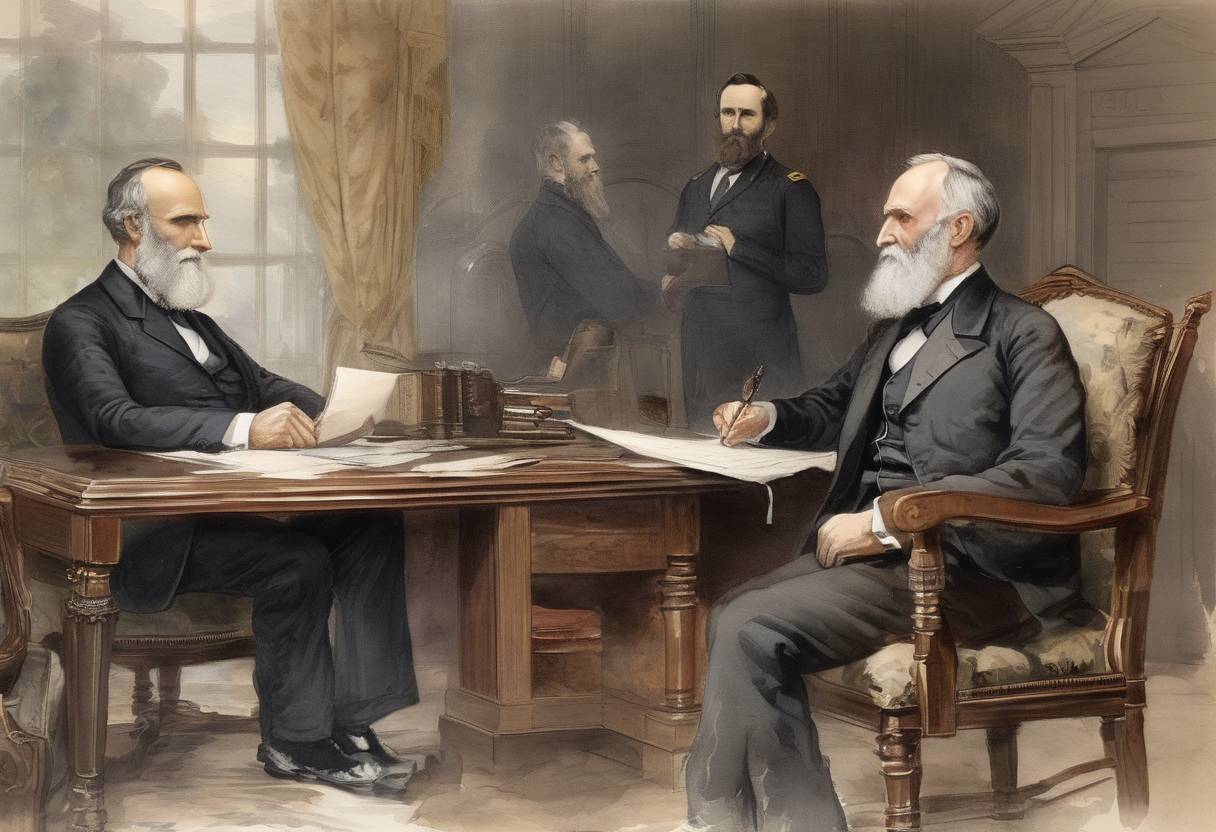
Watercolor painting based depiction of Rutherford B. Hayes was declared the winner of the 1876 United States presidential election by the U.S. Congress, following the Compromise of 1877. (1877)

Rutherford B. Hayes Declared Winner of the 1876 Presidential Election

On March 2, 1877, Rutherford B. Hayes was declared the winner of the highly contentious 1876 United States presidential election. This decision followed the Compromise of 1877, a pivotal moment in American history that resolved one of the most disputed elections and marked the end of the Reconstruction era.

Background

The 1876 presidential election was one of the most controversial in U.S. history. The main contenders were Rutherford B. Hayes, the Republican governor of Ohio, and Samuel J. Tilden, the Democratic governor of New York. The election took place in a post-Civil War America, during a period of intense political and social upheaval.

Key Issues

  • Reconstruction: The election occurred during the Reconstruction era, a time when the federal government was attempting to rebuild and integrate the Southern states after the Civil War. This period was marked by significant tension between the North and South.
  • Economic Concerns: The country was also dealing with the aftermath of the Panic of 1873, which had led to a severe economic depression.

The Election

The election results were extraordinarily close and fraught with allegations of electoral fraud and voter intimidation. Tilden won the popular vote, securing 4,288,546 votes to Hayes’s 4,034,311. However, the electoral vote count was disputed.

Disputed Electoral Votes

  • Electoral Votes: Tilden had 184 electoral votes, just one short of the 185 needed to win. Hayes had 165 electoral votes, with 20 votes from four states—Florida, Louisiana, South Carolina, and Oregon—being contested.
  • Electoral Commission: To resolve the impasse, Congress established a bipartisan Electoral Commission in January 1877, composed of 15 members: five from the House, five from the Senate, and five from the Supreme Court.

The Compromise of 1877

The Compromise of 1877 was an informal, unwritten deal that effectively resolved the election dispute. It entailed several key agreements:

  • Presidency: Rutherford B. Hayes would become president.
  • Withdrawal of Troops: Federal troops would be withdrawn from the Southern states, effectively ending Reconstruction.
  • Southern Infrastructure: The South would receive federal subsidies to build railroads and improve infrastructure.
  • Cabinet Position: A Southern Democrat would be appointed to Hayes’s cabinet.

Aftermath and Significance

  • End of Reconstruction: The withdrawal of federal troops marked the end of Reconstruction, leading to the rise of “Jim Crow” laws and the disenfranchisement of African Americans in the South.
  • Political Impact: The Compromise of 1877 set a precedent for resolving electoral disputes through negotiation rather than conflict.
  • Hayes’s Presidency: Hayes served as president from 1877 to 1881, focusing on civil service reform and attempting to reconcile the divisions left by the Civil War.

The resolution of the 1876 election through the Compromise of 1877 had profound and lasting impacts on American politics and race relations, shaping the nation’s trajectory for decades to come.