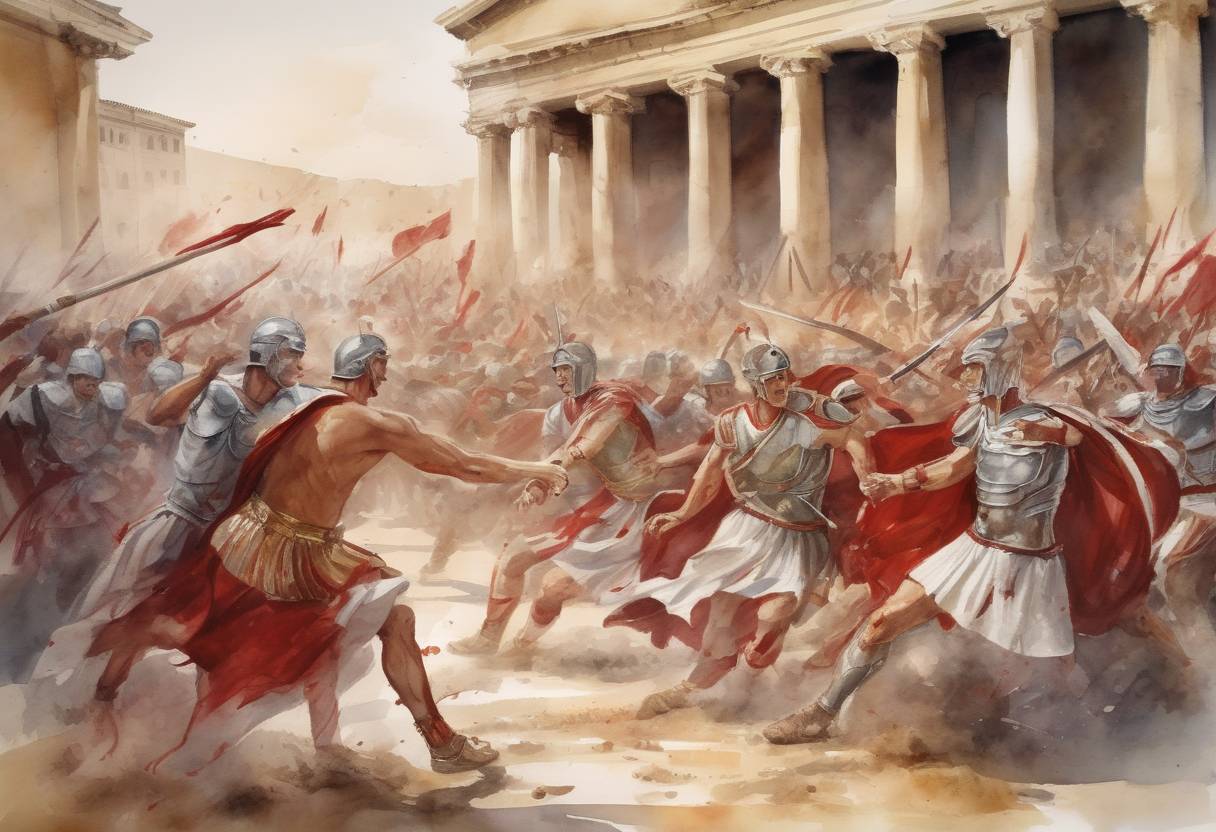
The Battle of Ruspina: Julius Caesar vs. Titus Labienus
Context
The Battle of Ruspina, fought on January 4, 46 BCE, was a significant engagement during Caesar’s Civil War, a conflict that arose from the power struggle between Julius Caesar and the Roman Senate, led by Pompey the Great. Following Caesar’s crossing of the Rubicon in 49 BCE, the civil war erupted, leading to a series of battles across the Roman Republic.
After defeating Pompey at the Battle of Pharsalus in 48 BCE, Caesar pursued his remaining opponents to North Africa. The Battle of Ruspina was part of this campaign, where Caesar faced the forces loyal to the Senate, commanded by Titus Labienus, a former ally of Caesar who had defected to Pompey’s side.
The Battle
- Location: The battle took place near Ruspina, a town in what is now modern-day Tunisia.
- Forces: Caesar’s forces were significantly outnumbered. He commanded approximately 30 cohorts, which amounted to around 10,000 men, primarily infantry. Labienus, on the other hand, had a larger force, including a substantial cavalry contingent.
- Tactics: Labienus utilized his cavalry advantage to encircle and harass Caesar’s troops. Caesar, recognizing the threat, adapted by forming his men into a defensive square, a tactic designed to protect against cavalry attacks.
- Outcome: Despite being outnumbered and initially at a disadvantage, Caesar’s tactical acumen and the discipline of his troops allowed him to withstand Labienus’s assaults. The battle ended inconclusively, with Caesar managing to retreat in good order, preserving his forces for future engagements.
Aftermath
- Strategic Impact: Although not a decisive victory, Caesar’s ability to avoid defeat at Ruspina allowed him to regroup and maintain his campaign in North Africa. This engagement demonstrated Caesar’s resilience and strategic flexibility.
- Subsequent Developments: The battle set the stage for further confrontations in the region. Caesar eventually achieved a decisive victory at the Battle of Thapsus later in 46 BCE, which effectively ended the resistance of the Senate’s forces in Africa.
- Historical Significance: The Battle of Ruspina highlighted the challenges Caesar faced in consolidating power and the loyalty and effectiveness of his legions. It also underscored the shifting allegiances and complex dynamics of Roman politics during the civil war.
Conclusion
The Battle of Ruspina was a testament to Julius Caesar’s military prowess and his ability to adapt to challenging circumstances. While not a clear victory, it was a crucial moment in his campaign to secure control over the Roman Republic, paving the way for his eventual rise as dictator.