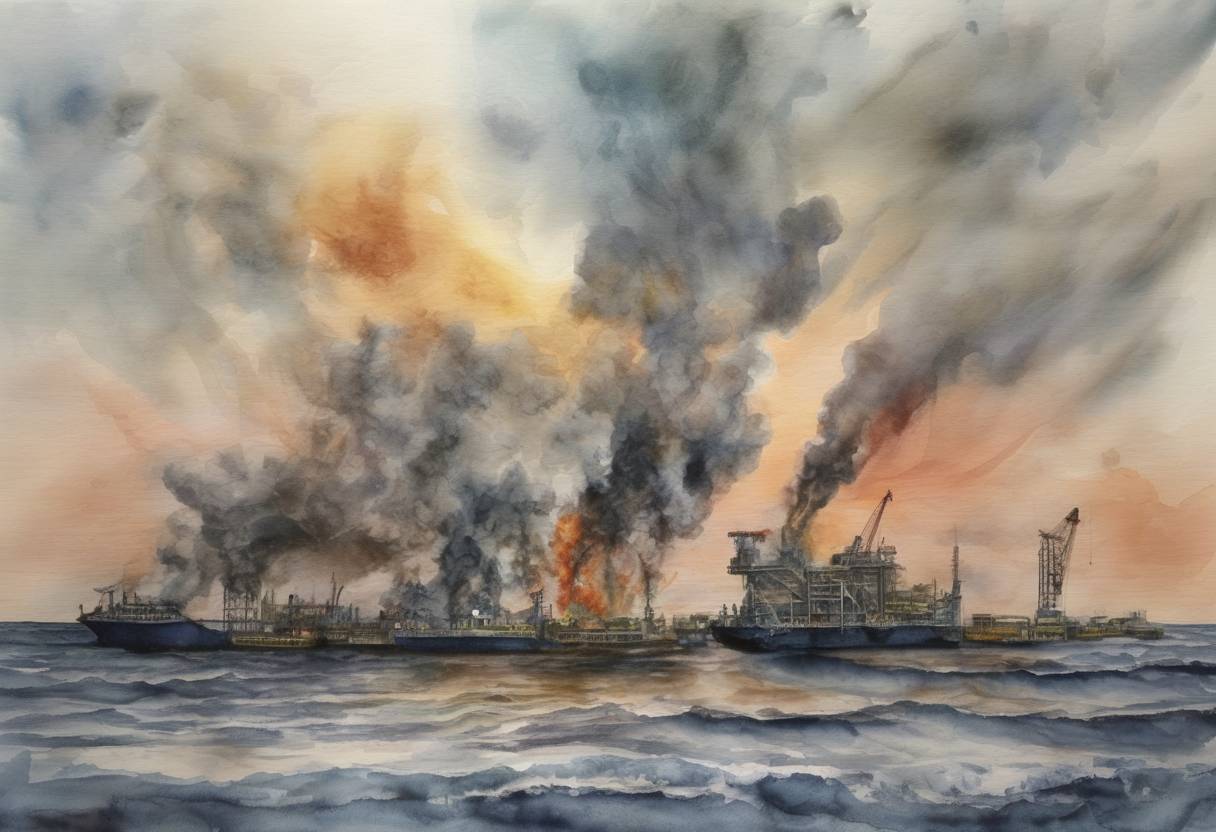
The Deepwater Horizon Oil Spill: April 21, 2010
The Deepwater Horizon oil spill, also known as the BP oil spill, is considered one of the largest environmental disasters in U.S. history. It began on April 20, 2010, with a catastrophic blowout on the Deepwater Horizon offshore drilling rig, operated by Transocean and owned by BP, in the Macondo Prospect, located in the Gulf of Mexico.
Key Events Leading Up to the Spill
- Deepwater Horizon Rig: The rig was drilling an exploratory well at a depth of approximately 5,000 feet below sea level. It was a state-of-the-art semi-submersible rig designed for deepwater drilling.
- April 20, 2010: A blowout occurred due to a surge of natural gas that traveled up the drill column, igniting and causing a massive explosion. The explosion resulted in the deaths of 11 workers and the sinking of the rig two days later.
- April 21, 2010: As the rig sank, it caused a rupture in the underwater oil well, leading to a massive oil spill.
The Spill and Its Impact
- Volume of Oil Spilled: Over the course of 87 days, it is estimated that approximately 4.9 million barrels (about 210 million gallons) of oil were discharged into the Gulf of Mexico.
- Environmental Impact: The spill had devastating effects on marine and wildlife habitats, including the deaths of thousands of marine animals and birds. It also severely impacted the fishing and tourism industries in the Gulf region.
- Response Efforts: Efforts to contain the spill included the use of dispersants, controlled burns, and the deployment of booms. The well was finally capped on July 15, 2010.
Aftermath and Consequences
- Legal and Financial Repercussions: BP faced extensive legal action and was required to pay billions in fines and settlements. In 2015, BP agreed to a $20.8 billion settlement with the U.S. government, the largest environmental settlement in U.S. history.
- Regulatory Changes: The disaster led to significant changes in U.S. offshore drilling regulations, including stricter safety standards and oversight.
- Long-term Environmental Effects: Studies continue to assess the long-term environmental impact of the spill, with ongoing concerns about the health of the Gulf ecosystem.
Broader Historical Significance
The Deepwater Horizon oil spill highlighted the risks associated with deepwater drilling and the need for improved safety measures and environmental protections. It also sparked a global conversation about energy practices and the environmental responsibilities of corporations. The disaster remains a pivotal moment in environmental history, underscoring the delicate balance between energy development and ecological preservation.