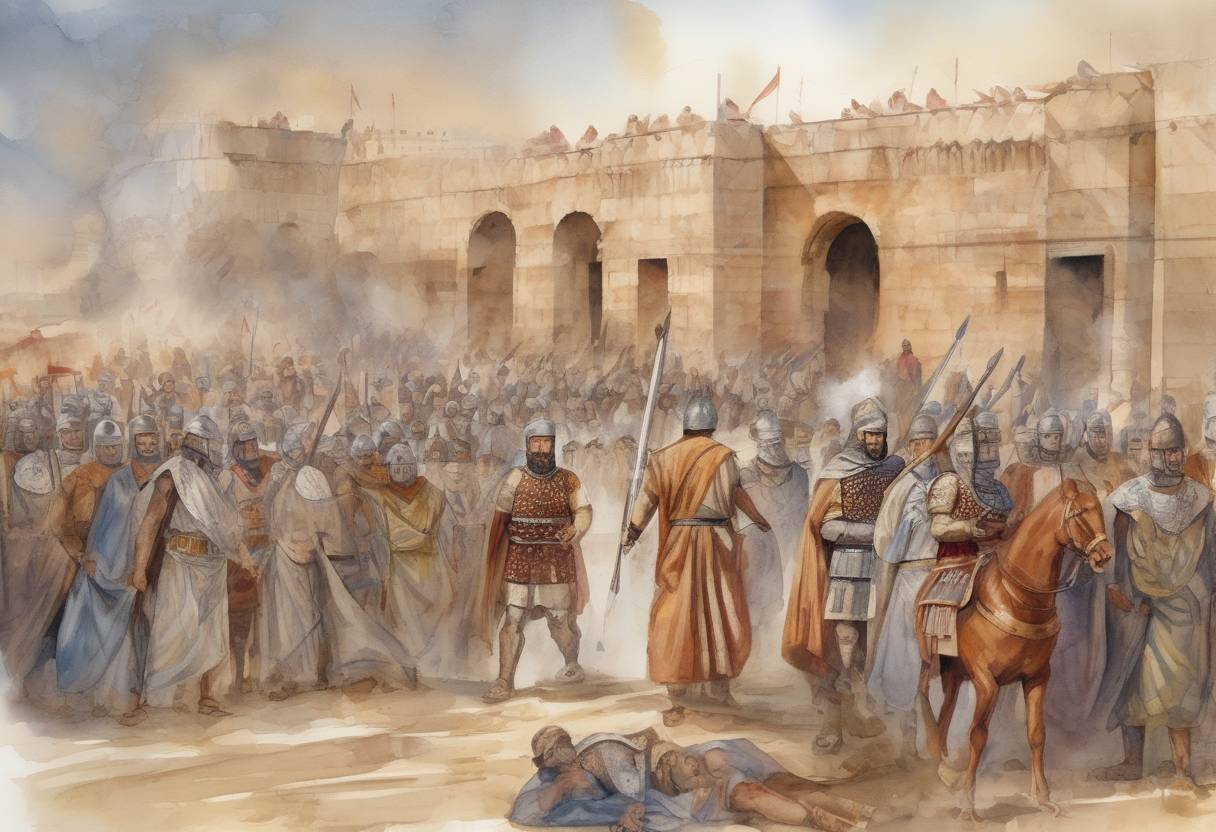
The Death of Emperor Julian the Apostate
On June 26, 363, Roman Emperor Julian, often referred to as Julian the Apostate, succumbed to wounds sustained during the Battle of Samarra against the Sasanian Empire. His death marked a significant turning point in Roman history, particularly in the context of religious policy and imperial ambitions.
Background
Julian ascended to the throne in 361 AD, following the death of his cousin, Emperor Constantius II. He was the last non-Christian ruler of the Roman Empire and is most noted for his efforts to restore paganism as the dominant religion, a stark contrast to the Christianization policies of his predecessors. Julian’s reign was characterized by his philosophical leanings towards Neoplatonism and his attempts to revive traditional Roman religious practices.
The Persian Campaign
Julian embarked on a military campaign against the Sasanian Empire in 363 AD, aiming to secure the eastern borders of the Roman Empire and perhaps to emulate the conquests of Alexander the Great. The campaign initially met with some success, as Julian’s forces advanced deep into Persian territory, capturing several cities and winning battles.
The Battle of Samarra
The decisive moment came during the Battle of Samarra, near the Tigris River. The Roman army, while retreating from Ctesiphon, faced logistical challenges and constant harassment from Persian forces. During a skirmish, Julian was struck by a spear, leading to a fatal wound. The exact circumstances of his injury remain a matter of historical debate, with some sources suggesting it was a Persian spear, while others hint at possible internal treachery.
Aftermath and Significance
Julian’s death had profound implications for the Roman Empire:
End of Pagan Revival: Julian’s efforts to restore paganism effectively ended with his death. His successor, Jovian, quickly restored Christianity as the state religion, reversing Julian’s policies.
Military and Political Consequences: The Roman army, leaderless and deep in enemy territory, was forced to negotiate a peace treaty with the Sasanians, resulting in territorial concessions.
Historical Legacy: Julian’s reign is often viewed through the lens of his religious policies. His attempt to revive paganism was short-lived, but it highlighted the religious tensions within the empire. His philosophical writings and attempts at religious reform have been subjects of interest for historians and scholars.
Julian’s death marked the end of an era and underscored the challenges faced by the Roman Empire in maintaining its vast territories and diverse religious landscape. His legacy as “the Apostate” reflects the enduring impact of his brief but eventful reign.