Chile's Declaration of Independence: February 12, 1818
1818 · Santiago, Chile
Chile formally declares its independence from Spain, solidifying its status as a sovereign nation.
April 5, 1879
Chile declared war on Bolivia and Peru, marking the beginning of the War of the Pacific.
Santiago, Chile | Chilean Government
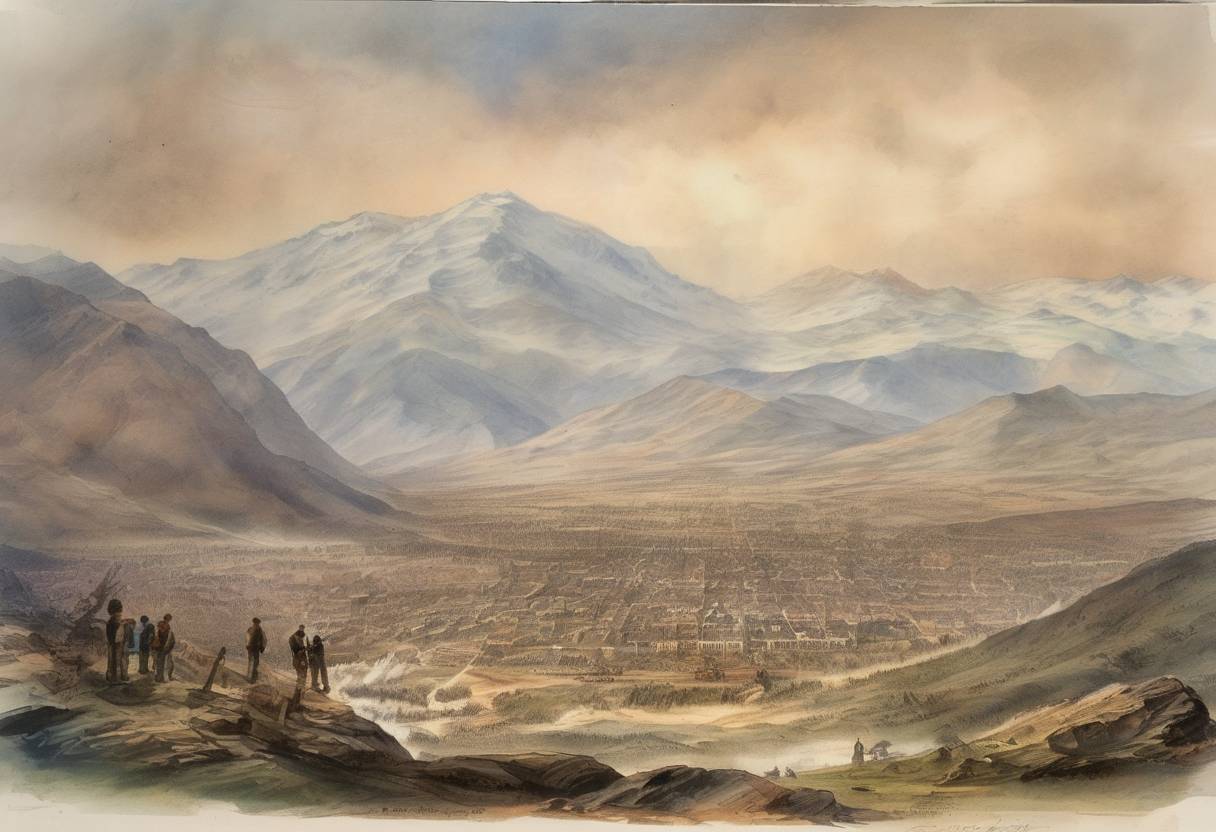
On April 5, 1879, Chile formally declared war on Bolivia and Peru, marking the beginning of the War of the Pacific. This conflict, which lasted until 1884, was primarily driven by disputes over control of valuable nitrate-rich territories in the Atacama Desert, a region that was economically significant due to its mineral resources.
The origins of the War of the Pacific can be traced back to the mid-19th century, when the Atacama Desert, located between the 23rd and 26th parallels south, became a focal point of interest due to its rich deposits of sodium nitrate, a valuable resource for fertilizer and explosives. The region was claimed by both Bolivia and Chile, leading to tensions over territorial rights and economic interests.
Treaty of 1866: Bolivia and Chile signed a treaty establishing the 24th parallel as their mutual boundary, with shared revenues from mineral extraction between the 23rd and 25th parallels.
Treaty of 1874: This treaty reaffirmed the 24th parallel as the boundary but granted Bolivia the right to collect taxes on Chilean companies operating in the region, with a stipulation that taxes would not be increased for 25 years.
Bolivian Tax Increase: In 1878, Bolivia imposed a new tax on the Compañía de Salitres y Ferrocarril de Antofagasta, a Chilean company, violating the 1874 treaty. When the company refused to pay, Bolivia confiscated its property.
Chilean Military Occupation: In response, Chilean forces occupied the Bolivian port city of Antofagasta on February 14, 1879, escalating tensions.
Peru’s Secret Alliance with Bolivia: Unknown to Chile at the time, Peru had a secret defensive alliance with Bolivia, signed in 1873, which obligated Peru to support Bolivia in the event of a conflict.
On April 5, 1879, after failed diplomatic negotiations and increasing hostilities, Chile declared war on both Bolivia and Peru. This declaration marked the official start of the War of the Pacific.
Military Campaigns: The war featured significant naval and land battles, including the Battle of Iquique and the Battle of Tacna. Chile’s superior naval power and military organization eventually led to its victory.
Treaty of Ancón (1883): The war concluded with the Treaty of Ancón, in which Peru ceded the province of Tarapacá to Chile. Bolivia lost its coastal territory, becoming a landlocked country, a status that has had lasting economic and political implications.
Long-term Impact: The War of the Pacific significantly altered the geopolitical landscape of South America. It established Chile as a dominant regional power and left lasting tensions between the involved nations, particularly regarding Bolivia’s access to the sea.
The War of the Pacific remains a pivotal event in South American history, illustrating the complex interplay of economic interests, territorial disputes, and international alliances.
Source: en.wikipedia.org