Completion of the Cologne Cathedral
1880 · Cologne, Germany
Construction of the Cologne Cathedral in Germany was completed, 632 years after it began in 1248.
August 15, 1248
The foundation stone of Cologne Cathedral was laid, marking the beginning of its construction.
Cologne, Holy Roman Empire
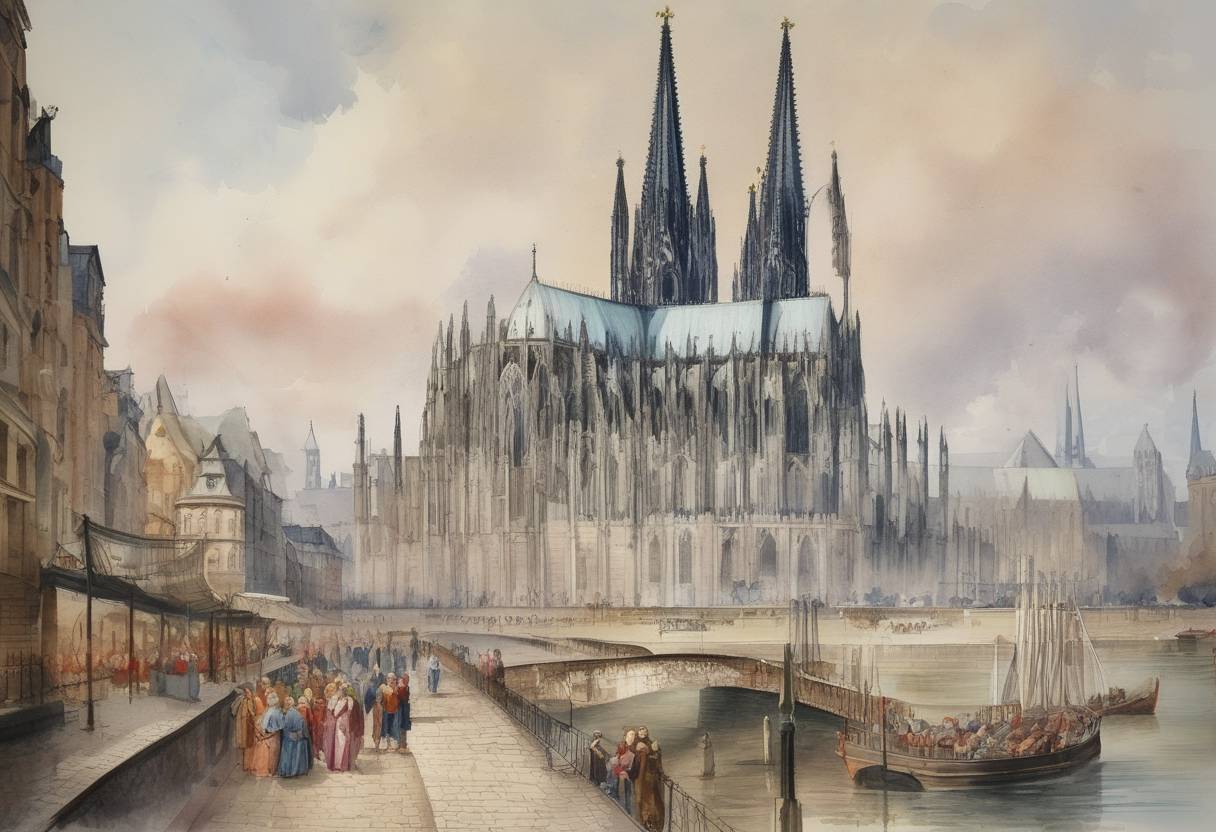
On August 15, 1248, the foundation stone of the Cologne Cathedral was laid, marking the commencement of one of the most ambitious and enduring architectural projects of the medieval period. This event set in motion the construction of what would become one of the largest and most iconic Gothic cathedrals in Europe.
Religious Significance: The Cologne Cathedral, officially known as the Cathedral Church of Saint Peter, was intended to house the relics of the Three Wise Men, which were transferred to Cologne in 1164. This made the city a major pilgrimage site, necessitating a grand cathedral to accommodate the influx of pilgrims.
Architectural Influence: The design of the cathedral was heavily influenced by the Gothic style, which had originated in France. The style was characterized by pointed arches, ribbed vaults, and flying buttresses, allowing for taller and more light-filled structures.
Previous Structures: Before the Gothic cathedral, there was an older Romanesque church on the site. As the need for a larger space grew, plans for a new, grander cathedral were developed.
Archbishop Konrad von Hochstaden: The laying of the foundation stone was presided over by Archbishop Konrad von Hochstaden, who played a crucial role in initiating the construction.
Initial Construction Phase: The construction began with the choir, which was completed in 1322. This part of the cathedral was used for services while the rest of the structure was still under construction.
Interruption and Resumption: Construction was halted in 1473, leaving the cathedral incomplete for several centuries. It wasn’t until the 19th century, during a period of renewed interest in Gothic architecture, that construction resumed.
Completion: The cathedral was finally completed in 1880, over 600 years after the foundation stone was laid. It was completed according to the original medieval plans, a testament to the enduring appeal of the Gothic style.
Cultural Landmark: The Cologne Cathedral is not only a place of worship but also a symbol of the city of Cologne and a masterpiece of Gothic architecture. It was designated a UNESCO World Heritage Site in 1996.
Architectural Influence: The cathedral’s design and construction techniques influenced many other Gothic structures across Europe, showcasing the spread and adaptation of architectural styles.
Tourism and Pilgrimage: Today, the cathedral remains a major tourist attraction and a site of religious significance, drawing millions of visitors each year.
The laying of the foundation stone on August 15, 1248, marked the beginning of a monumental project that would span centuries, reflecting the religious, cultural, and architectural aspirations of medieval Europe.
Source: en.wikipedia.org