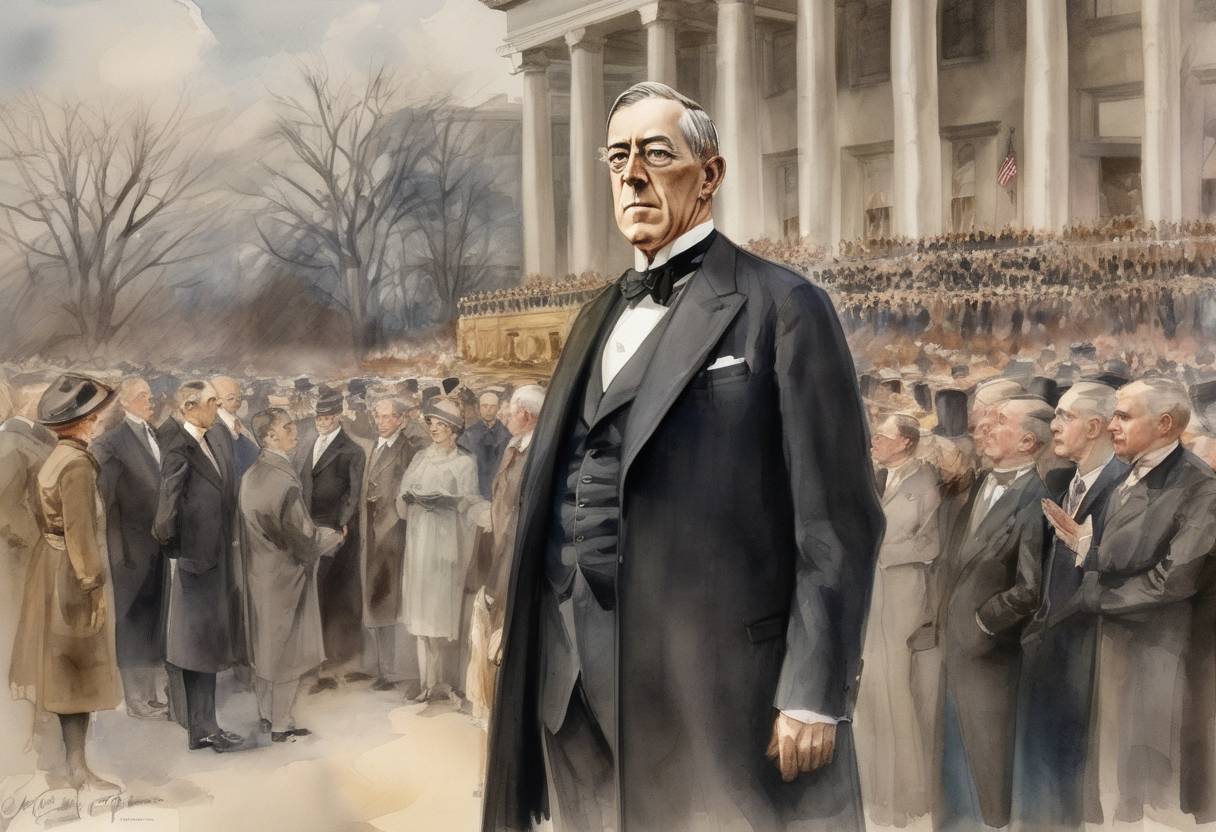
Inauguration of Woodrow Wilson as the 28th President of the United States
On March 4, 1913, Woodrow Wilson was inaugurated as the 28th President of the United States. This event marked the beginning of a significant era in American politics, characterized by progressive reforms and a shift in the nation’s approach to both domestic and international affairs.
Background
Woodrow Wilson, a Democrat, emerged as a prominent political figure after serving as the President of Princeton University and the Governor of New Jersey. His academic background and progressive policies gained him national recognition. The 1912 presidential election was notable for its division within the Republican Party, leading to a three-way race between Wilson, incumbent President William Howard Taft, and former President Theodore Roosevelt, who ran as a Progressive Party candidate.
Wilson won the election with a substantial electoral college victory, although he secured only about 42% of the popular vote. His victory was largely attributed to the split in the Republican vote between Taft and Roosevelt.
Inauguration Day
The inauguration took place at the U.S. Capitol in Washington, D.C. Wilson’s inaugural address focused on the need for reform and the responsibilities of government to address social and economic issues. He emphasized themes of justice, fairness, and the need for a more active government role in regulating business practices and protecting workers’ rights.
Key Themes and Policies
Progressive Reforms: Wilson’s presidency is often associated with the Progressive Era, a time of widespread social activism and political reform across the United States. His administration pursued significant legislative changes, including the establishment of the Federal Reserve System, the Federal Trade Commission, and the Clayton Antitrust Act.
Domestic Policy: Wilson’s “New Freedom” platform aimed to restore economic opportunity and eliminate unfair business practices. He focused on reducing tariffs, reforming the banking system, and strengthening antitrust laws to promote competition.
Foreign Policy: Initially, Wilson advocated for neutrality in international conflicts, but his presidency eventually saw the United States enter World War I in 1917. His vision for a post-war world order was encapsulated in his Fourteen Points, which laid the groundwork for the League of Nations.
Aftermath and Legacy
Wilson’s presidency had a lasting impact on American society and governance. His progressive reforms helped shape the modern regulatory state and expanded the role of the federal government in economic and social matters. However, his legacy is also marked by controversial decisions, such as his administration’s segregationist policies and his handling of civil liberties during World War I.
Wilson’s vision for international cooperation and peace, although not fully realized during his lifetime, influenced future global institutions and diplomatic efforts. His leadership during a transformative period in U.S. history continues to be studied and debated by historians and political scholars.