Creation of the Illinois Territory
1809 · Washington D.C., United States
The Illinois Territory was created by the 10th United States Congress.
February 11, 1812
Massachusetts Governor Elbridge Gerry signs a redistricting bill that leads to the term 'gerrymandering.'
Boston, United States | Massachusetts government
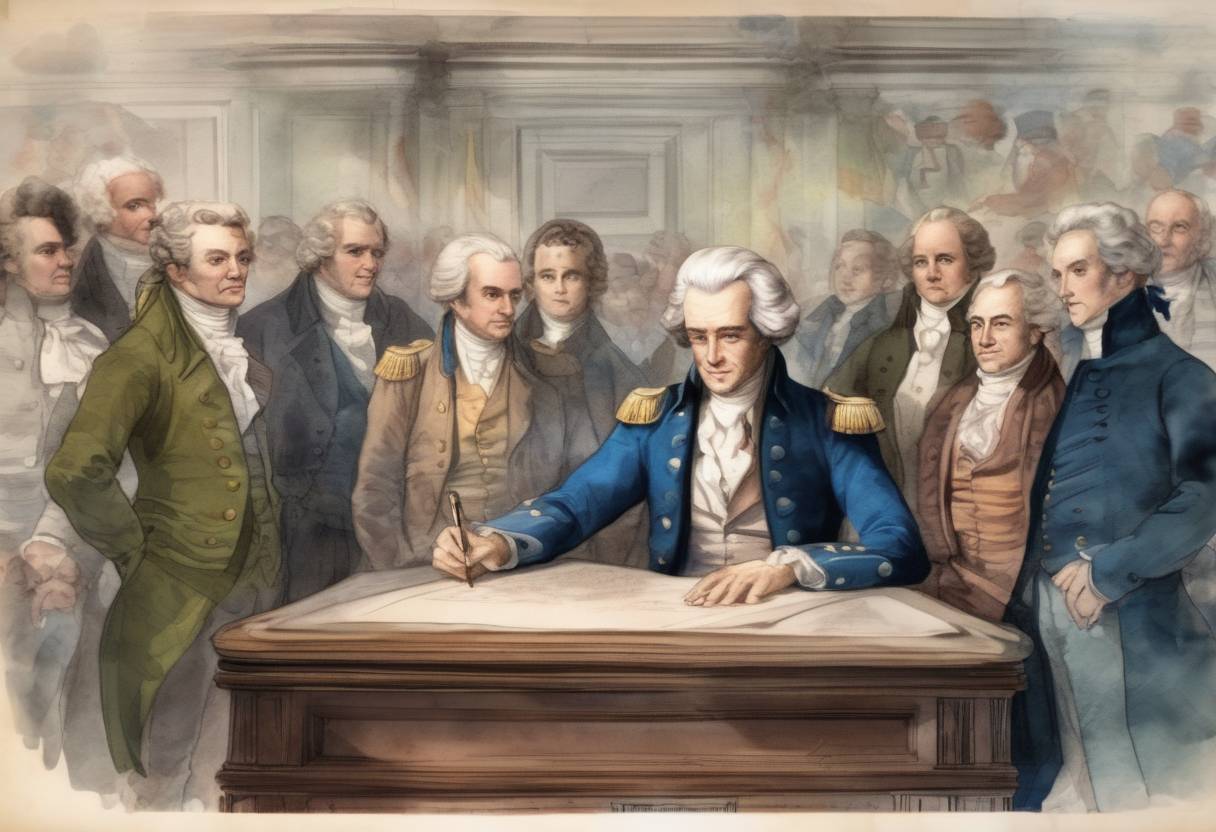
On February 11, 1812, Massachusetts Governor Elbridge Gerry signed a redistricting bill that would have a lasting impact on American politics, giving rise to the term “gerrymandering.” This event marked a significant moment in the history of electoral politics, illustrating the manipulation of electoral district boundaries for political advantage.
In the early 19th century, the political landscape of the United States was dominated by two major parties: the Democratic-Republicans and the Federalists. Elbridge Gerry, a member of the Democratic-Republican Party, became the governor of Massachusetts in 1810. At the time, the Democratic-Republicans sought to consolidate their power and diminish the influence of the rival Federalist Party.
The redistricting bill signed by Governor Gerry was crafted by the Democratic-Republican-controlled Massachusetts legislature. Its primary aim was to redraw the state’s senatorial districts in a manner that would favor the Democratic-Republicans. The new district map was strategically designed to concentrate Federalist voters into a few districts, thereby ensuring Democratic-Republican dominance in the remaining areas.
The term “gerrymandering” originated from a political cartoon published in the Boston Gazette in March 1812. The cartoon depicted one of the newly drawn districts as a bizarre, salamander-like creature, highlighting its contorted shape. The artist combined Governor Gerry’s name with “salamander,” coining the term “Gerry-mander.” Over time, the spelling evolved into “gerrymander.”
The practice of gerrymandering has had profound implications for American democracy. By manipulating district boundaries, political parties can influence electoral outcomes, often leading to a lack of competition and representation that does not accurately reflect the electorate’s will. Gerrymandering remains a contentious issue in contemporary politics, with ongoing debates about its impact on fair representation and calls for reform.
The term “gerrymandering” has transcended its origins in Massachusetts to become a global concept, used to describe similar practices in other countries. It serves as a reminder of the challenges in balancing political strategy with democratic principles and the ongoing struggle to ensure fair and equitable representation in electoral systems.
In summary, the signing of the redistricting bill by Governor Elbridge Gerry on February 11, 1812, not only shaped the political landscape of Massachusetts but also introduced a term that continues to resonate in discussions about electoral fairness and democracy worldwide.
Source: en.wikipedia.org