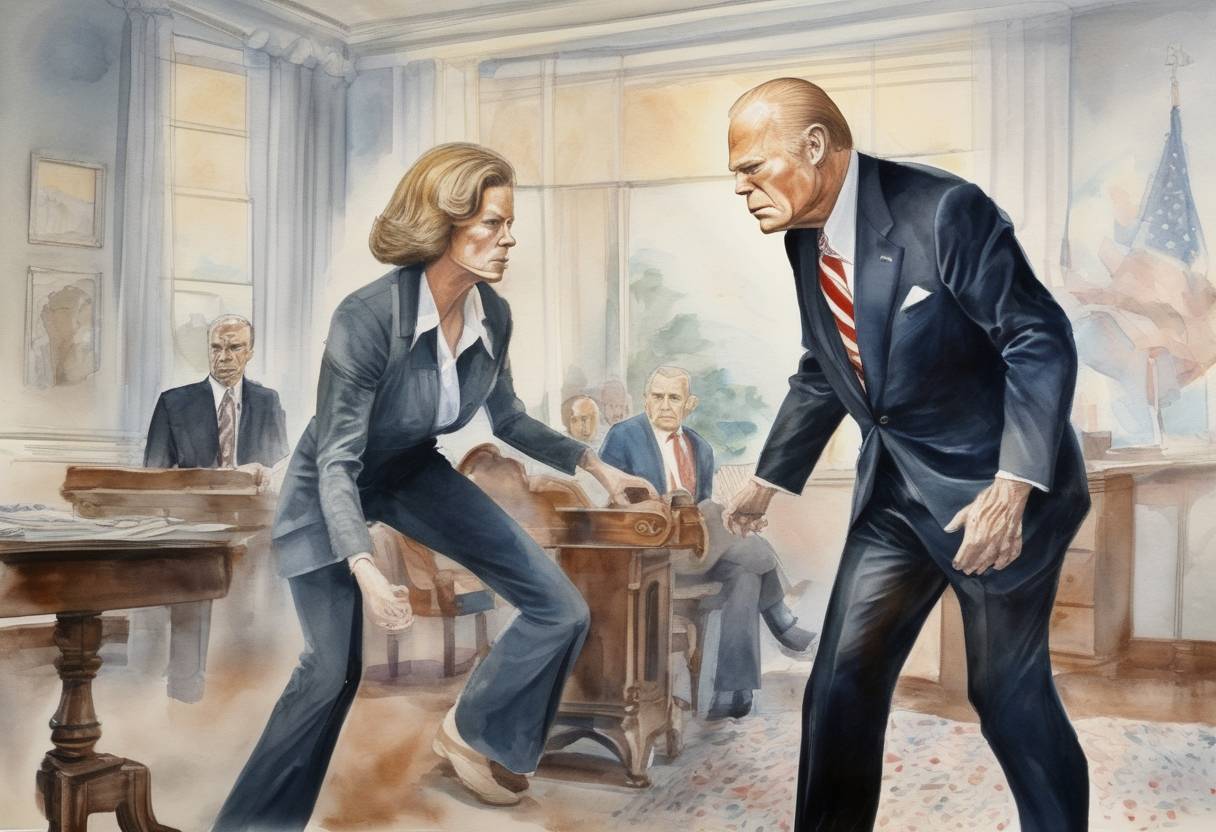
Assassination Attempt on President Gerald Ford by Sara Jane Moore
On September 22, 1975, Sara Jane Moore attempted to assassinate U.S. President Gerald Ford in San Francisco, California. This event marked the second assassination attempt on President Ford within a span of just 17 days, following an earlier attempt by Lynette “Squeaky” Fromme.
Background
Sara Jane Moore was a 45-year-old former accountant and political radical. Her motivations were rooted in her disillusionment with the U.S. government and her involvement with leftist political groups. Moore had been under FBI surveillance earlier in the year, but she was not considered a significant threat at the time of the attempt.
The Event
- Date and Location: The assassination attempt occurred on September 22, 1975, outside the St. Francis Hotel in San Francisco, California.
- The Attempt: As President Ford exited the hotel and was greeting the public, Moore fired a single shot from a .38 caliber revolver. Her shot narrowly missed the President, passing over his head.
- Intervention: A bystander named Oliver Sipple, a former Marine, quickly reacted by grabbing Moore’s arm, deflecting her aim. This action likely prevented her from firing a second, potentially more accurate shot.
Aftermath
- Arrest and Conviction: Moore was immediately apprehended by the Secret Service and local police. She was charged with attempted assassination and pleaded guilty. In 1976, she was sentenced to life in prison.
- Release: After serving 32 years, Moore was released on parole on December 31, 2007, at the age of 77.
- Impact on Security: The attempts on President Ford’s life led to increased security measures for U.S. Presidents, including more stringent crowd control and enhanced Secret Service protocols.
Historical Significance
The assassination attempt by Sara Jane Moore highlighted the volatile political climate of the 1970s in the United States, a period marked by social upheaval and political dissent. It underscored the vulnerabilities in presidential security at the time and contributed to reforms aimed at better protecting national leaders.
The incident also brought attention to the role of civilians in protecting public figures, as exemplified by Oliver Sipple’s quick actions, which were widely praised and recognized as having potentially saved President Ford’s life.