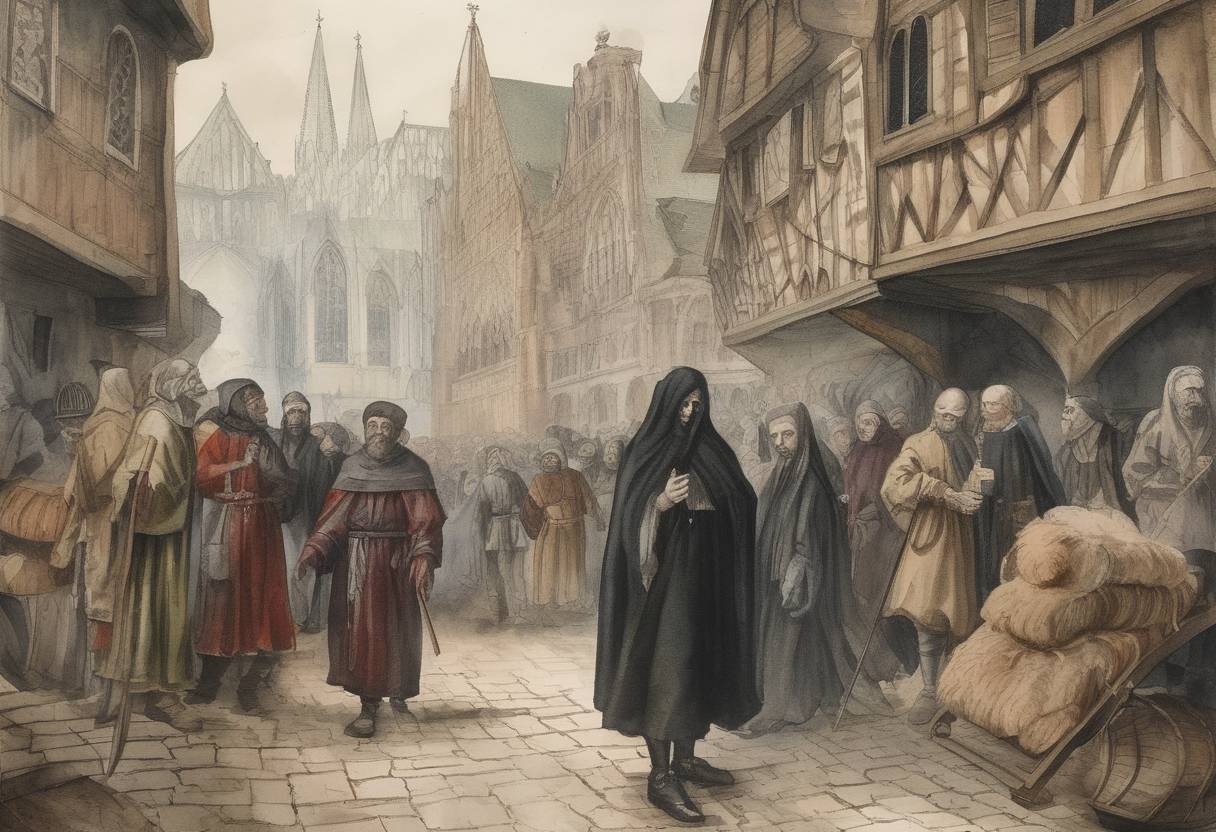
The Cologne Pogrom of August 24, 1349
On August 24, 1349, a tragic event unfolded in Cologne, Germany, as part of a series of violent attacks against Jewish communities during the period of the Black Death. This event, known as the Cologne Pogrom, was one of many instances where Jews were scapegoated and persecuted amidst the widespread panic and devastation caused by the plague.
Context and Background
The Black Death, which ravaged Europe between 1347 and 1351, was one of the deadliest pandemics in human history, resulting in the deaths of an estimated 25 to 30 million people in Europe alone. The disease, caused by the bacterium Yersinia pestis, spread rapidly through trade routes and densely populated areas, leading to widespread fear and social upheaval.
In the absence of scientific understanding of the disease, communities sought explanations for the catastrophe. Jews, who were often marginalized and lived in segregated areas, became convenient scapegoats. Rumors spread that Jewish communities were poisoning wells to deliberately spread the plague, despite the lack of evidence to support such claims.
The Pogrom in Cologne
Cologne, a major city in the Holy Roman Empire, was home to a significant Jewish population. On August 24, 1349, the Jewish community in Cologne faced a brutal pogrom. The violence was fueled by the baseless accusations that Jews were responsible for the Black Death. The pogrom led to the massacre of many Jews, while others were forcibly converted or expelled from the city.
Broader Historical Significance
The Cologne Pogrom was part of a larger wave of anti-Jewish violence that swept across Europe during the Black Death. Similar attacks occurred in cities such as Strasbourg, Mainz, and Erfurt. These pogroms were often incited by local authorities or mobs, and they resulted in the destruction of Jewish communities, loss of life, and the displacement of survivors.
The events of 1349 had long-lasting effects on Jewish life in Europe. Many Jewish communities were decimated, and survivors faced increased marginalization and persecution. The pogroms of this period are a stark reminder of the dangers of scapegoating and the devastating impact of baseless conspiracy theories.
Aftermath
In the years following the Black Death, some regions attempted to offer protection to Jewish communities, recognizing their economic and cultural contributions. However, the trauma and loss endured during the pogroms left a lasting scar on Jewish history in Europe.
The Cologne Pogrom of 1349 serves as a historical example of how fear and ignorance can lead to violence and persecution. It underscores the importance of combating prejudice and fostering understanding among diverse communities to prevent such tragedies from recurring.