The Siege of Sarajevo: April 5, 1992
1992 · Sarajevo, Bosnia and Herzegovina
Bosnian Serbs began the siege of Sarajevo, marking the start of the Bosnian War, which resulted in significant loss of life and destruction.
January 9, 1992
The Assembly of the Serb People in Bosnia and Herzegovina proclaimed the creation of the Republic of the Serbian People of Bosnia and Herzegovina.
Sarajevo, Bosnia and Herzegovina | Assembly of the Serb People
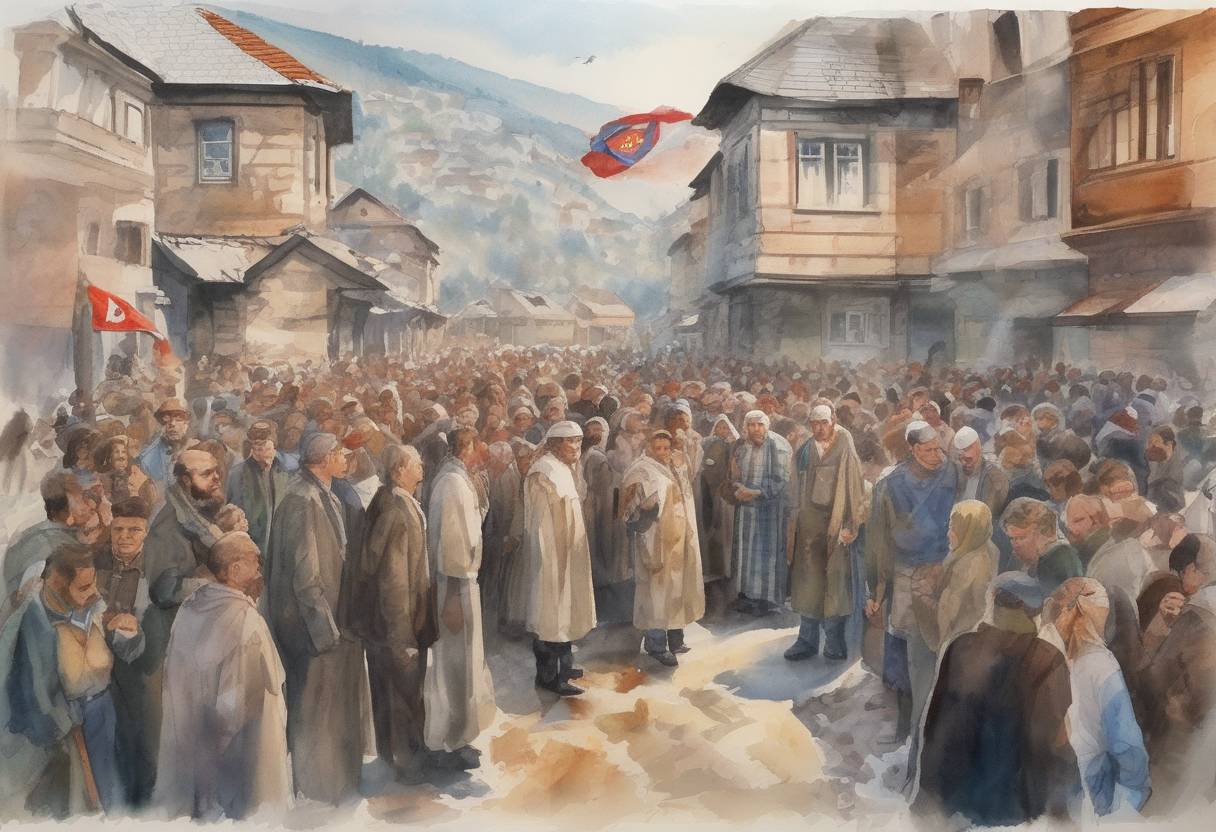
On January 9, 1992, a significant event unfolded in the Balkans as the Assembly of the Serb People in Bosnia and Herzegovina declared the creation of the Republic of the Serbian People of Bosnia and Herzegovina. This proclamation was a pivotal moment in the complex and tumultuous history of the region, marking a critical step in the disintegration of Yugoslavia and the onset of the Bosnian War.
The early 1990s were a period of intense political and ethnic tension in the Balkans. The Socialist Federal Republic of Yugoslavia, a multi-ethnic federation, was unraveling due to rising nationalism and demands for independence among its constituent republics. Slovenia and Croatia had already declared independence in 1991, leading to armed conflict, particularly in Croatia.
Bosnia and Herzegovina, a republic with a diverse population of Bosniaks (Bosnian Muslims), Croats, and Serbs, found itself at the center of these tensions. The Bosnian Serbs, led by the Serbian Democratic Party under Radovan Karadžić, were opposed to the independence of Bosnia and Herzegovina, fearing marginalization in a state dominated by Bosniaks and Croats.
On January 9, 1992, the Assembly of the Serb People in Bosnia and Herzegovina, convened by the Serbian Democratic Party, declared the establishment of the Republic of the Serbian People of Bosnia and Herzegovina. This entity was intended to be a separate political and territorial unit for Bosnian Serbs, aligning closely with the interests of Serbia and the broader Serb nationalist agenda.
The proclamation was a direct challenge to the sovereignty of Bosnia and Herzegovina, which was moving towards independence. It was also a precursor to the violent conflict that would engulf the region, as it set the stage for the Bosnian War, which began in earnest in April 1992.
The declaration of the Republic of the Serbian People of Bosnia and Herzegovina was not recognized by the international community, which supported the territorial integrity of Bosnia and Herzegovina. However, it effectively laid the groundwork for the self-declared Republika Srpska, which would become one of the two entities within Bosnia and Herzegovina following the Dayton Accords in 1995.
The Bosnian War, which lasted from 1992 to 1995, was marked by severe ethnic violence, including acts of genocide, particularly in places like Srebrenica. The conflict resulted in significant loss of life, displacement of populations, and widespread destruction.
The proclamation and the ensuing conflict highlighted the challenges of ethnic nationalism and the complexities of state-building in multi-ethnic societies. It underscored the fragility of peace in regions with deep-seated historical grievances and the international community’s role in conflict resolution and peacekeeping.
The events of January 9, 1992, remain a significant chapter in the history of the Balkans, illustrating the profound impact of nationalist movements and the enduring quest for political and ethnic self-determination.
Source: www.britannica.com