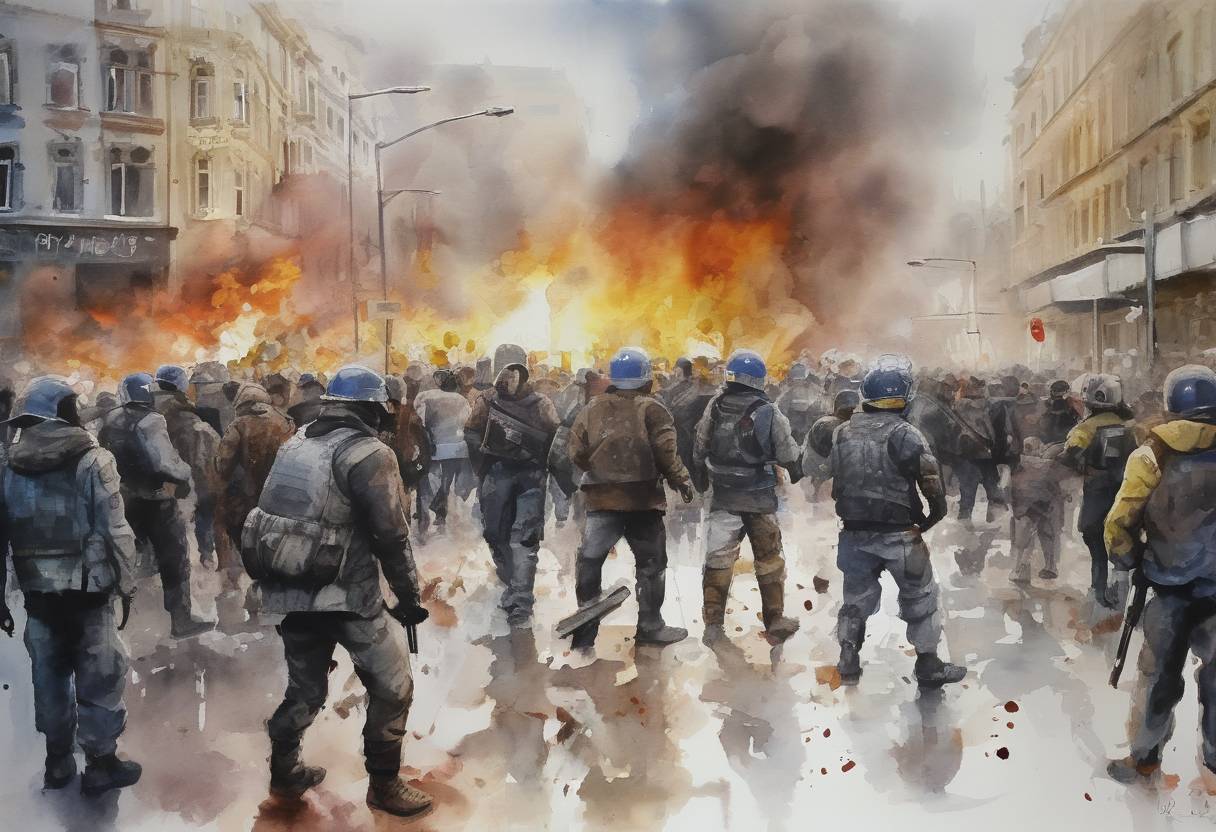
Violent Clashes in Kiev: Euromaidan Protests on February 19, 2014
On February 19, 2014, Kiev, the capital of Ukraine, witnessed one of the most violent days during the Euromaidan protests, resulting in the deaths of at least 26 people. This tragic event was part of a larger movement that had profound implications for Ukraine’s political landscape and its relationship with both Russia and the European Union.
Background
The Euromaidan protests began in November 2013, initially sparked by President Viktor Yanukovych’s decision to suspend an association agreement with the European Union in favor of closer ties with Russia. This decision was met with widespread disapproval, particularly among Ukrainians who favored European integration. The protests quickly grew into a broader movement against government corruption, abuse of power, and human rights violations.
Key Events Leading Up to February 19
- November 2013: Protests began in Kiev’s Maidan Nezalezhnosti (Independence Square), with demonstrators calling for closer ties with the EU and demanding the resignation of President Yanukovych.
- December 2013 - January 2014: The protests expanded, with hundreds of thousands of Ukrainians participating. The government responded with increasing force, leading to clashes between protesters and security forces.
- January 2014: The Ukrainian parliament passed anti-protest laws, which further inflamed tensions. Violent confrontations intensified, resulting in the first fatalities.
February 19, 2014: The Clashes
On February 18, 2014, violence escalated dramatically as protesters marched towards the Ukrainian parliament. The situation deteriorated overnight into February 19, with fierce clashes between protesters and security forces. Key aspects of the violence included:
- Location: The most intense fighting occurred around Maidan Nezalezhnosti and the surrounding streets.
- Casualties: At least 26 people were killed, including both protesters and police officers. Hundreds more were injured.
- Methods: Security forces used live ammunition, rubber bullets, and tear gas, while protesters defended themselves with makeshift shields and Molotov cocktails.
Aftermath and Consequences
The events of February 19 marked a turning point in the Euromaidan protests:
- Political Impact: The violence led to increased international condemnation of the Ukrainian government. Western nations, including the United States and EU members, called for restraint and dialogue.
- Government Response: President Yanukovych’s government initially attempted to suppress the protests through force but eventually agreed to negotiations.
- Resolution: By late February, Yanukovych fled Ukraine, and an interim government was established. This paved the way for new elections and significant political changes in Ukraine.
Broader Historical Significance
The Euromaidan protests and the violence of February 19, 2014, were pivotal in reshaping Ukraine’s political direction. They led to:
- Increased Tensions with Russia: The subsequent annexation of Crimea by Russia and the conflict in Eastern Ukraine.
- Closer EU Ties: Ukraine’s eventual signing of the EU association agreement and a shift towards European integration.
- Domestic Reforms: Efforts to address corruption and implement democratic reforms within Ukraine.
The events of February 19, 2014, remain a significant chapter in Ukraine’s modern history, symbolizing the struggle for democratic governance and national sovereignty.