The Treaty of Lisbon: Signing on December 13, 2007
2007 · Lisbon, Portugal
The Treaty of Lisbon was signed by the European Union member states, aiming to streamline EU institutions and increase efficiency. It came into force on December 1, 2009.
May 31, 1991
Angola's government and UNITA rebels signed a peace agreement in Lisbon, Portugal, in an attempt to end the long-standing civil war in Angola.
Lisbon, Portugal | UNITA
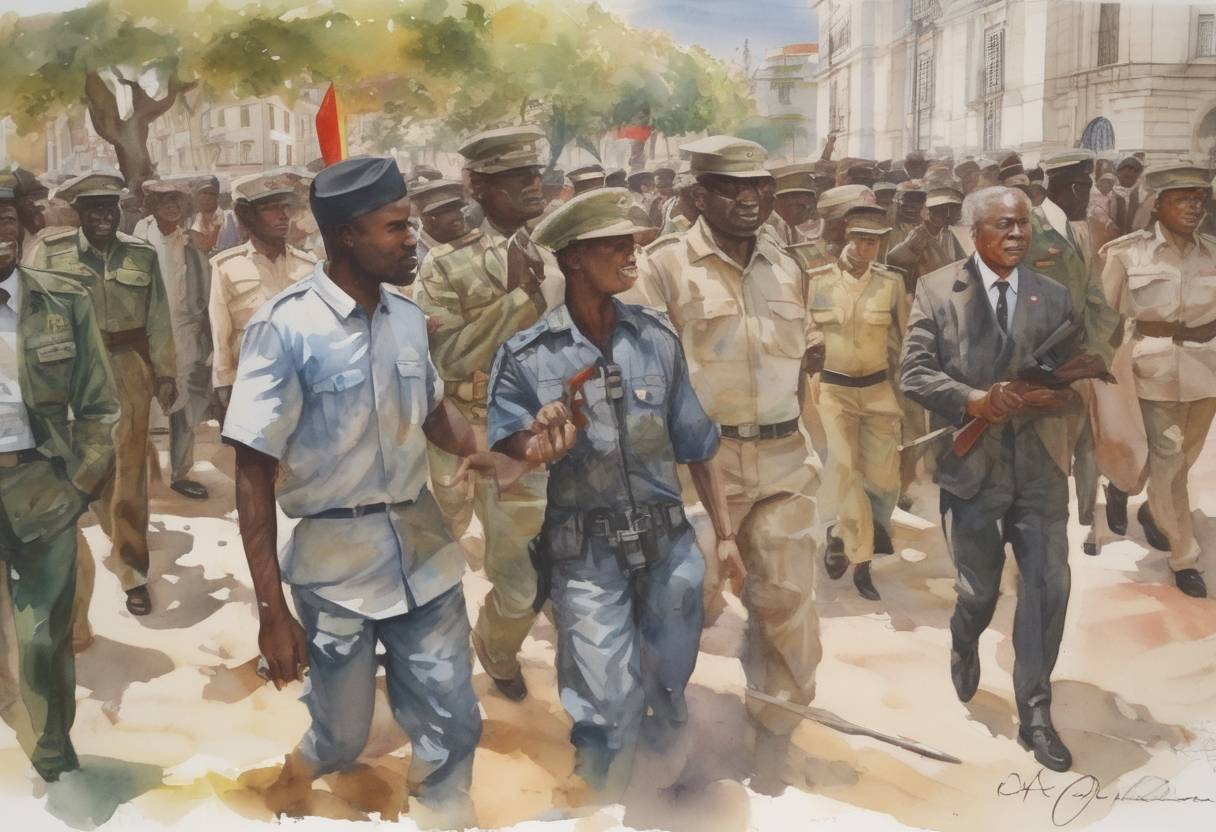
On May 31, 1991, a significant milestone was reached in the protracted Angolan Civil War when the government of Angola and the National Union for the Total Independence of Angola (UNITA) signed a peace agreement in Lisbon, Portugal. This accord, known as the Bicesse Accords, aimed to bring an end to the conflict that had ravaged Angola since its independence from Portugal in 1975.
Angolan Civil War: The war began shortly after Angola gained independence, primarily involving three factions: the People’s Movement for the Liberation of Angola (MPLA), which formed the government, UNITA, and the National Liberation Front of Angola (FNLA). The conflict was fueled by Cold War dynamics, with the MPLA receiving support from the Soviet Union and Cuba, while UNITA was backed by the United States and South Africa.
Previous Attempts: Prior to the Bicesse Accords, several attempts at peace had been made, including the Alvor Agreement in 1975 and the Lusaka Protocol in 1994, but these efforts failed to establish lasting peace.
Negotiations: The peace talks were facilitated by the Portuguese government, with significant involvement from the United States and the Soviet Union, reflecting the international interest in resolving the conflict.
Key Provisions:
Elections and Renewed Conflict: The elections took place in 1992, but the results were contested by UNITA, leading to a resurgence of violence. The civil war resumed, continuing until 2002 when a final peace agreement was reached following the death of UNITA leader Jonas Savimbi.
Long-term Impact: Despite the initial failure to secure lasting peace, the Bicesse Accords were a crucial step in the peace process, demonstrating the potential for negotiation and international cooperation in conflict resolution.
Reconstruction and Development: The eventual end of the civil war in 2002 allowed Angola to focus on reconstruction and development, though the legacy of the conflict continues to affect the nation.
The Bicesse Accords remain a significant chapter in Angola’s history, illustrating both the challenges and possibilities of peacebuilding in a nation deeply affected by decades of conflict.
Source: en.wikipedia.org