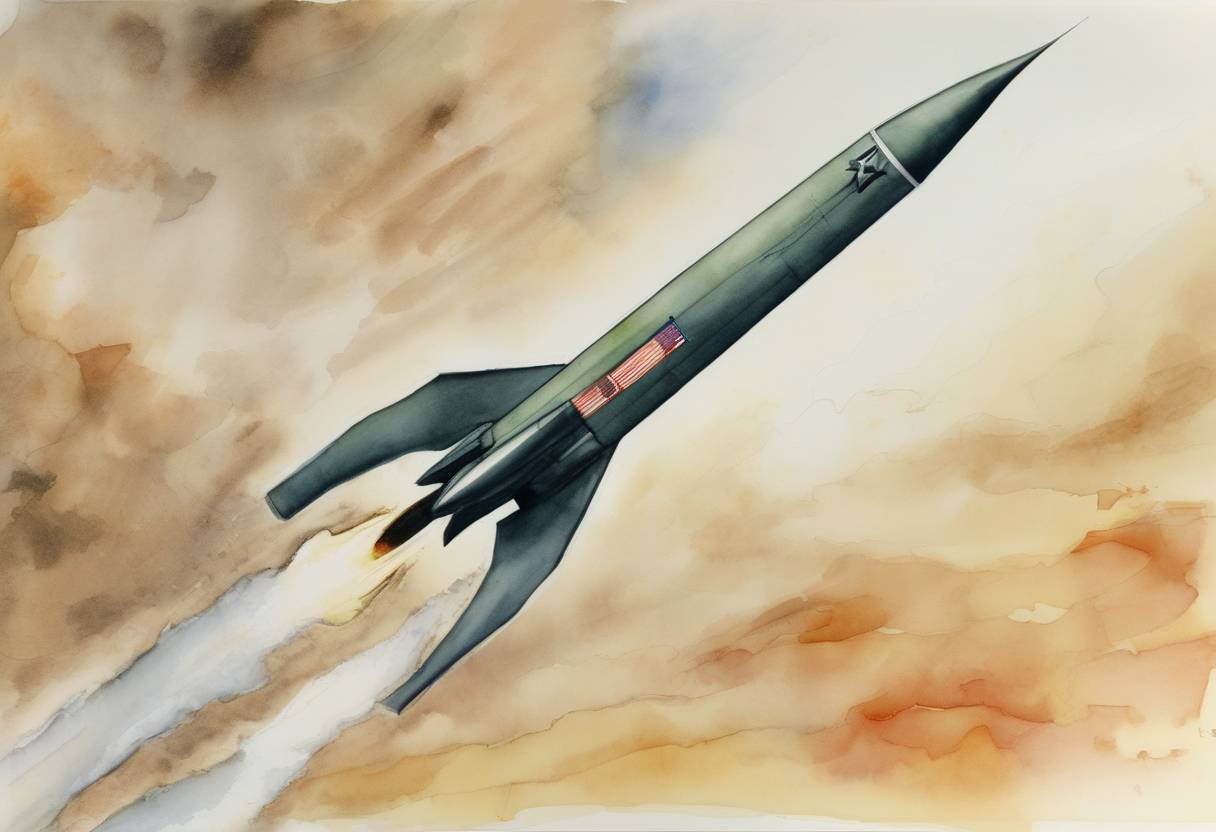
U.S. Withdrawal from the Anti-Ballistic Missile Treaty
On December 13, 2001, the United States officially announced its withdrawal from the Anti-Ballistic Missile (ABM) Treaty, a pivotal arms control agreement signed in 1972 between the United States and the Soviet Union. This decision marked a significant shift in U.S. defense policy and had considerable implications for international arms control dynamics.
Background of the ABM Treaty
The ABM Treaty was signed on May 26, 1972, by U.S. President Richard Nixon and Soviet General Secretary Leonid Brezhnev. The treaty was a cornerstone of strategic arms control during the Cold War, designed to limit the deployment of missile defense systems that could undermine the deterrence value of nuclear arsenals. Under the treaty, each side was allowed to deploy two ABM sites, later reduced to one, to protect either the national capital or an intercontinental ballistic missile (ICBM) field.
Events Leading to the Withdrawal
The decision to withdraw from the ABM Treaty was influenced by several factors:
Changing Security Environment: By the late 1990s and early 2000s, the geopolitical landscape had shifted significantly with the dissolution of the Soviet Union. The U.S. government, under President George W. Bush, argued that the treaty was outdated and did not address emerging threats from rogue states and non-state actors.
Missile Defense Advocacy: The Bush administration was a strong proponent of developing a national missile defense system to protect against potential missile attacks from countries like North Korea and Iran. The ABM Treaty was seen as a barrier to deploying such a system.
Technological Advancements: Advances in missile defense technology prompted a reevaluation of the treaty’s constraints. The U.S. sought the freedom to test and deploy new systems that could provide a more comprehensive defense.
The Withdrawal Process
On December 13, 2001, President George W. Bush formally announced the U.S. intention to withdraw from the ABM Treaty, invoking the treaty’s provision that allowed either party to withdraw with six months’ notice if it decided that extraordinary events related to the subject matter of the treaty had jeopardized its supreme interests.
Consequences and Aftermath
Impact on Arms Control: The withdrawal raised concerns about the future of arms control agreements and the potential for a new arms race. Critics argued that it undermined strategic stability and could lead to the proliferation of missile defense systems.
U.S.-Russia Relations: The decision strained relations between the United States and Russia, which viewed the treaty as a key element of strategic stability. However, both countries continued to engage in dialogue on arms control issues.
Development of Missile Defense: Following the withdrawal, the U.S. accelerated the development and deployment of missile defense systems, including ground-based interceptors and sea-based Aegis systems.
Broader Historical Significance
The U.S. withdrawal from the ABM Treaty reflected a broader shift in U.S. defense policy towards unilateralism and preemptive defense strategies in the post-Cold War era. It highlighted the challenges of adapting Cold War-era treaties to new security threats and technological realities, setting the stage for future debates on arms control and international security.