Estonia's EU Accession Referendum - September 14, 2003
2003 · Tallinn, Estonia
Estonia held a referendum on joining the European Union, with the majority voting in favor of accession.
November 13, 1994
Sweden votes in a referendum to join the European Union, which it does on January 1, 1995.
Stockholm, Sweden | European Union
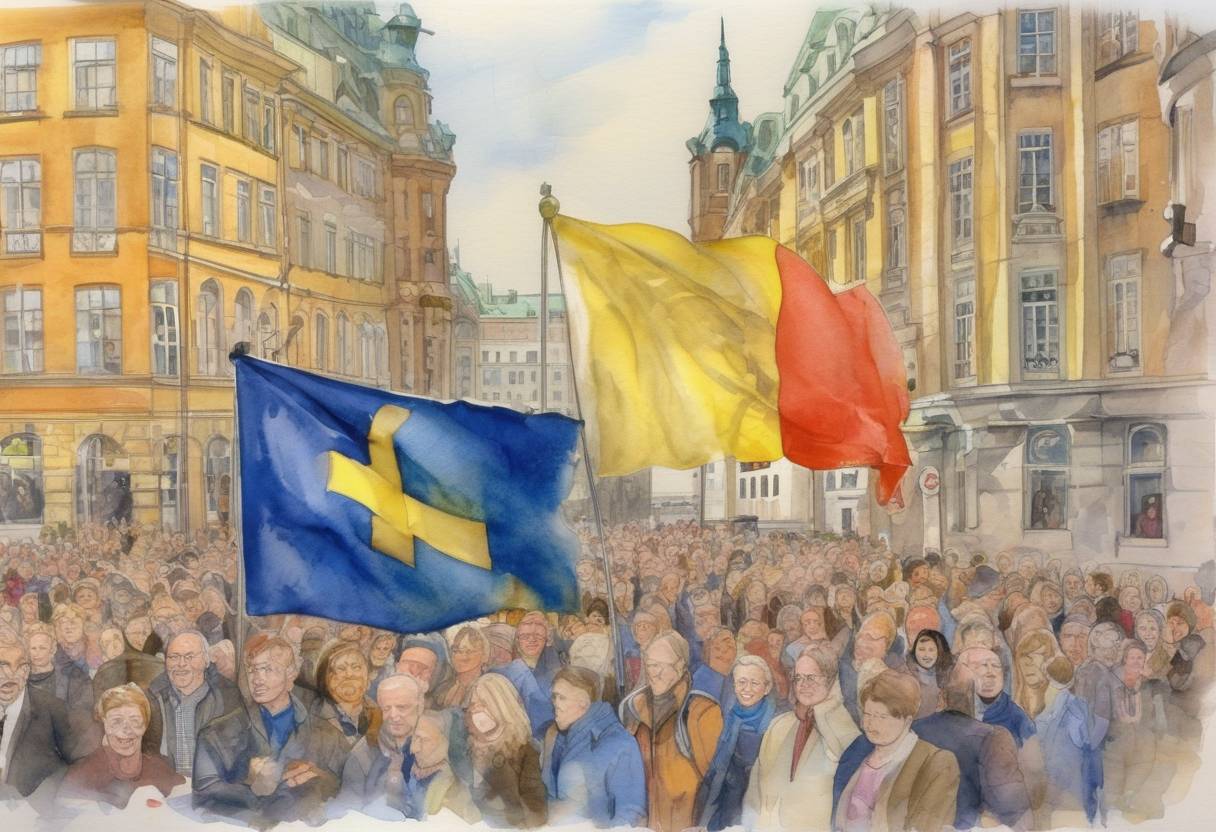
On November 13, 1994, Sweden held a pivotal referendum to decide whether the country should join the European Union (EU). This referendum was a significant moment in Sweden’s modern history, marking a shift in its international relations and economic policy.
Post-Cold War Environment: The end of the Cold War and the dissolution of the Soviet Union led to a reconfiguration of political and economic alliances in Europe. Many countries sought closer integration with Western Europe to ensure economic stability and security.
Economic Considerations: Sweden, traditionally neutral and non-aligned, faced economic challenges in the early 1990s, including a severe banking crisis. Joining the EU was seen as a way to boost economic growth and stability by gaining access to the single market.
Political Debate: The decision to join the EU was hotly debated within Sweden. Proponents argued that EU membership would enhance Sweden’s influence in Europe and provide economic benefits. Opponents feared loss of sovereignty and the impact on Sweden’s welfare state.
EU Membership: Following the referendum, Sweden officially joined the European Union on January 1, 1995, alongside Austria and Finland.
Economic Integration: Membership allowed Sweden to participate fully in the EU’s single market, facilitating trade and investment. However, Sweden opted not to adopt the euro, retaining the Swedish krona as its currency.
Political Impact: Joining the EU marked a significant shift in Sweden’s foreign policy, aligning it more closely with European integration efforts. It also sparked ongoing debates about the balance between national sovereignty and EU membership.
European Integration: Sweden’s accession to the EU was part of a broader wave of European integration in the 1990s, as many countries sought to strengthen economic and political ties in the post-Cold War era.
Model of Neutrality: Sweden’s decision to join the EU while maintaining its own currency and military neutrality served as a model for other countries considering similar paths.
In summary, the 1994 referendum was a landmark event in Swedish history, reflecting broader trends of European integration and economic globalization. It set the stage for Sweden’s active participation in the EU while maintaining its unique national identity.
Source: en.wikipedia.org