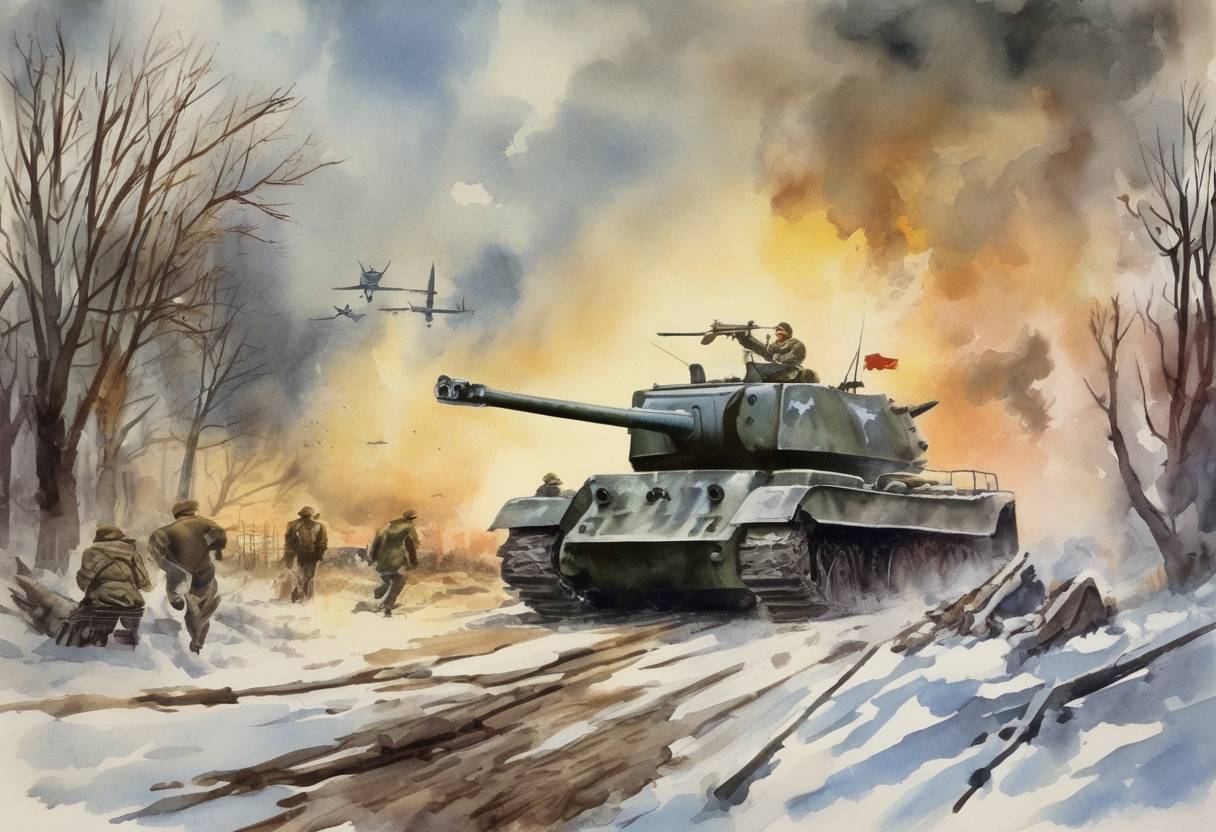
The Soviet Union’s Kharkov Offensive: May 12, 1942
On May 12, 1942, the Soviet Union launched an ambitious military operation known as the Kharkov Offensive, aimed at recapturing the city of Kharkov from German forces during World War II. This operation, also referred to as the Second Battle of Kharkov, was a significant engagement on the Eastern Front and marked a critical moment in the war’s progression.
Context and Background
- Location: Kharkov, located in the northeastern part of Ukraine, was a strategically vital industrial city and a major transportation hub. Its capture was crucial for both the Soviet and German military strategies.
- Soviet Strategy: The Soviet High Command, led by Marshal Semyon Timoshenko, sought to exploit perceived weaknesses in the German lines following the harsh winter of 1941-1942. The aim was to encircle and destroy the German 6th Army, thereby relieving pressure on the Soviet forces defending Moscow and Leningrad.
- German Defense: The German Army, under the command of General Friedrich Paulus, had fortified its positions around Kharkov. Despite suffering from the winter’s toll, the Germans were prepared for a Soviet counteroffensive.
Key Events of the Offensive
- Initial Success: The offensive began with a promising start for the Soviets. On May 12, Soviet forces launched a two-pronged attack, achieving initial breakthroughs and capturing several German positions.
- German Counterattack: However, the German forces quickly regrouped. By May 17, they launched a counteroffensive, Operation Fridericus, which effectively encircled the advancing Soviet troops.
- Encirclement and Defeat: The Soviet forces, overextended and lacking adequate supplies, were trapped in a pincer movement. By May 28, the encircled Soviet units were largely destroyed or captured, resulting in a significant defeat for the Red Army.
Aftermath and Consequences
- Casualties: The Soviet Union suffered heavy losses, with estimates of around 200,000 troops killed, wounded, or captured. The Germans also incurred significant casualties but maintained control of Kharkov.
- Strategic Impact: The failure of the Kharkov Offensive had profound implications for the Soviet war effort. It delayed Soviet plans for a summer offensive and allowed the Germans to regroup and prepare for their own summer campaign, which culminated in the Battle of Stalingrad.
- Lessons Learned: The defeat highlighted the need for better coordination and intelligence within the Soviet military. It also underscored the importance of logistical support and the dangers of overextending forces without securing supply lines.
Broader Historical Significance
The Second Battle of Kharkov was a stark reminder of the challenges faced by the Soviet Union in the early years of World War II. Despite the setback, the Soviet resilience and eventual adaptation in military strategy would later contribute to their success in turning the tide against the Axis powers. The battle also set the stage for future engagements on the Eastern Front, which would become pivotal in the eventual Allied victory in Europe.