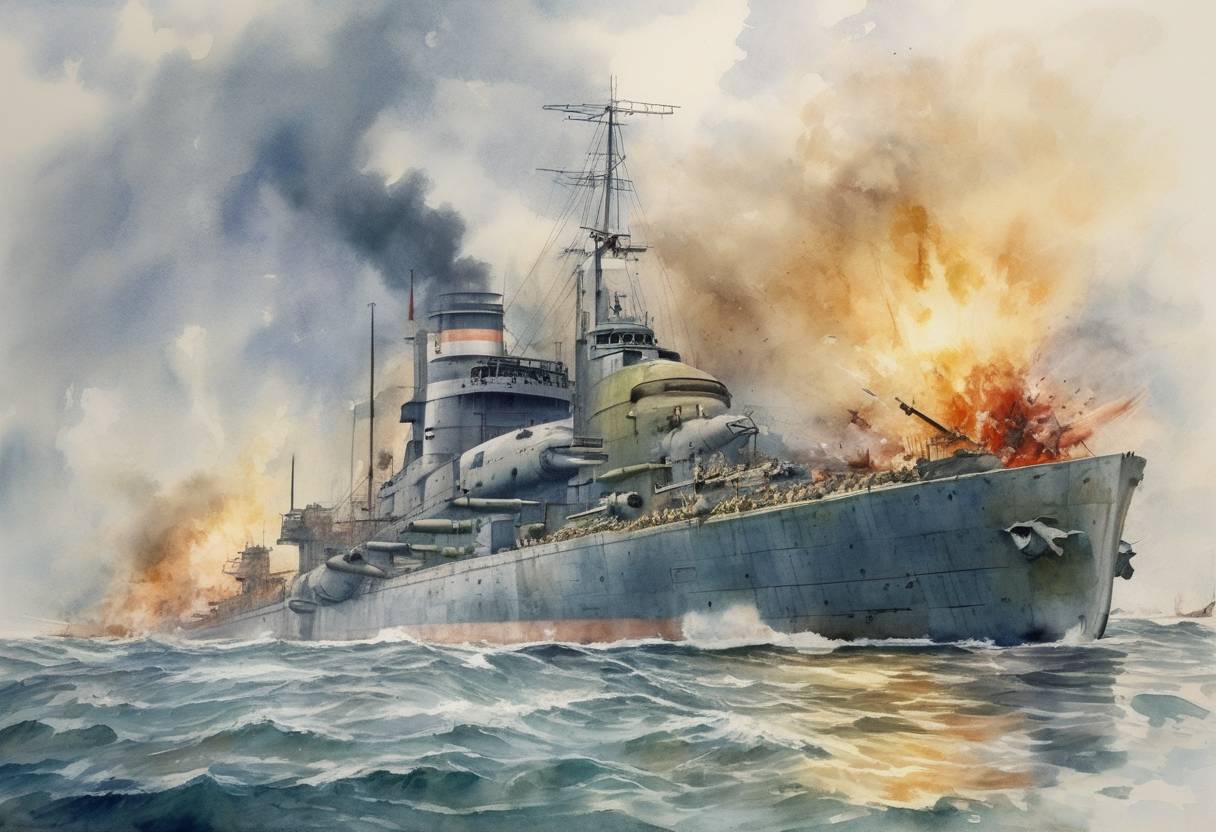
Sinking of the HMT Rohna: November 26, 1943
On November 26, 1943, during World War II, the British troopship HMT Rohna was sunk in the Mediterranean Sea by a German guided bomb, resulting in the tragic loss of 1,138 lives. This event marked one of the deadliest maritime disasters involving U.S. forces during the war.
Background
- HMT Rohna: Originally a British cargo ship, the HMT Rohna was repurposed as a troopship during World War II. It was part of a convoy transporting troops and equipment from Oran, Algeria, to the India-Burma theater.
- German Henschel Hs 293: The attack on the Rohna involved the Henschel Hs 293, an early form of guided missile. This radio-controlled glide bomb was developed by Nazi Germany and represented a significant technological advancement in warfare.
The Attack
- Date and Location: The attack occurred on November 26, 1943, in the Mediterranean Sea, off the coast of Algeria.
- Execution: The German Luftwaffe launched an air assault on the convoy. A bomber released the Hs 293 guided bomb, which successfully struck the Rohna.
- Impact: The bomb caused catastrophic damage, leading to the rapid sinking of the ship. The attack resulted in the deaths of 1,138 individuals, including 1,015 American troops, making it one of the largest losses of U.S. military personnel at sea during the war.
Aftermath
- Casualties: The sinking of the Rohna resulted in significant loss of life, with only about 600 survivors. The high casualty rate was exacerbated by the chaos of the attack and the challenges of rescue operations.
- Secrecy and Recognition: Initially, the details of the attack were kept secret due to wartime censorship and the sensitive nature of the technology involved. It wasn’t until decades later that the full story of the Rohna disaster became widely known.
- Historical Significance: The sinking of the HMT Rohna highlighted the deadly effectiveness of guided missile technology and underscored the vulnerabilities of Allied shipping during the war. It also served as a somber reminder of the human cost of technological warfare.
Legacy
The tragedy of the HMT Rohna is commemorated by survivors and families of the victims, ensuring that the sacrifices made on that fateful day are not forgotten. Memorials and annual remembrances honor those who lost their lives, preserving the memory of this significant yet often overlooked event in World War II history.