Operation Mountain Storm: May 15, 2004
2004 · Khost, Afghanistan
Armed forces of the United States launched Operation Mountain Storm in Afghanistan, aimed at eliminating Taliban and Al-Qaeda forces in the region.
October 7, 2001
The United States and its allies launched Operation Enduring Freedom, initiating the War in Afghanistan in response to the September 11 attacks, targeting the Taliban and al-Qaeda forces.
Kabul, Afghanistan | United States Armed Forces
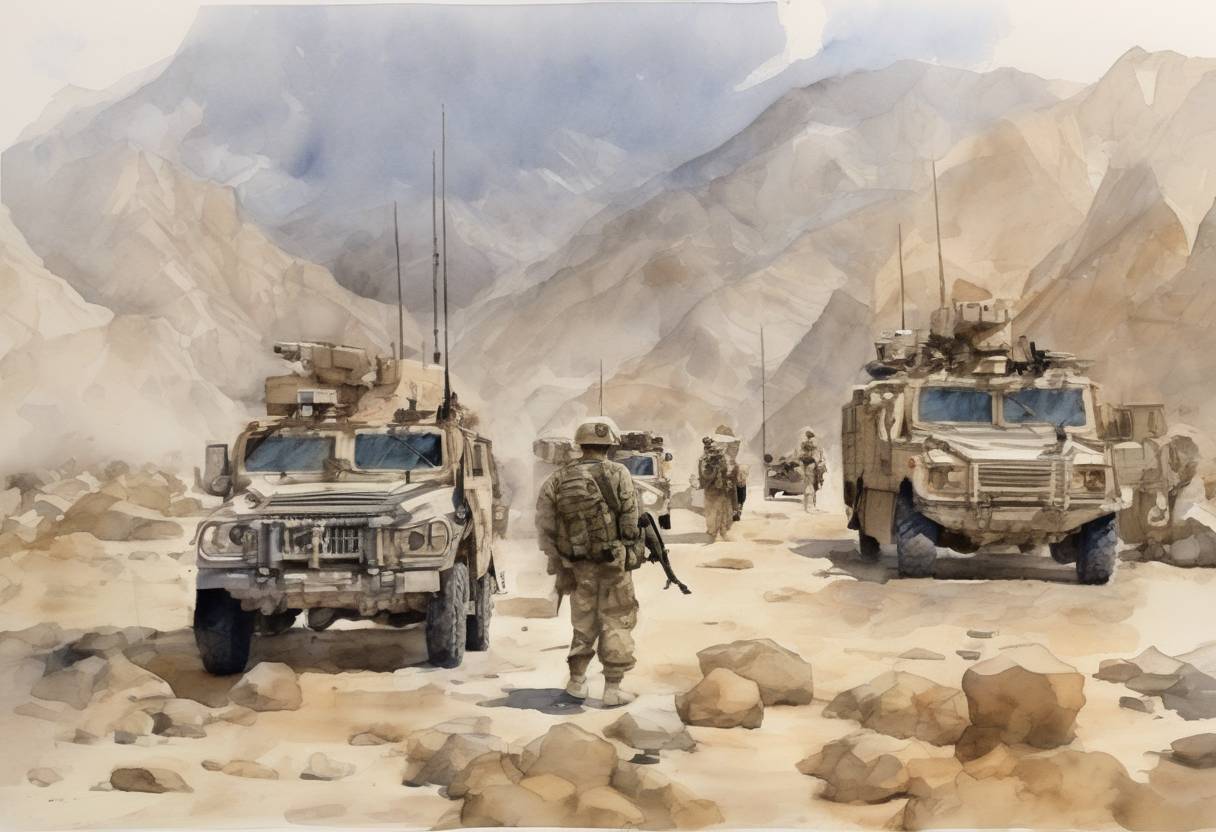
Operation Enduring Freedom marked the beginning of the United States’ military response to the September 11, 2001, terrorist attacks orchestrated by the al-Qaeda network. These attacks, which resulted in the deaths of nearly 3,000 people, prompted the U.S. government to take decisive action against those responsible and the regimes that harbored them.
The Taliban, an Islamist militant group, controlled most of Afghanistan at the time and provided sanctuary to al-Qaeda and its leader, Osama bin Laden. Despite international pressure, the Taliban refused to extradite bin Laden, leading to the U.S. decision to initiate military action.
Launch of Military Operations: The United States, supported by the United Kingdom and other allies, commenced Operation Enduring Freedom. The operation began with airstrikes targeting Taliban military sites, al-Qaeda training camps, and key infrastructure.
Coalition Involvement: The initial phase of the operation involved a coalition of countries, including NATO allies and other nations, contributing various forms of support, such as intelligence, logistical aid, and military forces.
Objectives: The primary goals were to dismantle al-Qaeda’s operational capabilities, capture or kill Osama bin Laden and other key leaders, and remove the Taliban from power to prevent Afghanistan from being a safe haven for terrorists.
Taliban Retreat: The initial air campaign was followed by ground operations, leading to the rapid retreat of Taliban forces from major cities, including Kabul, by November 2001.
Northern Alliance Support: The U.S. and its allies provided support to the Northern Alliance, an Afghan opposition group, which played a crucial role in the ground offensive against the Taliban.
Establishment of a New Government: By December 2001, the Bonn Agreement facilitated the establishment of an interim Afghan government, with Hamid Karzai appointed as its head.
Long-term Conflict: Operation Enduring Freedom marked the beginning of a prolonged conflict in Afghanistan, which became the longest war in U.S. history, lasting until the withdrawal of U.S. troops in August 2021.
Global War on Terror: The operation was a pivotal moment in the broader “Global War on Terror,” influencing U.S. foreign policy and military strategy for years to come.
Impact on Afghanistan: The war significantly impacted Afghanistan’s political landscape, infrastructure, and civilian population, with ongoing challenges related to security, governance, and development.
Operation Enduring Freedom set the stage for two decades of military engagement in Afghanistan, with complex implications for regional stability and international relations.
Source: en.wikipedia.org