Luna 9: The First Soft Landing on the Moon
1966 · Moscow, Soviet Union
The Soviet Union's Luna 9 became the first spacecraft to achieve a soft landing on the Moon and transmit photographic data to Earth.
September 12, 1959
The Soviet Union launches Luna 2, the first spacecraft to reach the Moon.
Baikonur, Kazakhstan | Soviet Space Program
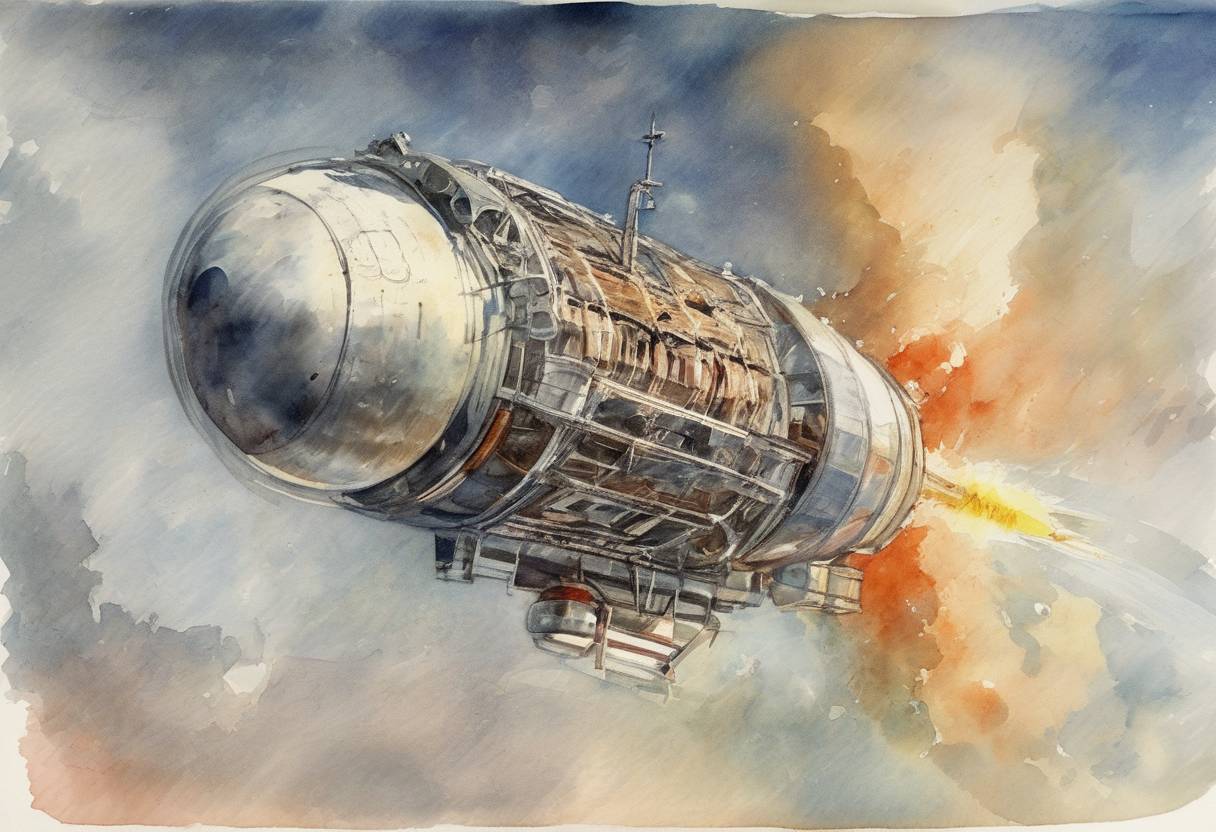
On September 12, 1959, the Soviet Union achieved a significant milestone in the Space Race by launching Luna 2, the first spacecraft to reach the Moon. This event marked a pivotal moment in space exploration, showcasing the technological prowess of the Soviet space program and intensifying the competition between the United States and the Soviet Union.
The Luna program was a series of robotic spacecraft missions launched by the Soviet Union with the goal of exploring the Moon. Following the success of Luna 1, which became the first spacecraft to reach the vicinity of the Moon in January 1959, Luna 2 was designed to impact the lunar surface, providing valuable data about the Moon’s environment.
Luna 2 was equipped with scientific instruments to study cosmic rays, solar wind, and magnetic fields. The spacecraft’s primary mission was to crash-land on the Moon, thereby confirming the feasibility of reaching the lunar surface.
The successful impact of Luna 2 on the Moon was a monumental achievement for the Soviet Union, demonstrating their advanced capabilities in space exploration. It provided a morale boost to the Soviet space program and served as a powerful symbol of Soviet scientific and technological advancement during the Cold War.
Luna 2’s mission remains a landmark in the history of space exploration, symbolizing humanity’s first successful attempt to reach another world and paving the way for future lunar missions.
Source: www.nasa.gov