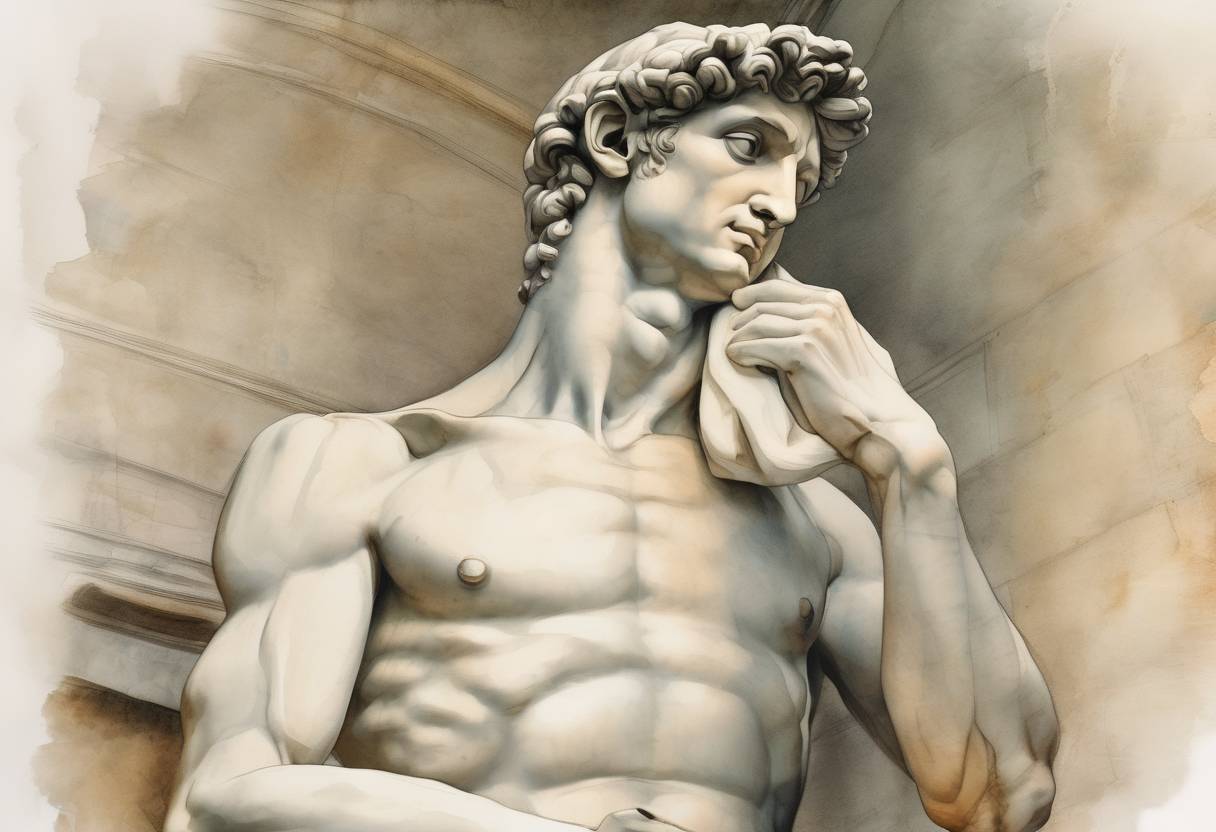
Michelangelo Begins Work on the Statue of David
On September 13, 1501, the renowned Italian artist Michelangelo Buonarroti began work on what would become one of the most iconic sculptures in the history of art: the statue of David. This masterpiece, which epitomizes the Renaissance ideals of human beauty and strength, was commissioned by the Opera del Duomo for the Cathedral of Florence.
Context and Background
Commission and Material: The project was originally intended as part of a series of statues to adorn the Florence Cathedral. The block of marble Michelangelo used had been quarried over 40 years earlier and had already been worked on by two other sculptors, Agostino di Duccio and Antonio Rossellino, who abandoned it due to its challenging nature.
Florence and the Renaissance: At the time, Florence was a vibrant center of the Renaissance, a period marked by a renewed interest in classical antiquity, humanism, and artistic innovation. The city was eager to display its cultural and political prowess through grand artistic projects.
Michelangelo’s Approach
Artistic Vision: Michelangelo, who was only 26 years old at the time, envisioned David not as a victorious hero, but as a contemplative and poised figure, capturing the moment before his battle with Goliath. This interpretation was a departure from previous depictions, which often showed David after his triumph.
Technical Mastery: Michelangelo’s work on David demonstrated his exceptional skill in sculpting the human form. He meticulously carved the 17-foot-tall statue, achieving a level of detail and realism that was unprecedented. The statue’s anatomy, from the tension in David’s muscles to the intensity in his gaze, reflects Michelangelo’s deep understanding of human physiology and emotion.
Significance and Legacy
Symbol of Florence: Upon its completion in 1504, David was placed in the Piazza della Signoria, in front of the Palazzo Vecchio, becoming a symbol of Florentine freedom and civic pride. It represented the city’s defiance against larger, more powerful adversaries, much like David’s biblical confrontation with Goliath.
Artistic Influence: Michelangelo’s David set a new standard for Renaissance art, influencing countless artists and sculptors. It remains a testament to the era’s artistic achievements and continues to draw admiration for its beauty and technical brilliance.
Preservation and Display: Today, the original statue is housed in the Galleria dell’Accademia in Florence, where it attracts millions of visitors each year. Its enduring legacy is a testament to Michelangelo’s genius and the cultural vibrancy of Renaissance Florence.
Michelangelo’s work on David not only solidified his reputation as one of the greatest artists of his time but also left an indelible mark on the history of art, inspiring generations to come.