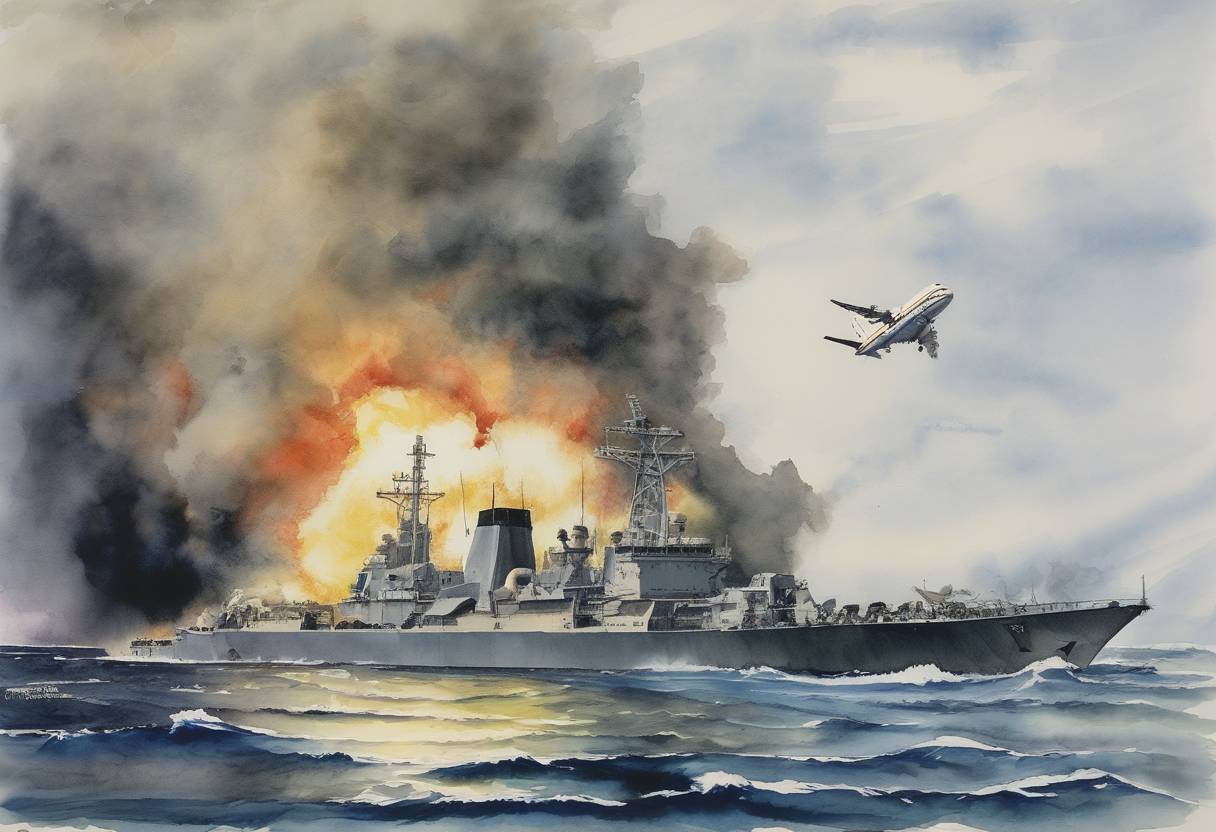
Iran Air Flight 655 Incident
On July 3, 1988, a tragic incident occurred involving Iran Air Flight 655, which was shot down by the USS Vincennes, a United States Navy guided missile cruiser. This event resulted in the deaths of all 290 passengers and crew aboard the aircraft and significantly escalated tensions between the United States and Iran.
Background
Iran-Iraq War Context: At the time, the Iran-Iraq War was ongoing, having started in 1980. The Persian Gulf was a region of strategic importance, and both Iran and Iraq had targeted oil tankers and other vessels, leading to increased military presence by external powers, including the United States, to protect shipping lanes.
USS Vincennes: The USS Vincennes was part of the U.S. naval forces deployed in the Persian Gulf to ensure the security of maritime traffic. The ship was equipped with the Aegis Combat System, a sophisticated radar and missile system designed for air defense.
The Incident
Flight Details: Iran Air Flight 655 was a scheduled passenger flight from Tehran to Dubai, with a stopover in Bandar Abbas. On July 3, 1988, the aircraft, an Airbus A300, departed Bandar Abbas and was en route to Dubai.
Misidentification: The USS Vincennes, under the command of Captain William C. Rogers III, was engaged in a skirmish with Iranian gunboats in the Strait of Hormuz. During this time, the Vincennes mistook the ascending civilian airliner for an attacking Iranian F-14 Tomcat fighter jet.
Engagement: Despite the aircraft being in a commercial air corridor and transmitting a civilian transponder signal, the Vincennes fired two surface-to-air missiles. The aircraft was hit and subsequently crashed into the Persian Gulf, killing all 290 people on board, including 66 children.
Aftermath and Consequences
International Reaction: The incident drew widespread international condemnation. Iran accused the United States of a deliberate attack, while the U.S. government maintained that it was a tragic mistake.
U.S. Response: The United States expressed regret over the loss of life but did not formally apologize at the time. The incident was attributed to the stress of combat and the complex environment in the Persian Gulf.
Legal and Diplomatic Outcomes: In 1996, the United States and Iran reached a settlement at the International Court of Justice. The U.S. agreed to pay $61.8 million in compensation to the families of the victims, although it did not admit legal liability.
Impact on U.S.-Iran Relations: The incident further strained U.S.-Iran relations, which were already tense due to the ongoing Iran-Iraq War and other geopolitical factors. It remains a significant event in the history of U.S.-Iran interactions.
Broader Historical Significance
The downing of Iran Air Flight 655 highlighted the dangers of military operations in congested civilian areas and underscored the need for improved communication and identification protocols to prevent similar tragedies. It also served as a reminder of the human cost of geopolitical conflicts and the importance of diplomatic efforts to resolve tensions peacefully.