The American Taxpayer Relief Act of 2012
2013 · Washington, D.C., United States
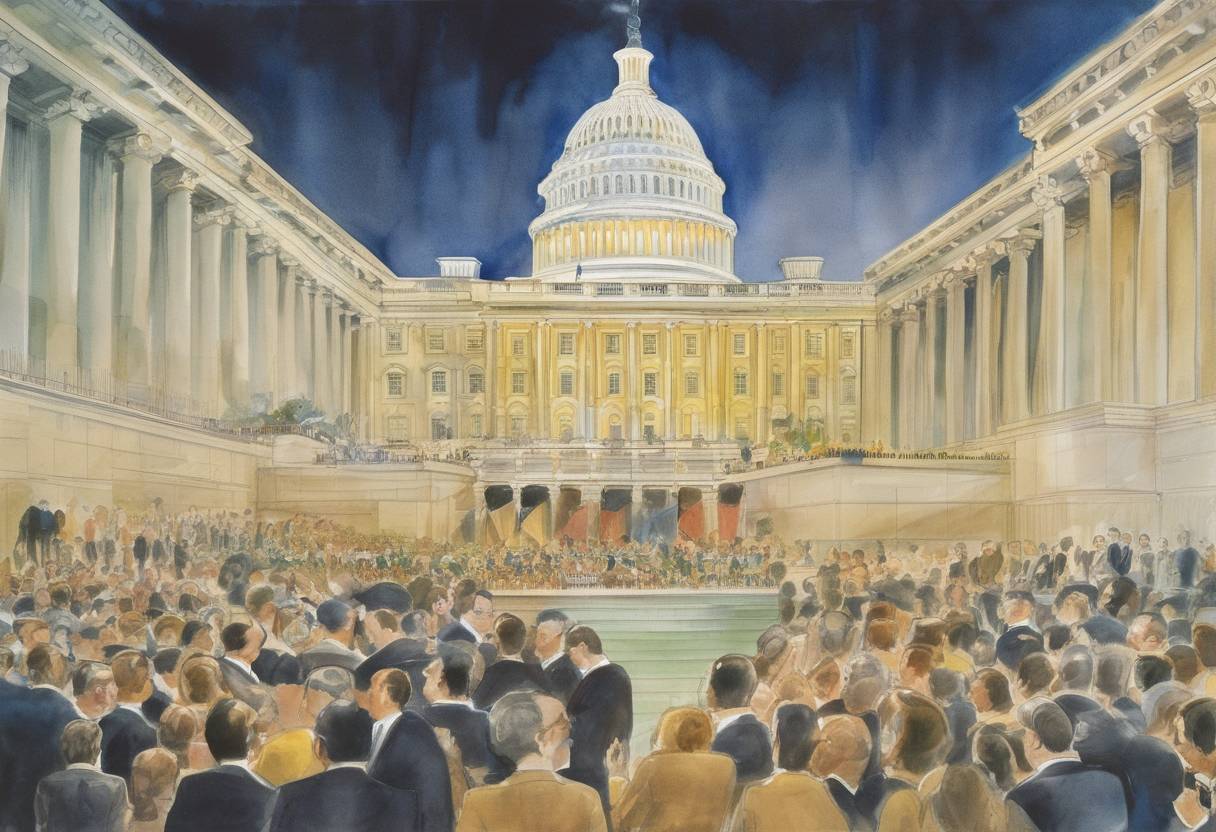
The United States Congress passes the American Taxpayer Relief Act of 2012, averting the fiscal cliff and preventing widespread tax increases and spending cuts.
August 15, 1971
President Richard Nixon announced the United States would no longer convert dollars to gold, effectively ending the Bretton Woods system.
Washington, D.C., United States | U.S. government
On August 15, 1971, President Richard Nixon made a pivotal announcement that marked a significant shift in global economic policy. In a televised address, Nixon declared that the United States would unilaterally suspend the convertibility of the U.S. dollar into gold. This decision effectively ended the Bretton Woods system, a cornerstone of international economic relations since the end of World War II.
The Bretton Woods system was established in 1944 during a conference held in Bretton Woods, New Hampshire. It created a framework for international monetary exchange, where currencies were pegged to the U.S. dollar, and the dollar itself was convertible to gold at a fixed rate of $35 per ounce. This system aimed to promote stability in international trade and finance, preventing the competitive devaluations that had contributed to the Great Depression.
By the late 1960s and early 1970s, the Bretton Woods system faced significant challenges:
U.S. Trade Deficits: The United States was experiencing persistent trade deficits, leading to an outflow of gold reserves as other countries converted their dollar holdings into gold.
Inflation: The U.S. was grappling with inflationary pressures, partly due to the costs associated with the Vietnam War and domestic social programs.
Speculation: There was increasing speculation against the dollar, as confidence in the U.S. ability to maintain the gold standard waned.
Global Economic Changes: The post-war economic landscape had evolved, with other countries, particularly in Europe and Japan, experiencing rapid economic growth, altering the balance of global economic power.
Nixon’s announcement, often referred to as the “Nixon Shock,” included several key measures:
The suspension of dollar convertibility led to the collapse of the Bretton Woods system. In its place, a system of floating exchange rates emerged, where currency values were determined by market forces rather than fixed rates.
Nixon’s decision to end the Bretton Woods system marked a turning point in international economic policy. It signaled the end of an era of fixed exchange rates and the beginning of a more flexible, market-driven approach to currency valuation. This shift has had lasting implications for global trade, finance, and economic policy, influencing how countries manage their economies in an increasingly interconnected world.
Source: en.wikipedia.org