The Cairo Agreement: Granting Palestinian Self-Rule
1994 · Cairo, Egypt
Israeli Prime Minister Yitzhak Rabin and PLO leader Yasser Arafat signed a historic accord in Cairo granting Palestinian self-rule in the Gaza Strip and Jericho.
November 11, 2004
The death of Yasser Arafat, the longtime leader of the Palestine Liberation Organization (PLO) and the Palestinian National Authority, was officially announced. His passing marked the end of an era in Palestinian politics and opened the door for new leadership and potential shifts in the Israeli-Palestinian conflict.
Clamart, France | Palestine Liberation Organization
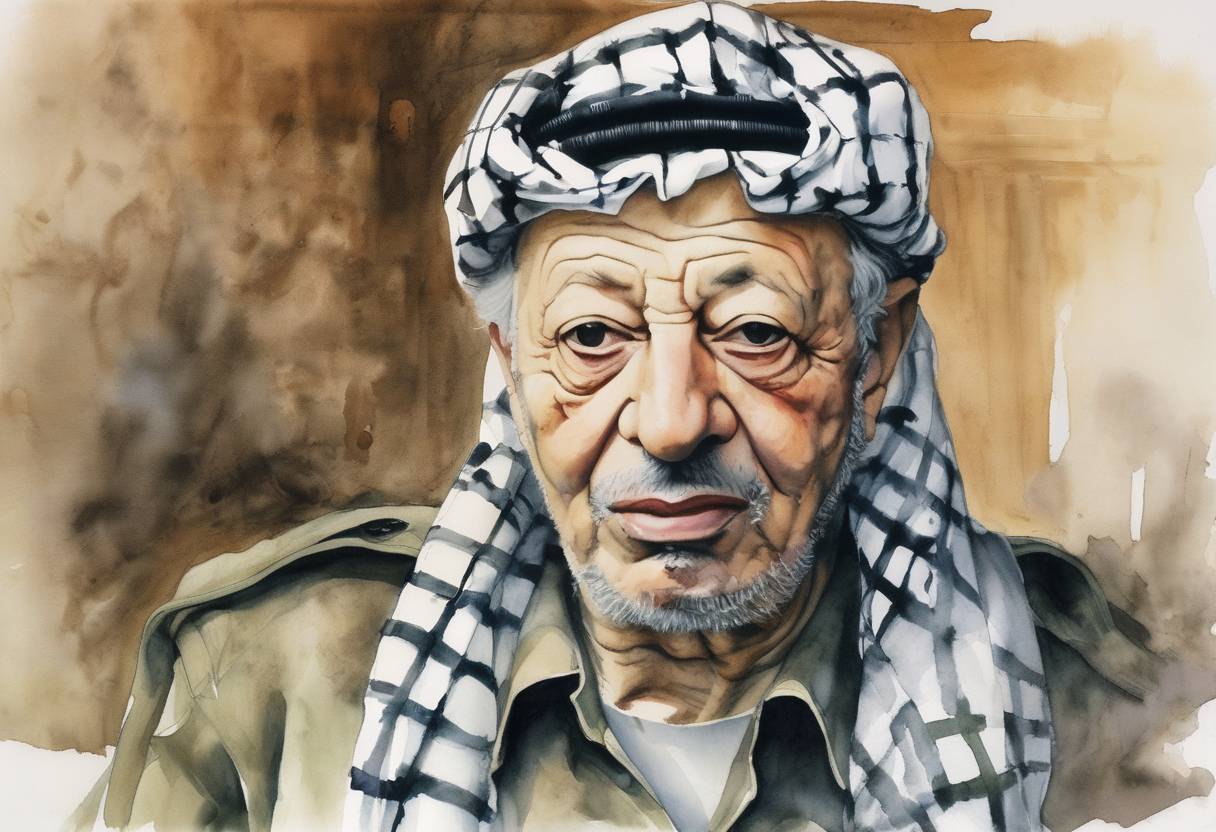
On November 11, 2004, the death of Yasser Arafat, the longtime leader of the Palestine Liberation Organization (PLO) and the Palestinian National Authority, was officially announced. Arafat’s passing marked the end of an era in Palestinian politics and opened the door for new leadership and potential shifts in the Israeli-Palestinian conflict.
Yasser Arafat was a central figure in Palestinian politics for decades. Born in Cairo in 1929, Arafat became involved in Palestinian nationalist activities in the mid-20th century. He co-founded the Fatah political party in 1959, which later became the dominant faction within the PLO. Arafat rose to prominence as a symbol of Palestinian aspirations for statehood and self-determination.
In 1994, following the Oslo Accords—a series of agreements between Israel and the PLO—Arafat returned to the Palestinian territories and became the first President of the Palestinian National Authority. The Oslo Accords were intended to pave the way for a two-state solution, but progress stalled over the years due to ongoing violence and disagreements over key issues such as borders, refugees, and the status of Jerusalem.
Arafat fell ill in late October 2004 and was flown to a military hospital in France for treatment. Despite extensive medical examinations, the exact cause of his illness remained unclear, leading to widespread speculation and conspiracy theories. On November 11, 2004, Arafat died at the age of 75. His death certificate listed a stroke as the immediate cause, but the underlying illness was not definitively identified.
Arafat’s death left a significant leadership vacuum in Palestinian politics. Mahmoud Abbas, a moderate figure and Arafat’s longtime deputy, was elected as his successor in January 2005. Abbas’s leadership marked a shift toward more diplomatic efforts in the Israeli-Palestinian conflict, although challenges remained.
Arafat’s passing also had implications for the broader Middle East peace process. While some hoped his death might lead to renewed negotiations, the conflict continued to be marked by violence and political stalemate. The internal divisions within Palestinian society, particularly between Fatah and the Islamist group Hamas, further complicated efforts toward peace.
Yasser Arafat remains a controversial and complex figure. To many Palestinians, he is a national hero and a symbol of their struggle for independence. To many Israelis and others, he is seen as a divisive figure associated with terrorism and missed opportunities for peace. His legacy continues to influence Palestinian politics and the broader Middle East conflict.
In summary, Arafat’s death on November 11, 2004, was a pivotal moment in Palestinian history, marking the end of a significant chapter and setting the stage for new developments in the ongoing quest for peace and stability in the region.
Source: www.britannica.com