The Death of Pope Gregory I (Gregory the Great) - March 12, 604
604 · Rome, Italy
Pope Gregory I, also known as Gregory the Great, dies. He was instrumental in the early medieval church, known for his writings and the Gregorian Chant.
September 3, 0590
Gregory I, also known as Gregory the Great, was consecrated as Pope. He is notable for instigating the first recorded large-scale mission from Rome, the Gregorian Mission, to convert the then-pagan Anglo-Saxons in England to Christianity.
Rome, Italy | Catholic Church
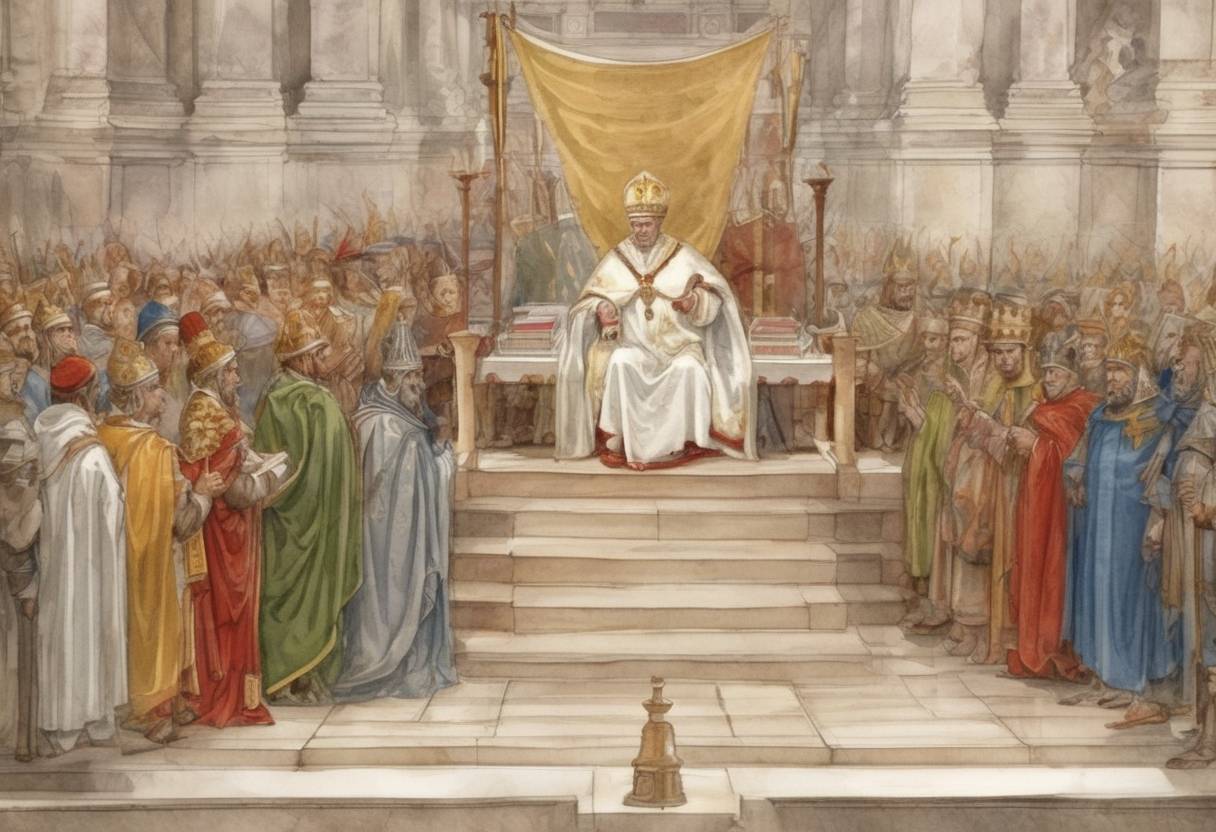
On September 3, 590, Gregory I, later known as Gregory the Great, was consecrated as Pope. His papacy marked a significant era in the history of the Catholic Church and the broader Christian world. Gregory’s tenure as Pope is particularly notable for his efforts to expand the influence of Christianity, most famously through the Gregorian Mission to convert the Anglo-Saxons in England.
Gregory was born around 540 into a wealthy Roman family with strong connections to the Church. Before becoming Pope, he served as the Prefect of Rome and later as a monk, which deeply influenced his spiritual and administrative outlook. His monastic background played a crucial role in shaping his papal policies and reforms.
Upon his consecration, Gregory faced numerous challenges, including the aftermath of the Lombard invasions, which had left much of Italy in turmoil. He worked tirelessly to address the needs of the poor and reorganize the Church’s administration. Gregory is credited with significant liturgical reforms, including the development of what would later be known as Gregorian Chant, although his direct involvement in its creation is debated.
One of Gregory’s most enduring legacies is the Gregorian Mission, initiated in 596. Concerned about the spiritual state of the Anglo-Saxons, Gregory dispatched a group of monks led by Augustine of Canterbury to England. This mission aimed to convert the Anglo-Saxons from their pagan beliefs to Christianity. The mission was a pivotal moment in the Christianization of England, leading to the establishment of a lasting Christian presence in the region.
Gregory’s papacy had a profound impact on the medieval Church. He is remembered for his writings, including “Pastoral Care,” a guide for bishops on how to lead their congregations, and his “Dialogues,” which include the life of Saint Benedict. His emphasis on pastoral care and missionary work set a precedent for future papal policies.
Gregory the Great is venerated as a saint in both the Catholic and Eastern Orthodox Churches. His feast day is celebrated on March 12 in the Western Church. Gregory’s influence extended beyond his lifetime, shaping the medieval Church’s structure and its approach to evangelization and pastoral care.
In summary, Pope Gregory I’s consecration marked the beginning of a transformative papacy that would leave a lasting imprint on the Christian world, particularly through his missionary efforts and administrative reforms.
Source: en.wikipedia.org