Adolf Hitler Becomes Supreme Commander-in-Chief of the German Army
1941 · Berlin, Germany
Adolf Hitler became Supreme Commander-in-Chief of the German Army, consolidating his control over the military during World War II.
October 2, 1941
Operation Typhoon, the German offensive to capture Moscow during World War II, began.
Moscow, Soviet Union | Nazi Germany
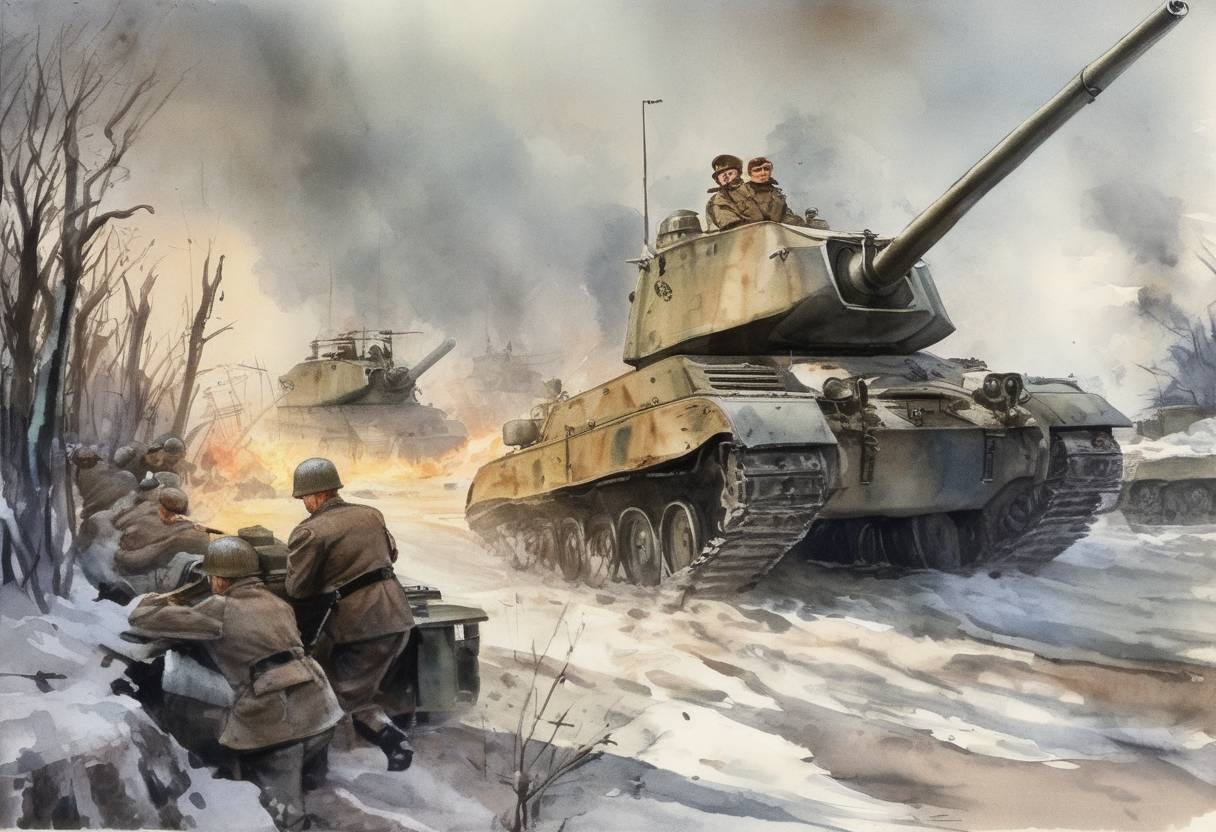
Operation Typhoon was the code name for the German Wehrmacht’s strategic offensive aimed at capturing Moscow during World War II. This operation began on October 2, 1941, and was a pivotal moment in the Eastern Front of the war.
Barbarossa Campaign: Operation Typhoon was part of the larger Operation Barbarossa, the German invasion of the Soviet Union, which commenced on June 22, 1941. The initial phase of Barbarossa saw rapid German advances, with the Wehrmacht capturing vast territories and inflicting heavy casualties on Soviet forces.
Strategic Importance: Moscow, the capital of the Soviet Union, was not only a political and administrative center but also a vital transportation hub. Capturing Moscow was believed to be crucial for breaking Soviet resistance and potentially forcing a Soviet surrender.
Forces Involved: The German Army Group Center, commanded by Field Marshal Fedor von Bock, spearheaded the offensive. It comprised several Panzer (armored) divisions and infantry units, supported by the Luftwaffe.
Initial Successes: The operation began with a series of encirclements and battles, notably the Vyazma and Bryansk pockets, where German forces trapped and destroyed significant Soviet formations. These early victories created a sense of optimism among German commanders.
Weather and Terrain: As the Germans advanced towards Moscow, they encountered worsening weather conditions. The infamous Russian mud, or “rasputitsa,” slowed their progress, and the onset of winter further complicated logistics and mobility.
Soviet Defense: Despite initial setbacks, the Soviet Union, under the leadership of Joseph Stalin, mobilized reserves and fortified defenses around Moscow. The Soviet counteroffensive, bolstered by reinforcements from Siberia, began to stiffen resistance against the German advance.
Stalemate and Retreat: By December 1941, the German advance had stalled just miles from Moscow. The Soviet counteroffensive launched in early December pushed the Germans back, marking the first major defeat of the Wehrmacht in the war.
Turning Point: Operation Typhoon’s failure marked a turning point on the Eastern Front. It demonstrated the limits of German military power and the resilience of Soviet forces. The inability to capture Moscow prolonged the war and set the stage for future Soviet offensives.
Impact on German Strategy: The failure of Operation Typhoon forced the German High Command to reconsider its strategy on the Eastern Front, leading to a shift towards defensive operations in subsequent years.
Operation Typhoon remains a significant episode in World War II history, illustrating the challenges of warfare on the Eastern Front and the critical role of Moscow in the Soviet war effort.
Source: en.wikipedia.org