Launch of the ZX81 Home Computer
1981 · Cambridge, United Kingdom
The ZX81, a home computer produced by Sinclair Research, was launched in the United Kingdom, becoming one of the first affordable personal computers.
June 27, 1967
The world's first ATM was installed in Enfield, London, by Barclays Bank, revolutionizing banking by allowing customers to withdraw cash without the need for a teller.
Enfield, United Kingdom | Barclays Bank
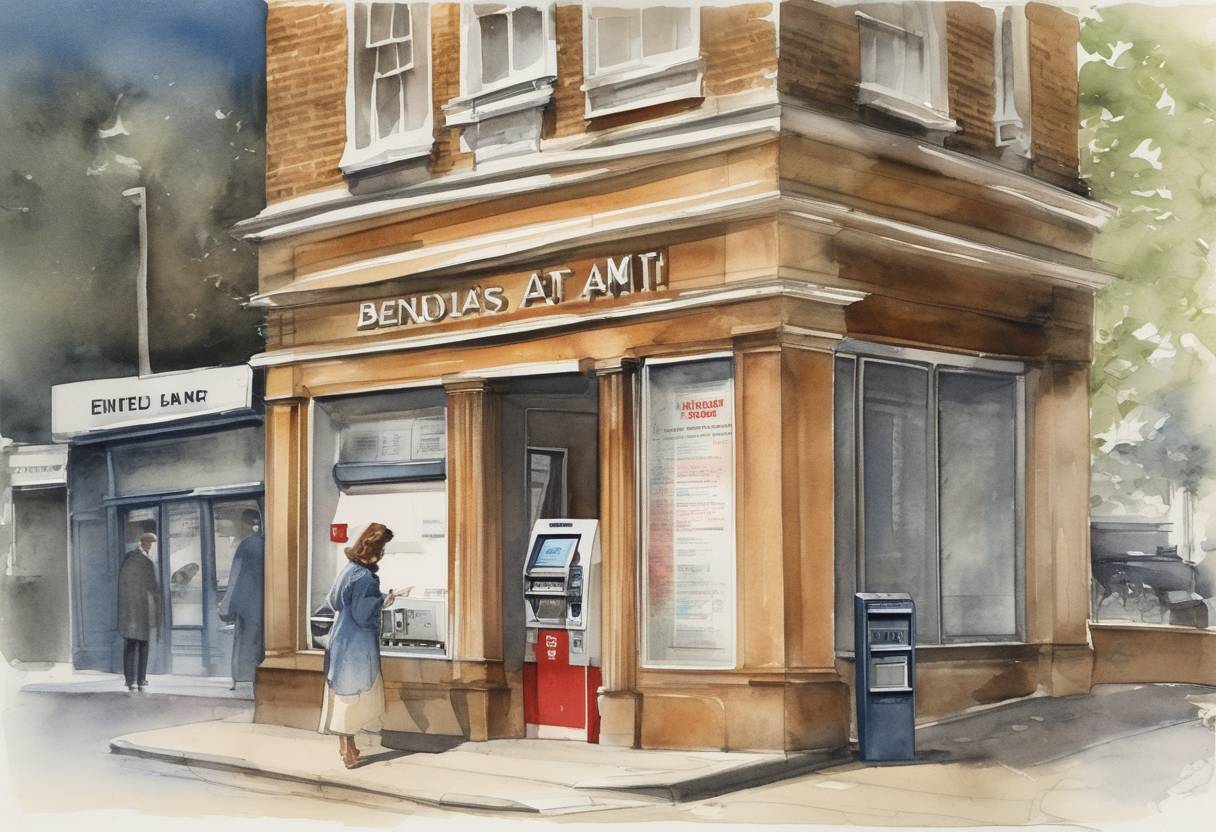
On June 27, 1967, the world’s first Automated Teller Machine (ATM) was installed by Barclays Bank in Enfield, London. This groundbreaking event marked a significant milestone in the evolution of banking, fundamentally transforming how customers accessed their money.
Before the advent of ATMs, banking transactions were limited to the operating hours of bank branches, requiring customers to interact directly with bank tellers for cash withdrawals. This process was often time-consuming and inconvenient, especially outside of regular banking hours.
The ATM was invented by John Shepherd-Barron, a Scottish inventor, who conceptualized the idea of a cash-dispensing machine after being inspired by vending machines. Shepherd-Barron, along with a team at De La Rue, a British printing company, developed the first ATM prototype. The machine used special checks impregnated with a radioactive compound, which were inserted into the machine to dispense a fixed amount of cash.
Barclays Bank, recognizing the potential of this innovation, installed the first ATM at its branch in Enfield, a suburb of London. The machine was inaugurated by actor Reg Varney, known for his role in the British television series “On the Buses.” This event was widely publicized and marked the beginning of a new era in banking convenience.
The introduction of the ATM revolutionized banking by providing customers with 24⁄7 access to their funds, significantly enhancing convenience and flexibility. Over time, ATMs evolved to offer a wide range of banking services, including deposits, transfers, and account inquiries.
Global Adoption: Following the successful implementation in London, ATMs quickly gained popularity worldwide. By the 1970s, they were being installed in banks across Europe, North America, and beyond.
Technological Advancements: The initial ATM technology paved the way for further innovations, including the use of magnetic stripe cards and later, chip-enabled cards, enhancing security and functionality.
Banking Industry Transformation: The widespread adoption of ATMs contributed to the shift towards electronic banking, reducing the reliance on physical bank branches and leading to the development of online and mobile banking services.
The installation of the first ATM in Enfield was a pivotal moment in banking history, setting the stage for the modern, digital banking landscape we know today. It demonstrated the potential of technology to improve customer service and operational efficiency in the financial sector.
Source: en.wikipedia.org