The Treaty of Fort Jackson: Ending the Creek War
1814 · Fort Jackson, United States
The Treaty of Fort Jackson is signed, ending the Creek War.
December 26, 1862
The largest mass execution in U.S. history took place when 38 Dakota men were hanged in Mankato, Minnesota, following the Dakota War of 1862.
Mankato, United States | United States government
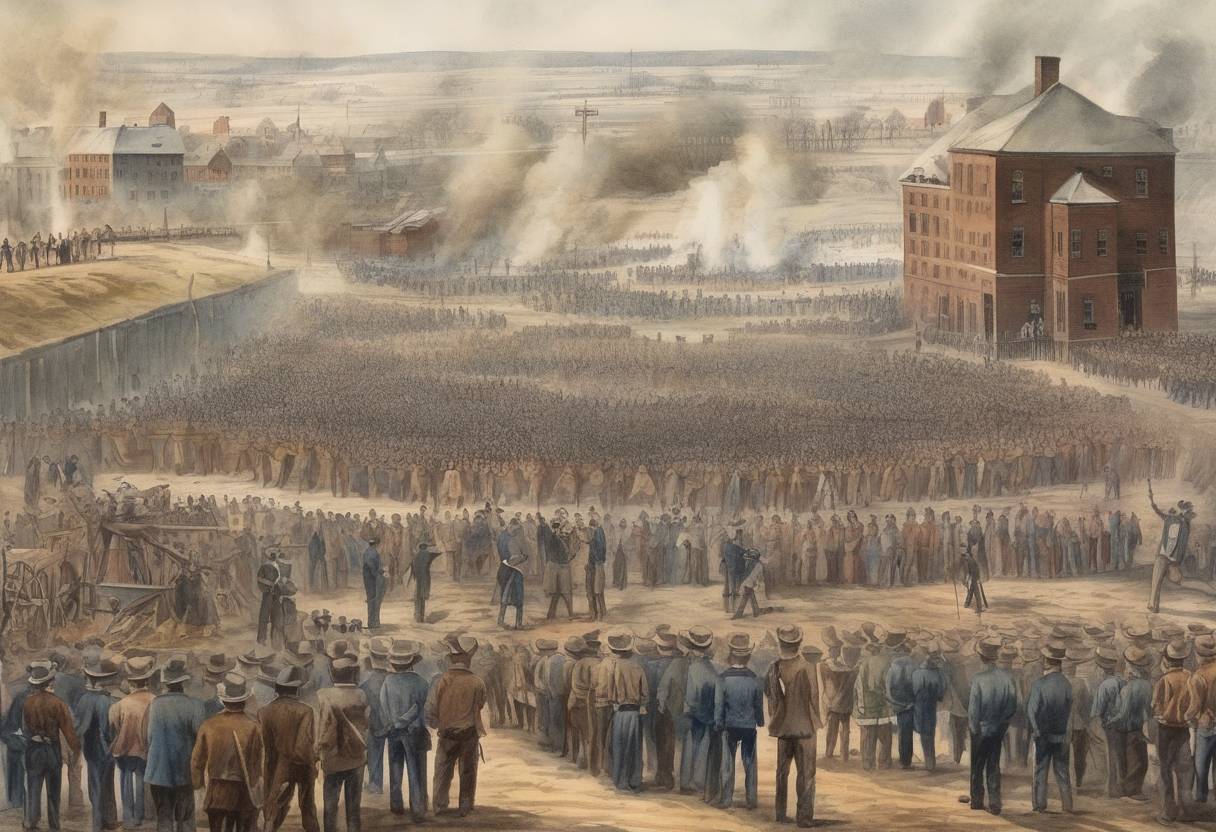
On December 26, 1862, the largest mass execution in United States history took place in Mankato, Minnesota, when 38 Dakota men were hanged following the Dakota War of 1862. This event was a culmination of tensions and conflicts between the Dakota (also known as the Sioux) and European-American settlers.
The Dakota War of 1862, also known as the Sioux Uprising, was rooted in longstanding grievances. The Dakota people had been forced into treaties that ceded vast amounts of their land to the U.S. government in exchange for annuities and supplies. However, these promises were frequently broken or delayed, leading to widespread hunger and hardship among the Dakota.
In August 1862, frustration and desperation boiled over, and a faction of the Dakota, led by Little Crow, initiated an armed conflict against settlers and government forces. The war lasted several months, resulting in significant casualties on both sides and the displacement of many settlers.
Following the suppression of the uprising, more than 300 Dakota men were captured and tried by a military commission. The trials were swift, often lasting less than a day, and many lacked proper legal representation. President Abraham Lincoln intervened, reviewing the trial records and reducing the number of executions to 38, focusing on those accused of participating in civilian massacres.
On December 26, 1862, the execution took place in Mankato. A large scaffold was constructed, and the 38 Dakota men were hanged simultaneously in front of a crowd of spectators. This event remains a somber chapter in American history, reflecting the deep-seated conflicts and injustices faced by Native American communities.
The mass execution had profound consequences for the Dakota people. In the aftermath, the U.S. government expelled the Dakota from Minnesota, confiscating their remaining lands. Many were forcibly relocated to reservations in South Dakota and Nebraska.
The event is a stark reminder of the complex and often tragic interactions between Native American tribes and the expanding United States during the 19th century. It highlights issues of justice, cultural conflict, and the impact of U.S. expansionist policies on indigenous populations.
Today, the execution is commemorated and remembered as part of efforts to acknowledge and reconcile with this painful history. It serves as a point of reflection on the need for understanding and respecting the rights and cultures of all peoples.
Source: www.mnhs.org