Election of Pope Adrian VI on January 9, 1522
1522 · Rome, Papal States
Pope Adrian VI was elected as the 218th pope, the last non-Italian pope until John Paul II in 1978.
December 14, 0867
Adrian II was elected as the Pope of the Roman Catholic Church.
Rome, Papal States | Roman Catholic Church
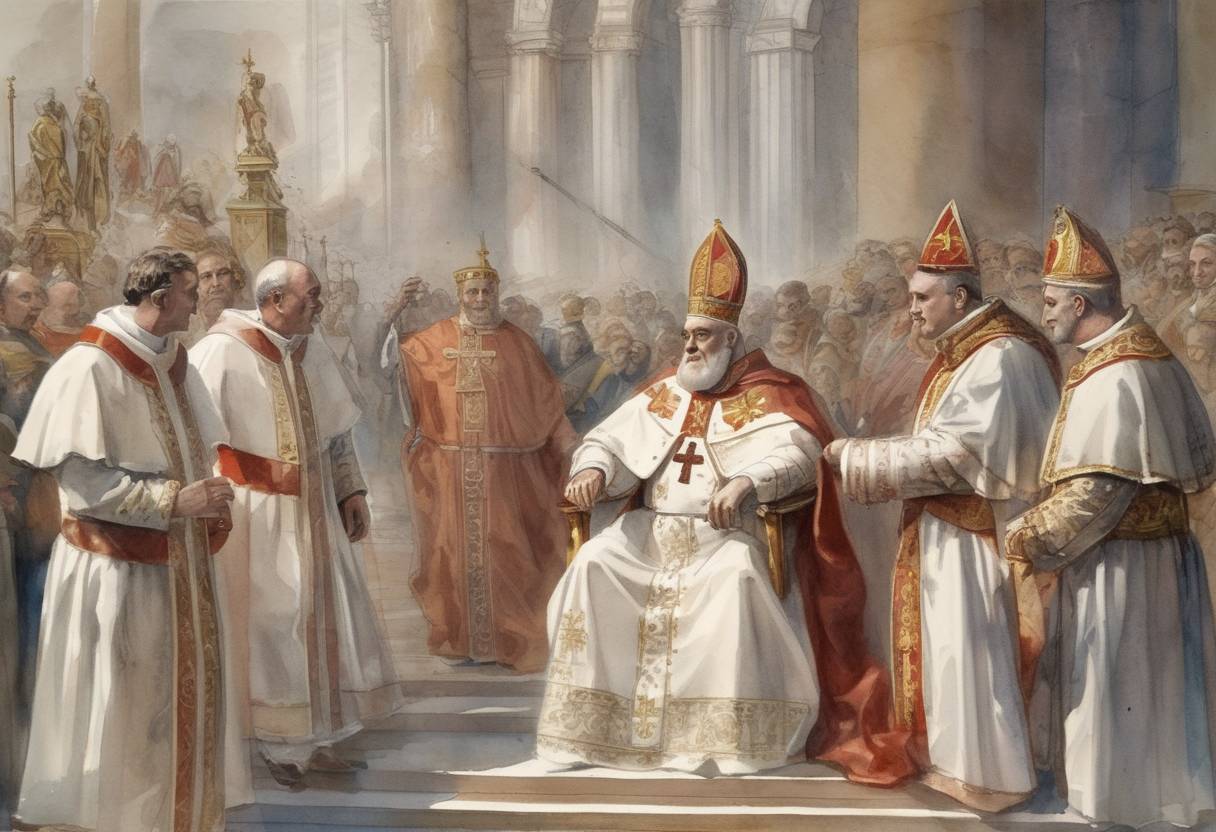
On December 14, 867, Adrian II was elected as the Pope of the Roman Catholic Church. His papacy marked a significant period in the church’s history, characterized by both internal and external challenges.
Adrian II was born in Rome around 792 into a noble family. Before his election as pope, he had served as a cardinal and was known for his piety and dedication to the church. His election came at a time when the papacy was heavily involved in political and theological disputes.
Predecessor’s Death: Adrian II succeeded Pope Nicholas I, who had been a strong and influential leader. Nicholas I’s papacy was marked by his assertive stance on church authority, which set a precedent for Adrian II to follow.
Political Climate: The period was marked by tensions between the papacy and the Byzantine Empire, as well as ongoing conflicts with the Frankish Empire. The church was also dealing with internal issues, such as the Photian Schism, which involved a dispute over the legitimacy of the Patriarch of Constantinople.
Diplomatic Efforts: Adrian II’s papacy was notable for its diplomatic efforts to resolve the Photian Schism. He sought to restore relations with the Eastern Church, although these efforts were only partially successful during his tenure.
Challenges: Adrian II faced significant challenges, including the ongoing power struggles within the Carolingian Empire and the need to assert papal authority over secular rulers. His papacy also dealt with issues of clerical discipline and the enforcement of church laws.
Council of Constantinople (869-870): One of the significant events during his papacy was the Fourth Council of Constantinople, which aimed to address the schism and reinforce the authority of the Roman Church. The council condemned Photius and reaffirmed the decisions of previous councils.
Short Papacy: Adrian II’s papacy lasted until his death on December 14, 872. Despite its brevity, his reign was marked by efforts to maintain the church’s influence and navigate the complex political landscape of the time.
Legacy: Adrian II is remembered for his attempts to mediate between conflicting factions within the church and for his role in the broader context of church-state relations during the 9th century. His efforts laid groundwork for future popes to build upon in terms of diplomacy and ecclesiastical governance.
Adrian II’s election and subsequent papacy were pivotal in the ongoing development of the medieval church, reflecting the intricate interplay between religious and political spheres during this period.