Battle of Oudenarde (July 11, 1708)
1708 · Oudenaarde, Belgium
Battle of Oudenarde occurs when forces of the Grand Alliance, led by Duke of Marlborough, defeat French troops.
July 25, 1722
Dummer's War, also known as Father Rale's War, begins in the North American colonies between New England and the Wabanaki Confederacy.
Canso, Canada | New England Colonies
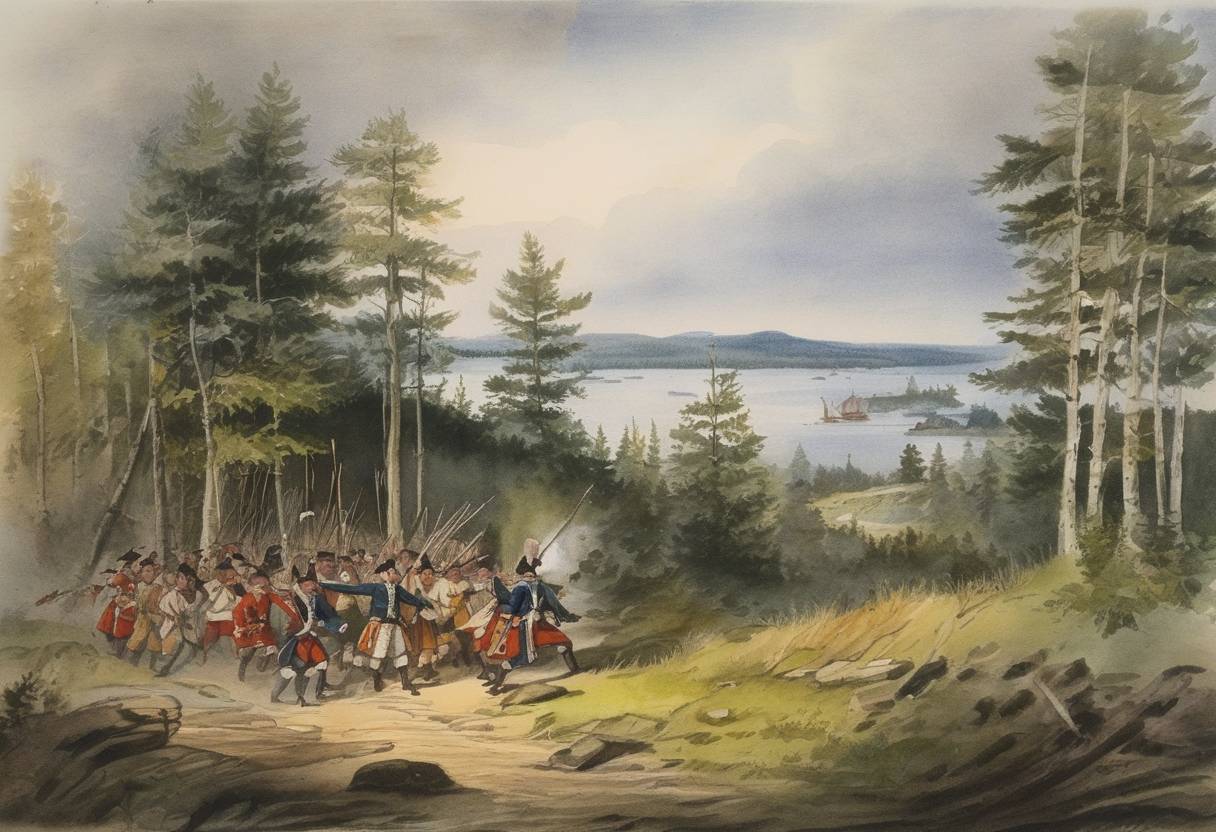
Dummer’s War, also known as Father Rale’s War, officially began on July 25, 1722, marking a significant conflict in early 18th-century North America between New England colonists and the Wabanaki Confederacy, supported by French allies. This conflict is named after Governor William Dummer of Massachusetts and the Jesuit priest Sébastien Rale.
The roots of this war can be traced back to earlier tensions between various European colonial powers and the Indigenous peoples of the northeastern part of the continent. Following Queen Anne’s War, territorial disputes persisted as colonists expanded into Indigenous lands, encroaching upon the Wabanaki territories in what is today the boundary areas of modern-day Maine, New Hampshire, and Nova Scotia.
The French, who maintained strong trade and religious ties with the Wabanaki through figures like Father Rale, backed the Indigenous efforts to resist English expansion. This relationship underscored the broader struggle between France and Britain for control over parts of North America and their Indigenous alliances.
On July 25, 1722, hostilities came to a head with the start of Dummer’s War. The immediate catalyst was the response to British actions, including the construction of fortified settlements and trading posts in contested areas. The Wabanaki Confederacy saw these actions as a direct threat to their homelands and sovereignty.
A notable early incident was the attack on Fort St. George in Thomaston, Maine. The Wabanaki’s strategic efforts involved a series of raids on British settlements and fortifications along the frontier, disrupting colonial expansion and communications.
Dummer’s War would continue until 1725, resulting in significant casualties and destruction on both sides. The conflict ended with a treaty, but not without leaving a legacy of tension between the Indigenous peoples, the British, and the French. The war highlighted the fragile nature of colonial and Indigenous relations and foreshadowed further conflicts in the region, such as King George’s War and the French and Indian War.
The end of the conflict placed nominal British control over much of the contested land yet failed to truly resolve the underlying disputes over sovereignty and territory that had fueled the war. The Treaty of 1725, while a temporary cessation of hostilities, did not address these core issues, leading to continued friction in subsequent years.
Source: www.britannica.com